

















·
Speech therapist in Almaty: when to bring your child, what issues we address, and how much it costs
- When to take a child to a specialist — signs and timelines
- Speech therapist, defectologist, or neuropsychologist — who does your child need
- How much do sessions cost and how much time is needed — prices and timelines
- How We Work: Speech Correction Methods
- Which format to choose — at the center, online, or at home
- How to choose a good speech therapist — criteria and checklist
- Specific issues: stuttering, dysarthria, ASD, adults
- Conclusion
We are a speech therapy center in Almaty where speech therapists-defectologists and neuropsychologists work. We accept children from age 2 and adults. We help with speech delay, dysarthria, stuttering, sound production, and speech initiation in non-speaking children. Sessions are held at the center, online, and at home. We start with a diagnostic assessment.
When to take a child to a specialist — signs and timelines
Speech development has clear age milestones: first words by age one, phrases by age two, sentences by age three. If a child doesn't meet these, it's a reason to consult, not to wait.
At what age should a child start speaking — norms by year
A child should say their first words by 12 months, two-word phrases by age 2, and form sentences of 3–4 words by age 3. If these milestones are not met, a specialist consultation is needed. At 1 year, the norm is 5–10 meaningful words ("mama," "give," "beep-beep"), at 1.5 years — 20–30, and by age 2, the child combines two words into a simple phrase ("mama, give") with an active vocabulary growing by 10–15 words monthly. By age 3, they ask questions, name objects in pictures, and use grammatical structures — if instead the vocabulary does not exceed 50 words or phrasal speech is absent, a speech therapist-defectologist diagnoses a speech delay (SD). The earlier correction begins, the faster progress occurs — a child's brain is most plastic until ages 5–6, so waiting for it to "go away on its own" is not advisable.
It’s worth seeing a speech therapist in Almaty at the first doubts about a child’s speech development — early diagnosis reduces the correction period by 2–3 times.
Speech development delay is one of the most common diagnoses in children aged 2–4, and the earlier correction begins, the faster the child catches up with peers.
5 signs that a child needs a specialist — a checklist for parents
- No phrases by age 3: The child speaks individual words but does not combine them into 2–3 word sentences — this is a direct indication for diagnostics.
- Does not understand spoken speech: does not follow simple requests ("bring the ball," "show me the bear") after 1.5 years.
- Massive substitutions and distortions of sounds: After 4–5 years, a child cannot pronounce 5 or more sounds, replaces them with others, or has slurred speech.
- Stuttering or hesitations: The child repeats syllables, stretches sounds, or gets stuck on the first sound of a word for more than 2–3 seconds.
- Speech regression: the child started talking and then fell silent for a month or longer, or stopped using phrases they had already mastered.
"Too lazy to talk" is not a diagnosis; refusal to speak often hides a neurological or speech therapy problem that needs to be diagnosed.
My child isn't speaking at age 3 — what to do and which specialist to see
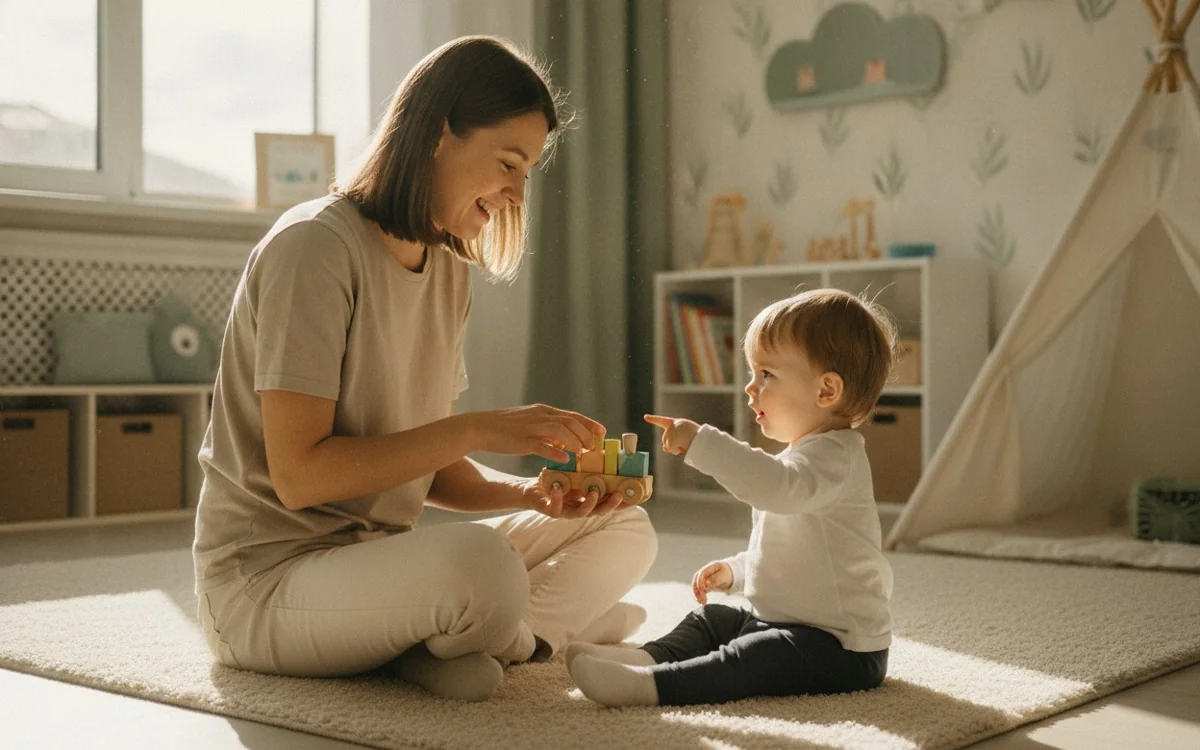
If a child at age 3 is not speaking or uses fewer than 20 words, we start with a comprehensive assessment: a speech therapist-defectologist evaluates speech comprehension, the articulatory apparatus, and neurological status. The initial appointment lasts 40–60 minutes and includes checking phonemic awareness, tongue and lip mobility, and the level of instruction comprehension — this distinguishes speech delay from more serious disorders such as motor alalia or autism spectrum disorder. Based on the assessment, an individual plan is created: for non-speaking children — jumpstarting speech through articulatory gymnastics and eliciting sound imitations; for children with a limited vocabulary — expanding passive and active vocabulary through play-based methods. During the appointment, the specialist works together with a neuropsychologist — this allows for a complete picture, not just speech issues, and immediately rules out accompanying neurological causes for the silence.
Speech therapist, defectologist, or neuropsychologist — who does your child need
Parents often confuse these specialists, although they have different profiles. We clarify how they differ and in which cases to see whom.
How a Speech Therapist Differs from a Defectologist — A Simple Explanation
A children's speech therapist at our center works with pronunciation, speech tempo, and voice, and also conducts speech development diagnostics. The speech therapist works with sound pronunciation, speech tempo, and voice, while a defectologist addresses the causes of speech disorders: developmental delays, intellectual features, and neurological issues. The former can teach the "r" sound if the child simply lacks the articulatory basis, but in cases of speech development delay due to organic central nervous system damage, the same "r" sound will not emerge without correcting thinking and memory — this is the defectologist's role. Our center employs specialists with dual qualifications: in one session, they first perform articulatory gymnastics for the tongue, then include exercises to develop attention and logic. This saves time — parents don't need to take their child to two different specialists on different days. If a child has been diagnosed with speech development delay or psychomotor development delay, choose a specialist with a defectology background — without such training, they may miss the root cause of the silence.
When a neuropsychologist is needed — and how they help the speech therapist
A neuropsychologist at our center assesses how memory, attention, thinking, and interhemispheric interaction function — this is important if a child is not speaking due to nervous system immaturity rather than weak articulation. During the initial neuropsychological assessment, we observe how the child follows instructions, switches between tasks, and reproduces rhythmic patterns — these tests show whether their cerebral cortex is ready for speech initiation. If not, speech therapy sessions alone will yield zero results: the child won't remember articulation because their attention is scattered. We often prescribe neurogymnastics alongside speech therapy sessions — cross-crawl steps and breathing exercises for 10 minutes before the lesson increase brain tone and accelerate speech initiation in children with delayed speech development by 3–4 weeks faster than with isolated speech therapy.
Speech therapy center or private specialist — which to choose
In a speech therapy center like ours, several specialists of different profiles work — a speech therapist-defectologist, a neuropsychologist — allowing for a comprehensive correction plan in one assessment. A private specialist usually takes children with purely sound issues — correcting "l" or "sh" in 8-12 sessions, which is cheaper than a center package. But when a child has a mixed disorder — for example, dysarthria with ADHD — a private specialist without colleagues may miss the neurological cause: they might spend a month correcting a sound, while the child cannot maintain articulation due to impulsivity. Our specialists create an individual correction plan for each client based on conclusions from three profiles (speech therapist, defectologist, neuropsychologist) — this approach yields predictable results in 2-3 months, rather than six months of unsystematic sessions.
How much do sessions cost and how much time is needed — prices and timelines
Price and timeline are the main questions parents ask. We provide honest guidelines without promising "we'll fix any sound in 5 sessions." The cost and duration depend on the specific disorder and age. Speech therapist prices in Almaty depend on the session format, specialist's qualifications, and course length — at our center, the cost starts from 5,000 tenge per individual session.
How much does a speech assessment and individual session cost?
| Service | Duration | Cost | Note |
|---|---|---|---|
| Initial speech assessment | 60 minutes | 7,000 tenge | Includes a speech therapy assessment and a report with a correction plan |
| Individual Session with a Speech Therapist-Defectologist | 40 minutes | 5,000 tenge | For children aged 2 to 12, play-based format |
| Individual speech therapy session for adults | 50 minutes | 6,000 tenge | Diction correction, speech recovery after a stroke |
| Speech therapy massage (probe / manual) | 30 minutes | 4,000 tenge | Conducted as a course of 10–15 sessions, only when indicated |
| Package of 8 Sessions (for Children) | 40 minutes × 8 | 36,000 tenge | Save 4,000 tenge, sessions 2 times per week |
How many sessions are needed to correct a sound — realistic timelines
Producing one sound (e.g., R or L) takes from 8 to 20 individual sessions, but automation in speech can last up to 3–6 months of regular sessions 2–3 times a week. In our practice, producing the R sound in children aged 5–6 without accompanying disorders takes an average of 12–15 sessions, and with dysarthria — from 20 to 30 sessions with mandatory inclusion of articulation exercises and speech therapy massage. Speech initiation in non-speaking children aged 2.5–4 requires from 3 to 9 months of intensive work — first a passive vocabulary is formed, then the first babbling words appear. The Sh or Zh sound takes 5–10 sessions, the sibilants S, Z, Ts — 8–12. If a specialist cannot produce a sound in 3 months — this is a reason to reconsider the method or check for a neurological cause (dysarthria, alalia).
What Determines the Duration of the Course — Factors Affecting the Timeline
- Child's age: children aged 4–6 master sounds faster than teenagers, whose articulatory patterns have already become fixed incorrectly.
- Type of disorder: dyslalia (one or two sounds) is corrected in 2–3 months, dysarthria requires 6–12 months of systematic work.
- Regularity of sessions: missing 2–3 consecutive sessions sets progress back by 1–2 weeks, especially during the automation stage.
- Completing homework: without daily 5–10-minute articulation exercises, the correction timeline increases by 1.5–2 times.
- Associated diagnoses: In cases of developmental delay, autism spectrum disorder, or cerebral palsy, speech therapy is integrated into comprehensive correction and lasts longer — from a year.
How We Work: Speech Correction Methods
We explain the methods we use in our work — from articulation exercises to speech therapy massage and neurogymnastics. Each method solves its own task, and the combination provides a lasting result.
Articulation gymnastics — the foundation of every session
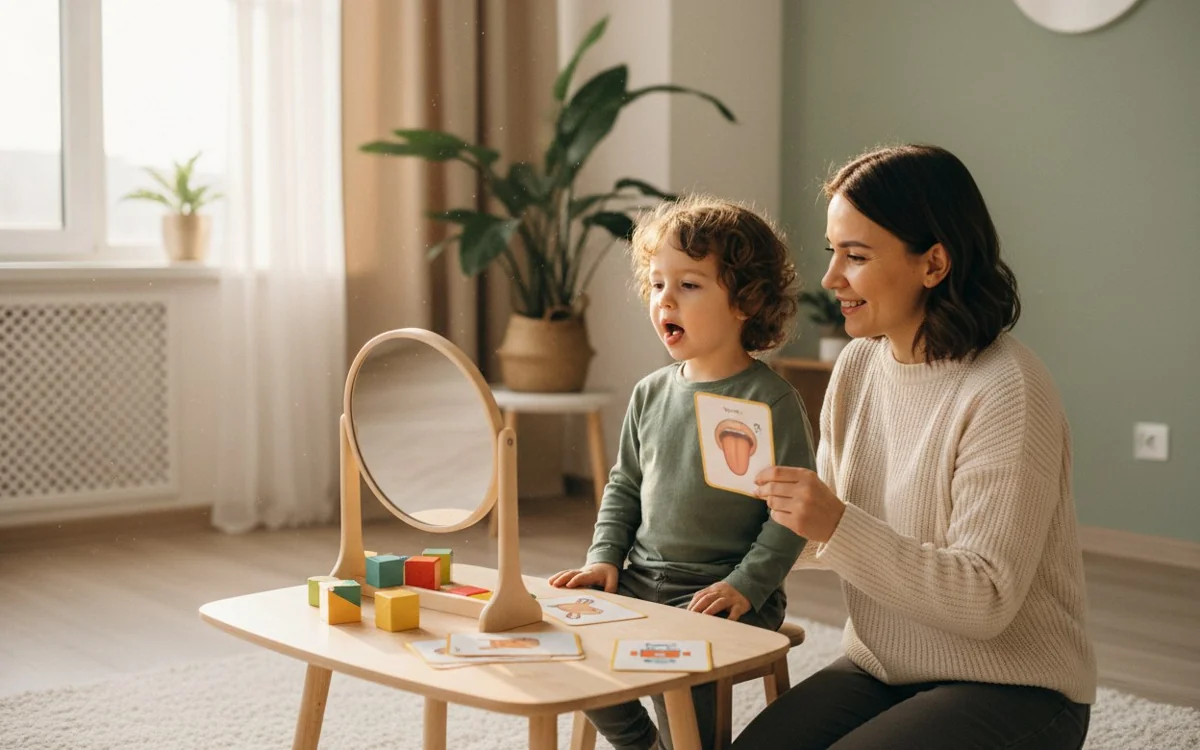
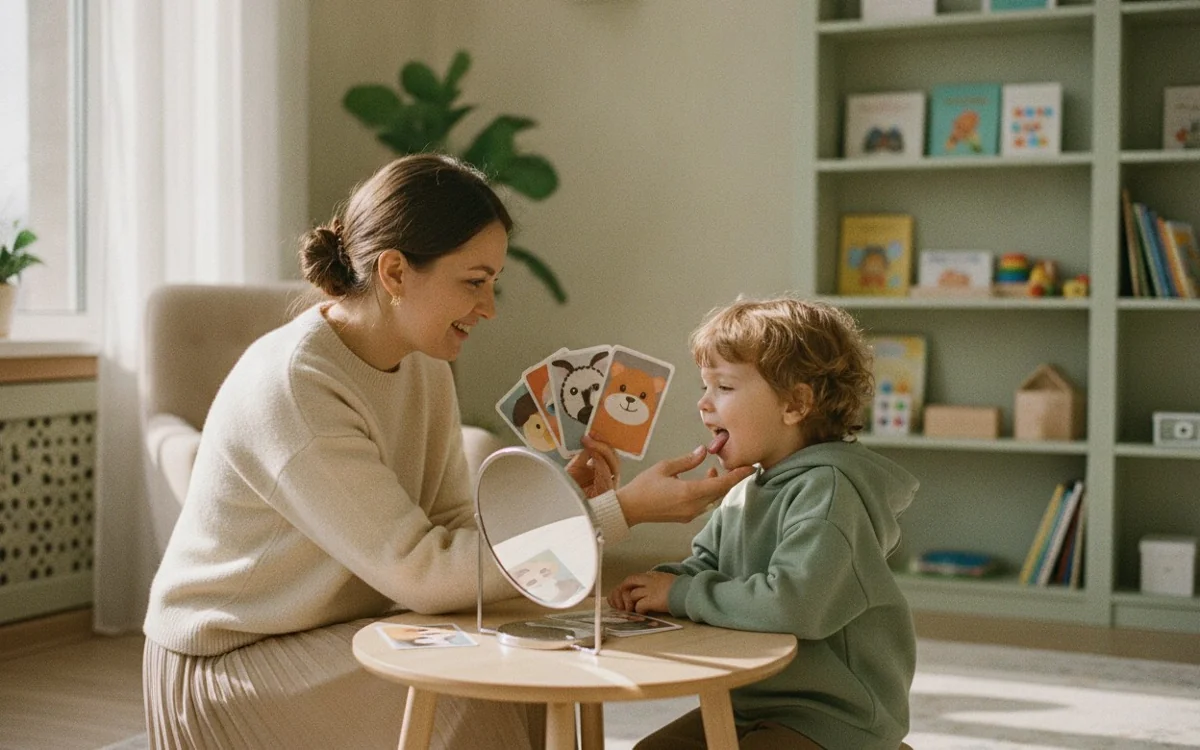
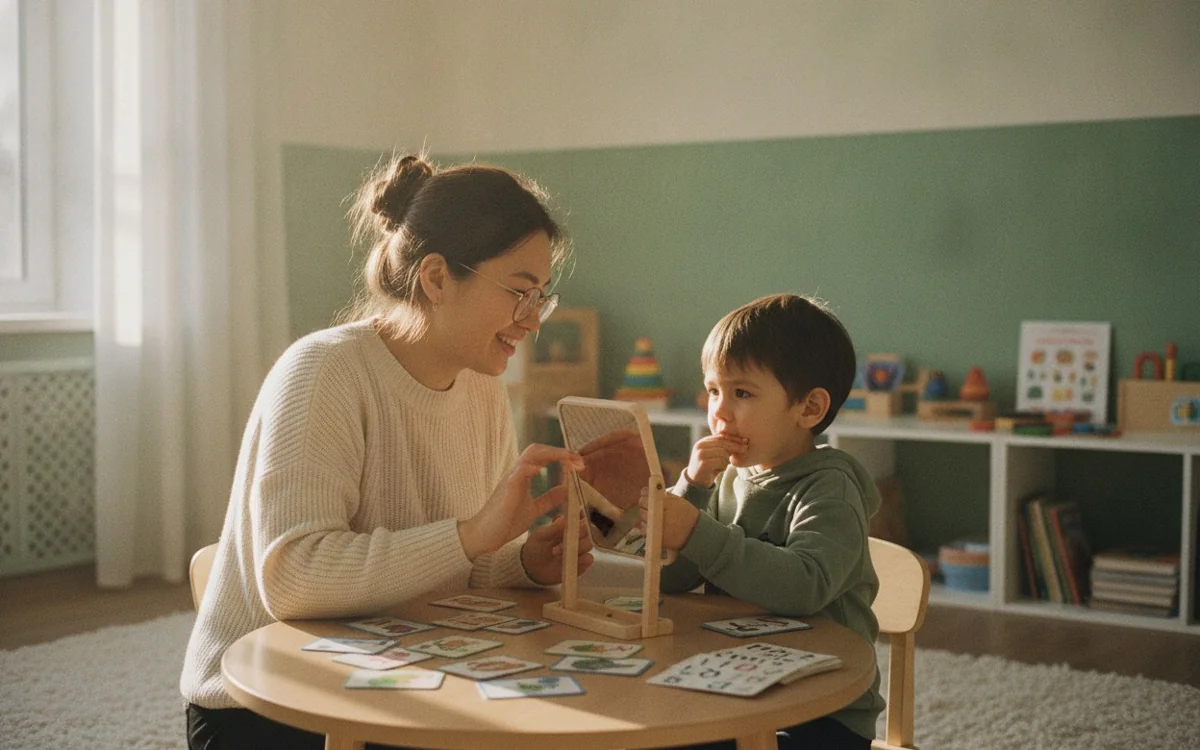
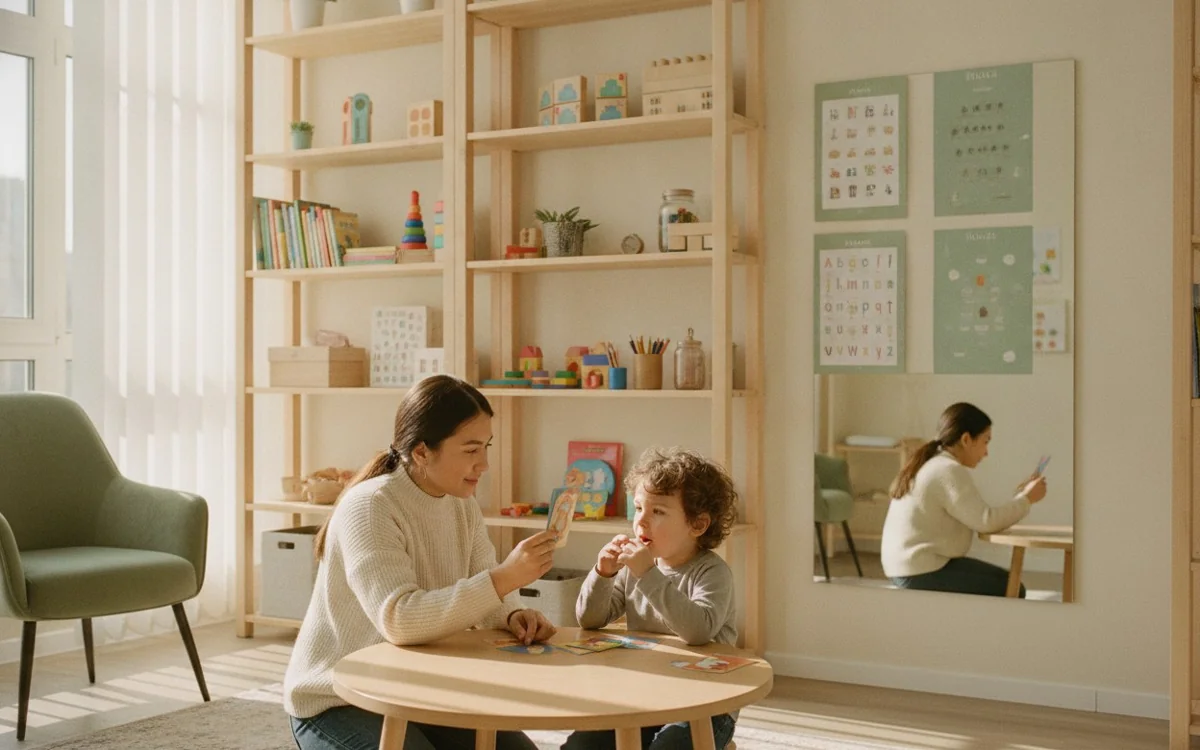
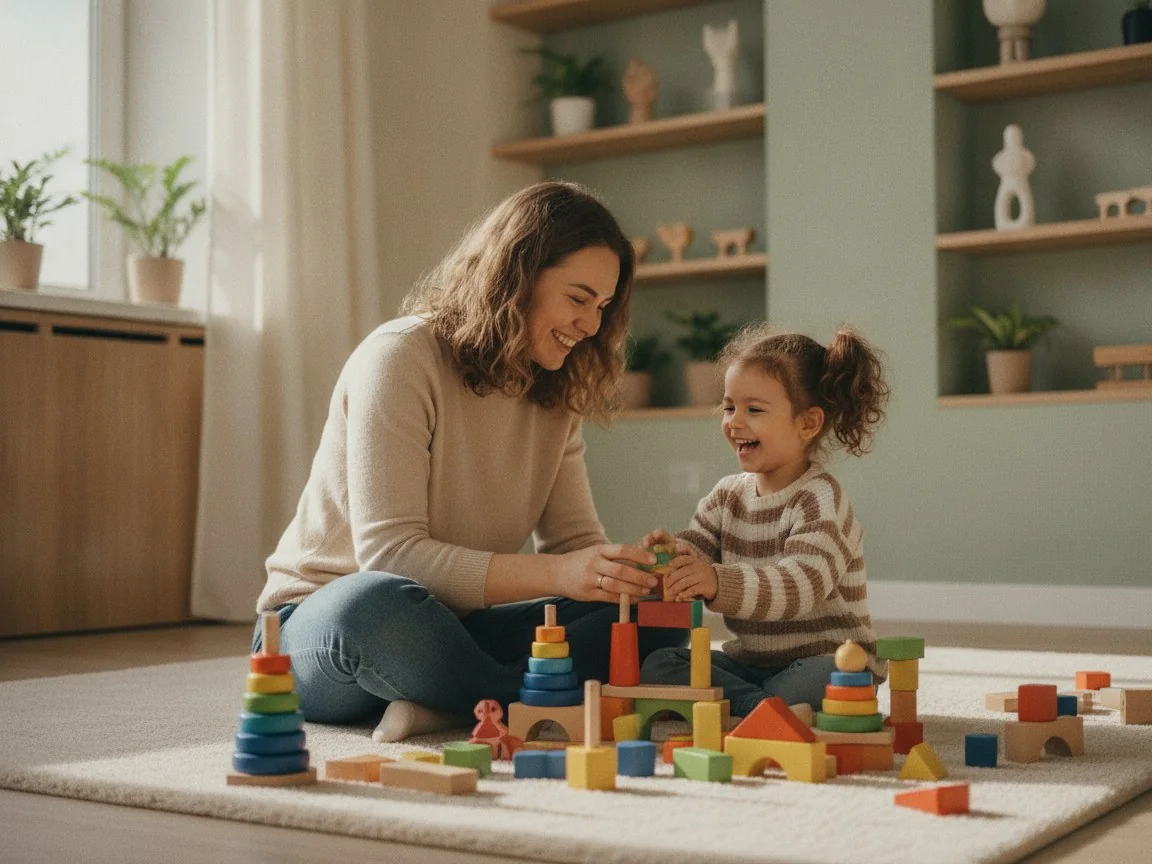
Articulation gymnastics is a set of exercises for the tongue, lips, and jaw, which we conduct at the beginning of each session to warm up the speech apparatus. In Almaty centers, we use didactic materials and mirrors so the child can see their face and control movements: they lift the tip of the tongue to the palate ("cup"), stretch lips into a smile ("fence"), blow on a cotton ball ("football"). Our specialists select the sequence of exercises for the specific problem — for producing the "R" sound, strong vibration of the tongue tip is needed; for sibilants, a wide tongue posture is required. We use playful forms of gymnastics — children perform exercises more willingly when it is part of a story or competition, rather than a boring "tongue workout."
Speech therapy massage — when it is needed and how it is performed
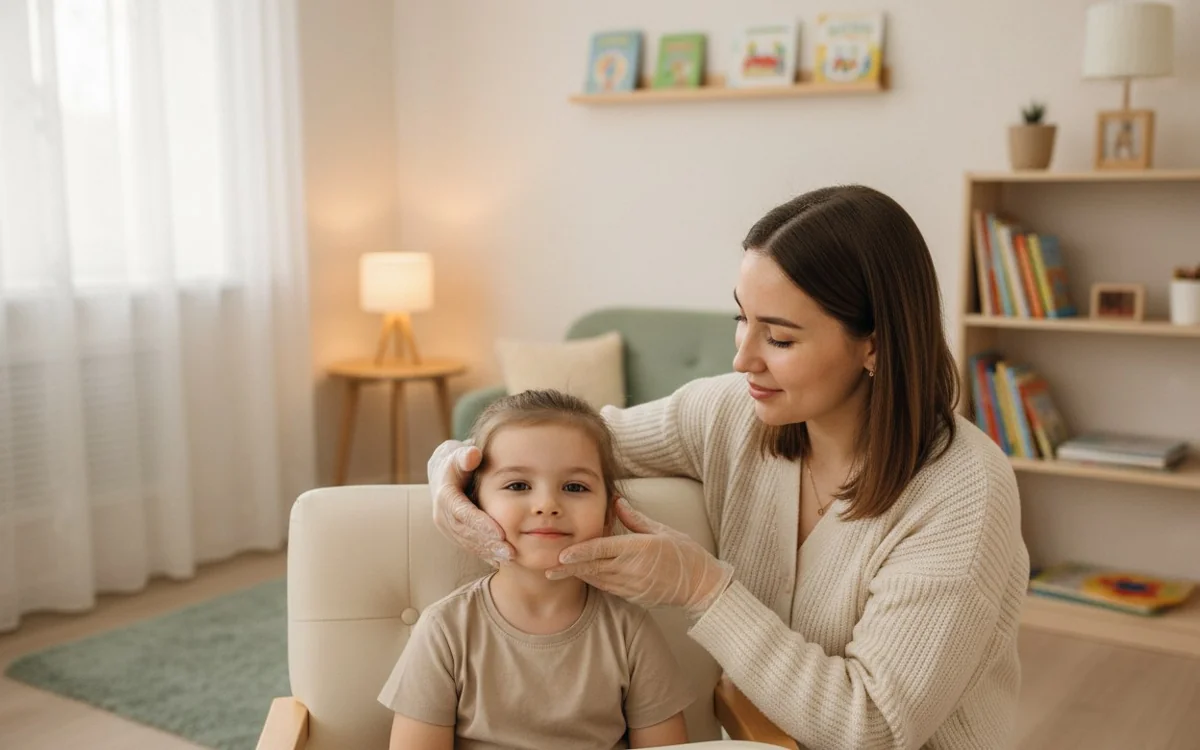
Speech therapy massage (probe and manual) is prescribed for dysarthria, when the muscles of the tongue and lips are too tense or, conversely, flaccid — the massage normalizes tone and prepares the articulatory apparatus for sound production. We perform probe massage using special speech therapy probes (balls, hooks, forks) — targeting spasmed areas of the tongue, lips, and cheeks. Manual massage involves finger kneading of the collar zone and face, relieving general muscle tension that often prevents a 3-4-year-old child from starting to speak. In our practice, massage is especially effective for dysarthria, when a child "mumbles" and has difficulty swallowing saliva — after the course, tone normalizes. Massage does not replace sessions — it works in combination with articulation exercises and sound production, and the effect is noticeable after a course of 8–10 procedures.
Neurogymnastics and logorhythmics — for brain and speech development
Neurogymnastics are exercises for movement coordination and interhemispheric interaction, while speech rhythmics combine speech, music, and movement; we use both methods to initiate speech in non-speaking children. Neurogymnastics includes cross-crawl steps (right hand — left leg), mirror drawing with both hands, balance exercises — these simple actions activate speech areas of the cerebral cortex and stimulate the emergence of first words. We build speech rhythmics on Almaty folklore and children's songs: the child claps to the beat, stomps to the rhythm of a poem, and says syllables along with movement. Speech rhythmics is especially effective in a group format — children imitate each other, and a non-speaking child joins speech activity more quickly.
Homework — How Parents Help the Specialist
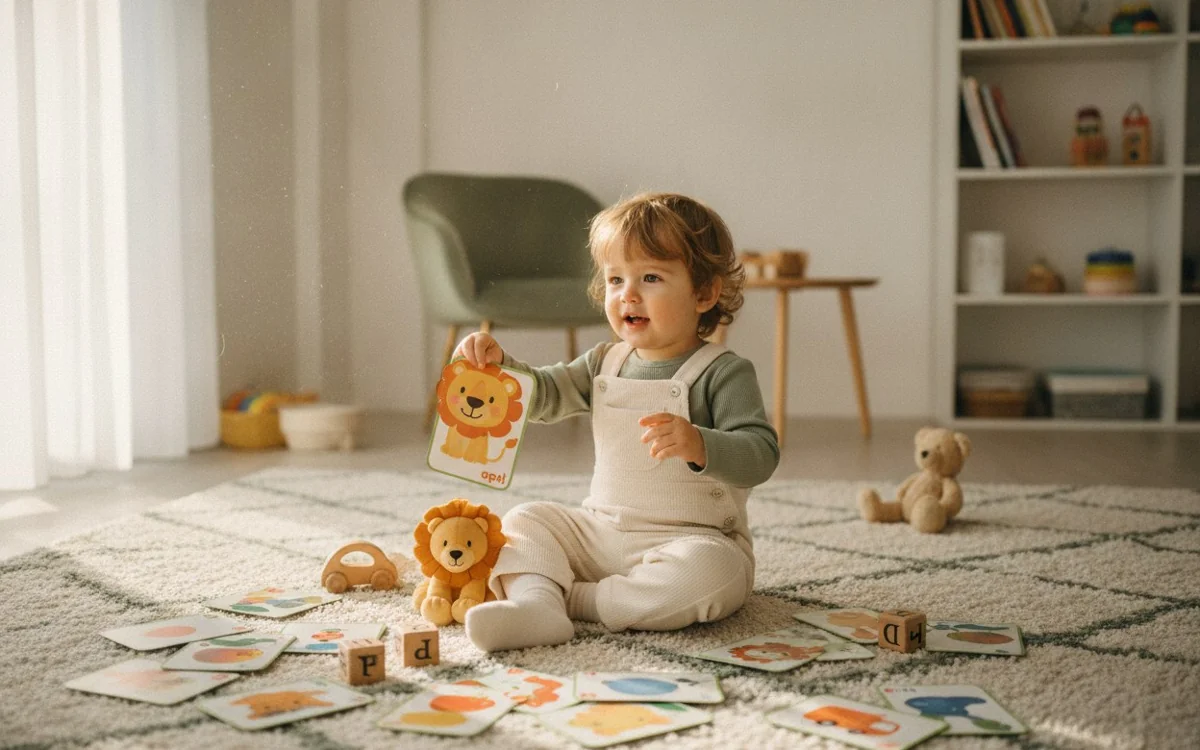
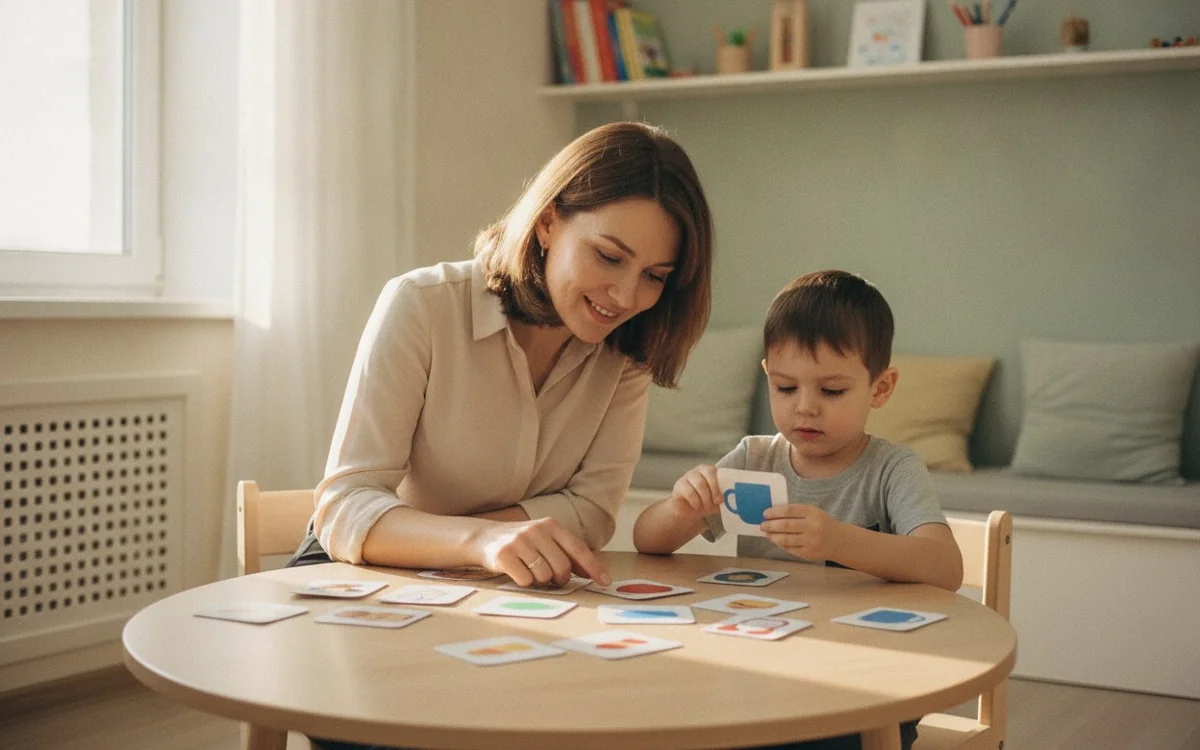
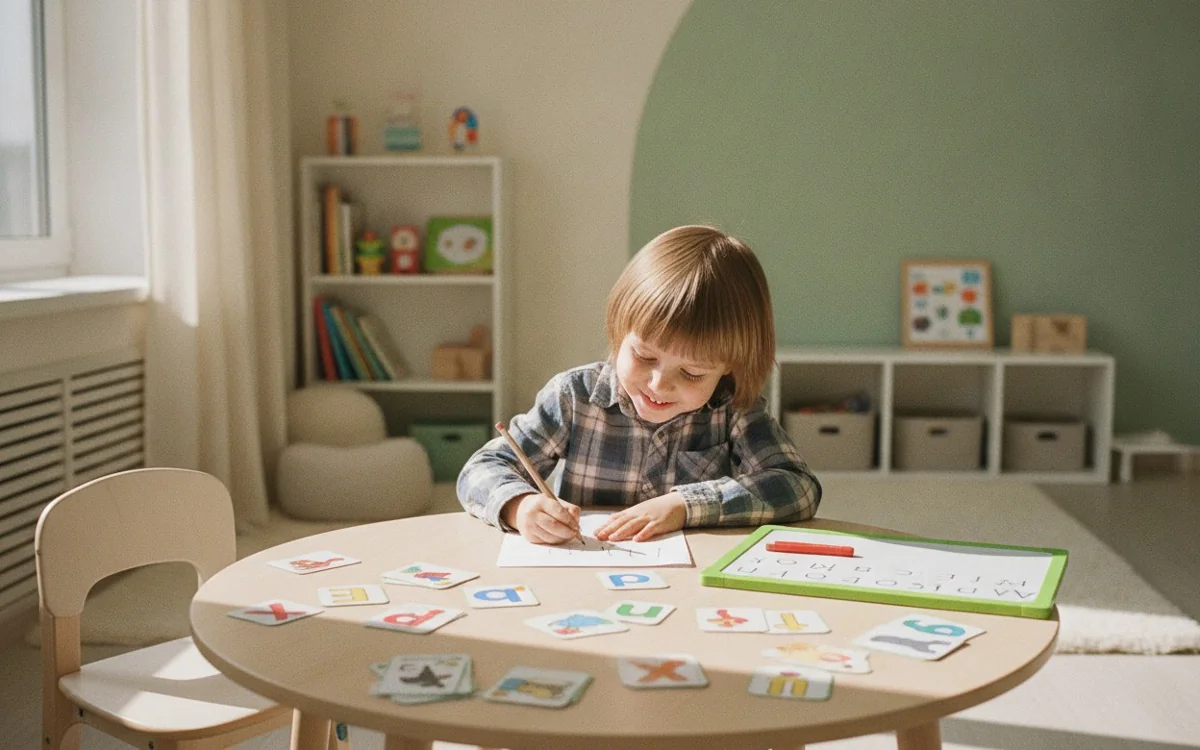
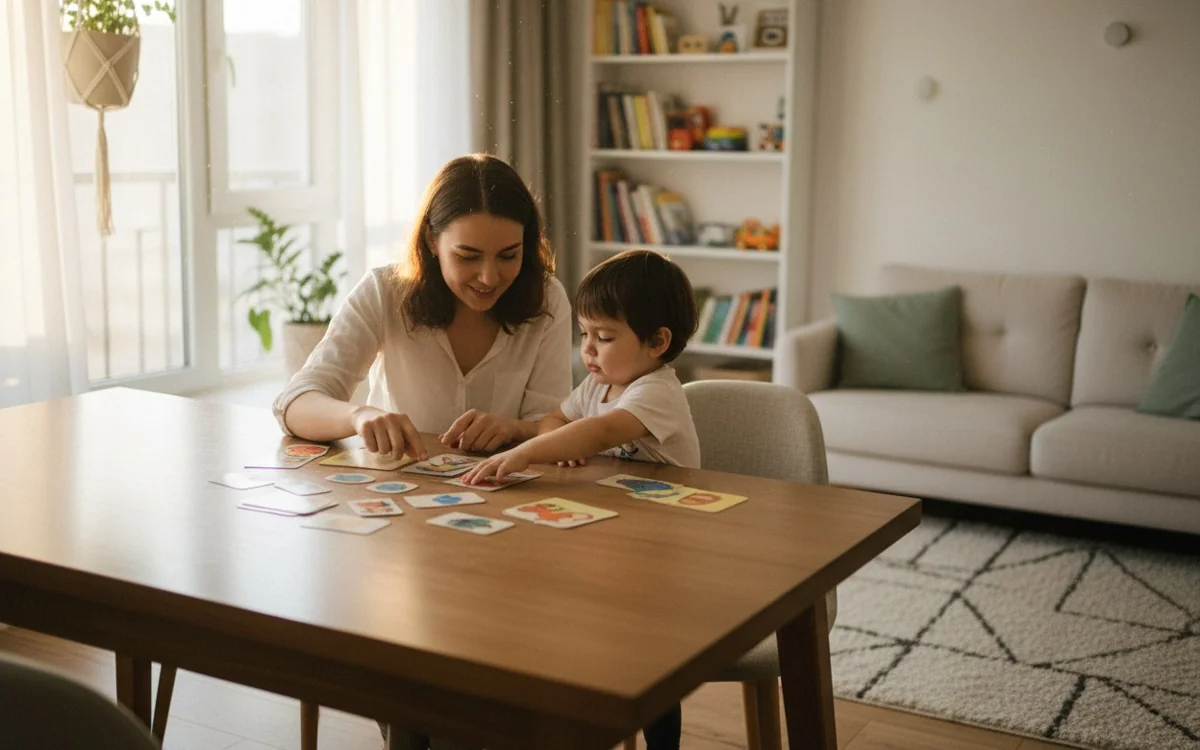
After each session, we give parents homework for 10–15 minutes a day — articulation exercises, phonemic awareness games, and reinforcement of set sounds. In Almaty families, we often encounter parents who don’t know how to do exercises correctly, so during the first consultation, our specialist demonstrates each movement on themselves and records a short video instruction. Homework includes breathing games ("blow out the candle," "blow the cotton ball off your palm") and cards for sound automation — the child names pictures containing the target sound. Regular homework reduces the overall correction course by 30–40% — a specialist cannot instill a skill in 2 hours a week without daily practice.
Which format to choose — at the center, online, or at home
Each session format has its own pros and limitations. We break down which option suits the child's age, type of disorder, and the family's logistics.
Center-based sessions — when in-person format is most effective
In-person sessions at our center are the main format for children with speech development delay, dysarthria, and stuttering, because the specialist can control articulation tactilely and use speech therapy massage. The office has all necessary probes, mirrors, and teaching aids — from speech therapy cards to breathing trainers that you can’t carry around. The child is in a specially organized environment without home distractions like TV, toys, and siblings. It’s easier for us to stabilize the head and jaw when producing complex sounds — especially in children with hypersalivation or weak tongue muscles. At the center, the child gets used to the learning environment faster — this also helps with school readiness, which requires discipline and the ability to follow instructions. School preparation includes not only teaching reading and counting but also developing phonemic awareness, coherent speech, and articulatory motor skills — all of which the speech therapist handles.
Online Format — Who Suits Remote Sessions
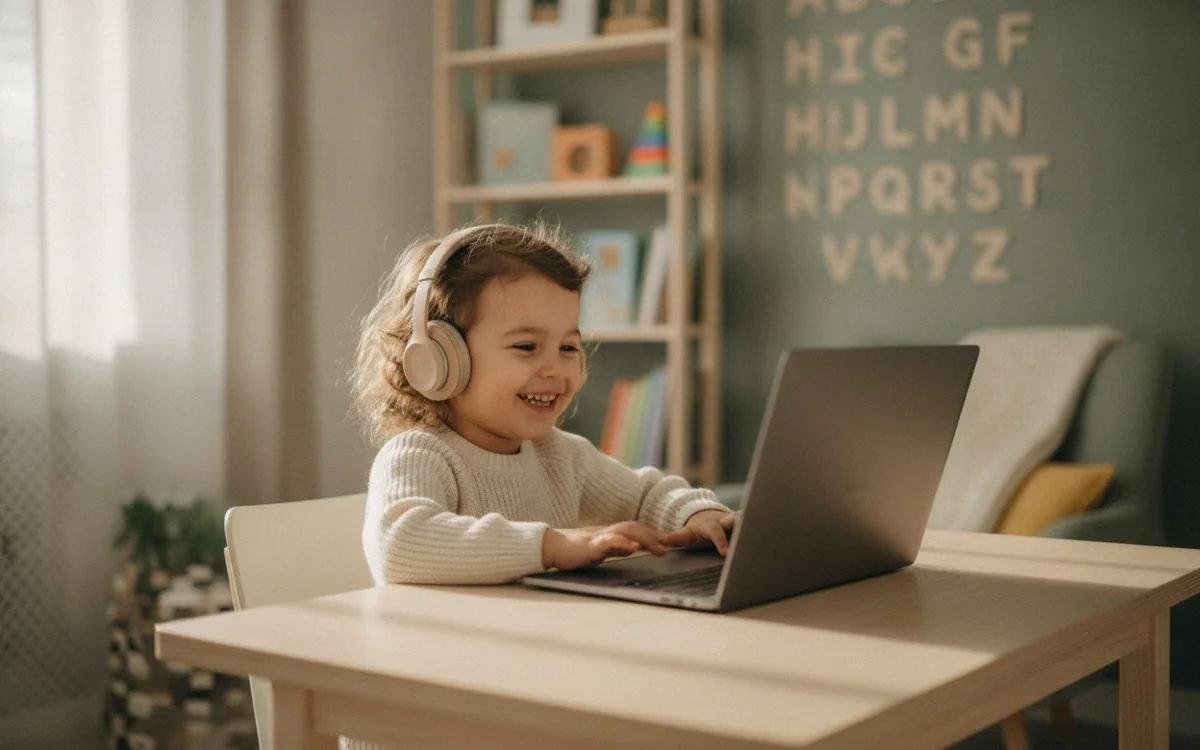
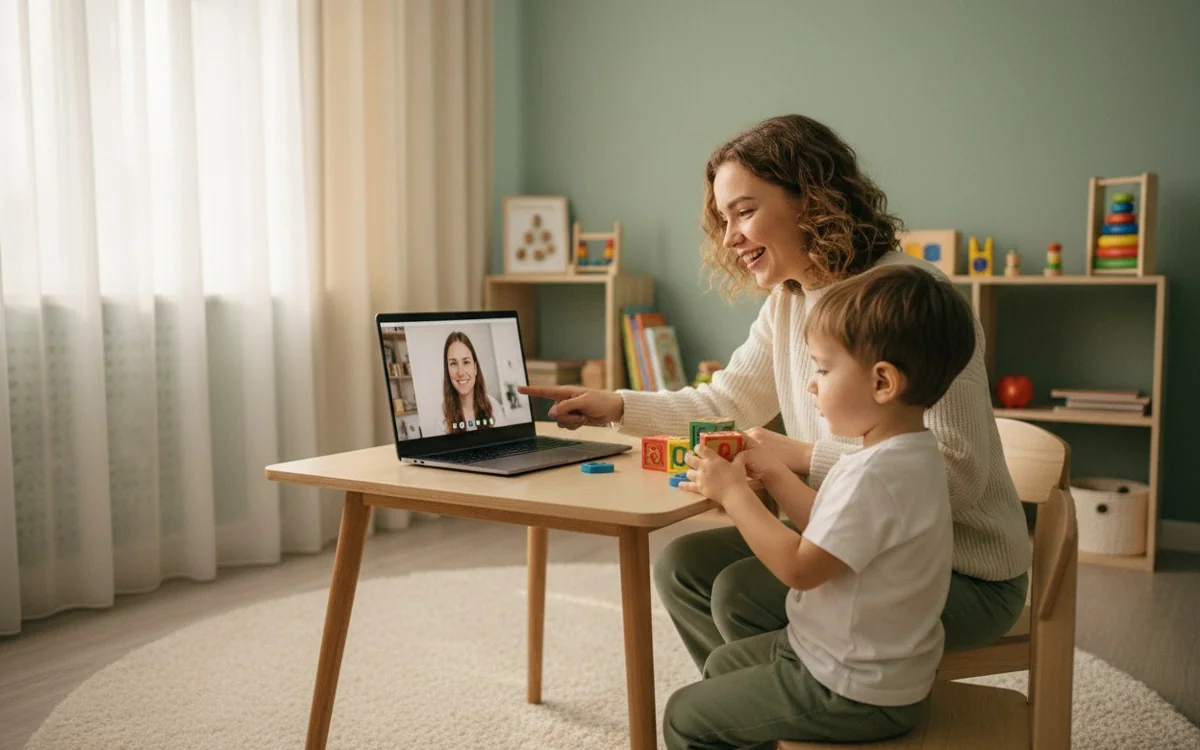
Online speech therapy — a convenient format for children aged 5 and older and adults, when it is not possible to attend the center in person, but correction of sounds or stuttering is still needed. Online sessions are suitable for children aged 5 and older with already developed speech for sound pronunciation correction, as well as for adults — for stuttering correction or speech recovery after a stroke. We use Zoom or Skype with screen sharing: we demonstrate articulation postures, give on-screen tasks, and monitor performance via camera. Our adult clients with logoneurosis note that the remote format reduces anxiety — there is no fear of the "office" or strangers nearby. For non-speaking children, the online format is largely ineffective — the specialist cannot physically help the child perform an articulation movement or conduct a massage, and without this, speech initiation in such children is nearly impossible.
Home visits across Almaty — when it's convenient for you
We make home visits across city districts for children who find it difficult to travel to the center due to transport, or for adults with limited mobility — the home visit fee is added to the session price and depends on distance (Bostandyk, Medeu, or Alatau district). The specialist brings probes, massage brushes, and some materials, but a full speech therapy massage at home is more difficult to perform — a couch and good lighting are needed. The home environment may relax the child, but sometimes hinders concentration — we recommend starting with sessions at the center, then transitioning to home visits if necessary, for example, to reinforce skills in a familiar setting.
How to choose a good speech therapist — criteria and checklist
We have compiled specific criteria to evaluate a specialist before and during sessions — so you don't waste time and money on ineffective work.
5 signs of a good speech therapist — what to look for when choosing
- Specialized education: the specialist graduated from a defectology or speech therapy faculty at a university, not from month-long retraining courses.
- Mandatory diagnosis: the first session is a speech assessment lasting 40–60 minutes, not immediate sound production without a conclusion.
- Individual correction plan: after the diagnosis, the specialist creates a written plan with stages, sequence, and estimated timelines.
- Homework: without reinforcement between sessions, progress is 2–3 times slower — a good specialist gives exercises to the parent with instructions for 5–10 minutes a day.
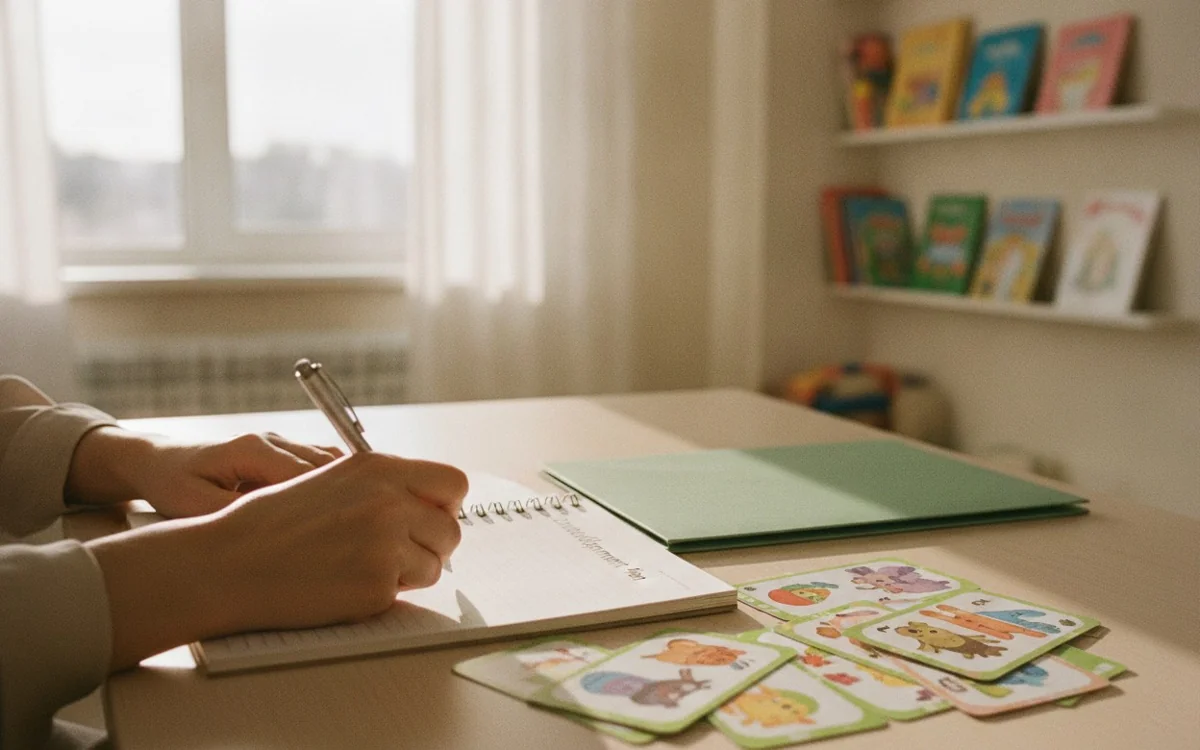
- Progress Tracking: he keeps a speech chart and shows changes every 1–2 months — new sounds, syllables, words, or phrases.
If such a specialist promises to produce all sounds in 5 sessions without a diagnosis — this is a red flag; quality work requires time and a systematic approach.
How to know if a specialist is truly helping — criteria for progress
Progress is visible through specific changes: the child starts pronouncing a sound they couldn’t before, vocabulary increases, phrases emerge, and speech comprehension improves. With dysarthria and stuttering, progress is slower — it’s normal if in a month the child learns to control their breathing or hold an articulatory posture 2–3 seconds longer. Our specialists record these micro-steps in the speech chart, compare them with baseline data every 2 months, and keep video recordings of the first sessions — parents often miss improvements because they see the child daily. If after 2–3 months of regular sessions there are no changes at all, it’s a reason to request a revision of the correction plan or consult another specialist.
Why We Are a Trusted Speech Therapy Center in Almaty
Our center employs speech therapists and defectologists with higher specialized education. We conduct comprehensive diagnostics, create an individual plan, and track progress every 2–3 months. We maintain a speech record card according to the Ministry of Health of the Republic of Kazakhstan standard, document each stage, and provide parents with written recommendations for home practice — unlike unlicensed private practitioners who work "by eye." For speech therapy massage and sound production, we use only certified probes; safety and hygiene are checked before each session. We do not promise "guaranteed recovery" — instead, we give honest timeline forecasts and regularly inform about progress.
Specific issues: stuttering, dysarthria, ASD, adults
Some speech disorders require a special correction strategy. We discuss how we at [Brand] structure work with stuttering, dysarthria, children with ASD, and adult clients.
Stuttering Correction for Children and Adults — How We Work
Stuttering correction at our center includes work on breathing, speech tempo, and the psychological component — we use logorhythmics, articulation exercises, and consultations with a neuropsychologist. In children aged 3–7, logoneurosis is often linked to fear or stress (moving, adapting to kindergarten), so in initial sessions we relieve muscle tension through relaxation exercises and Strelnikova breathing techniques. For teenagers and adults, we add work on voice modulation and a psychotherapeutic element — the client learns to control speech fluency in stressful situations (answering at the board, phone conversation). Stuttering correction in adults takes longer than in children, but lasting results are possible with regular sessions 2–3 times a week for 6–12 months.
Dysarthria — when not only speech but also movements are impaired
Dysarthria is a disorder of the pronunciation aspect of speech due to problems with muscle innervation; we work on it through speech therapy massage, articulation exercises, and neurogymnastics. Children with this disorder often have slurred speech, hypersalivation (excessive drooling), and weakness of the articulatory muscles — our task is to normalize the tone of the tongue, lips, and soft palate, and then produce sounds in a strict sequence (first vowels, then sibilants, hushing sounds, and sonorants). Probe massage according to Novikova and manual work on the cheek-tongue area alternate with passive and active articulation exercises. For this condition, massage is not an additional option but a mandatory part of correction, because without normalizing muscle tone, sound production is impossible.
Specialist for children with ASD — approach specifics
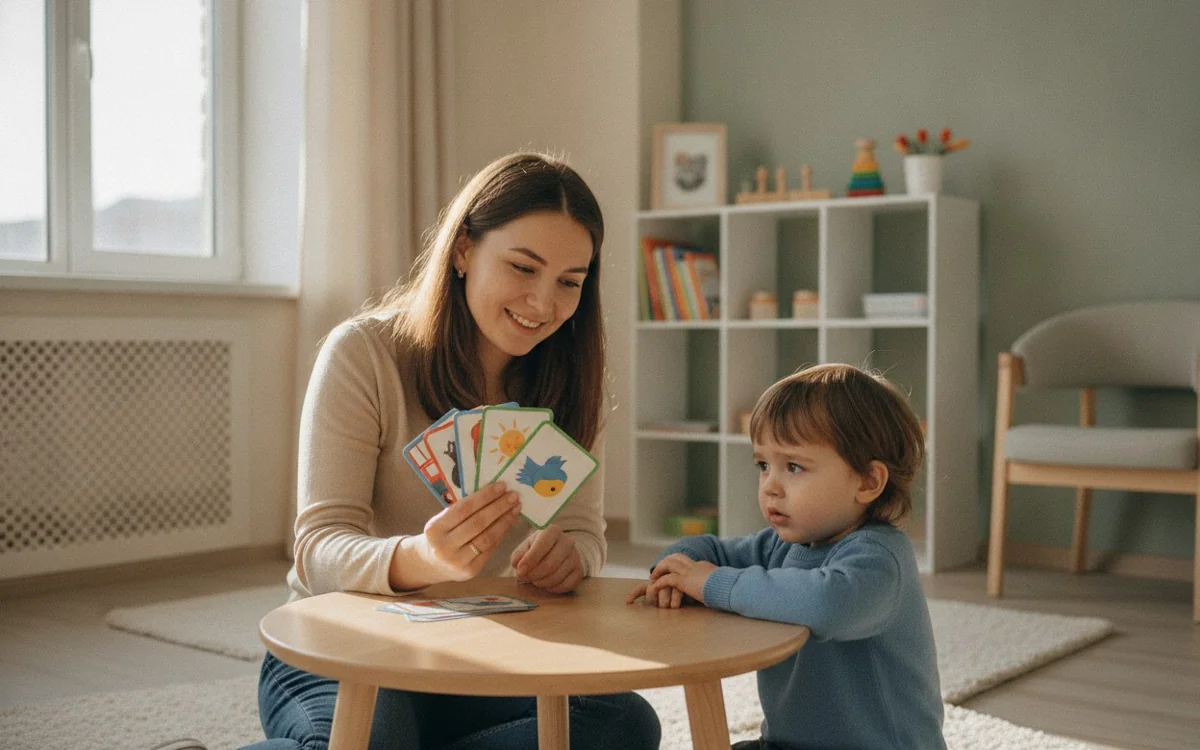
For children with ASD, we offer alternative communication (gestures, PECS cards) alongside speech stimulation — this reduces anxiety and helps initiate speech at a pace comfortable for the child. In the first sessions, we do not require a verbal response: the child can point to a card saying "want," "drink," "more" — this builds a basic communication need that later develops into vocalizations and words. We simultaneously incorporate sensory integration (games with grains, water, tactile paths) — children with ASD often have impaired sensory processing, and without normalization, a speech breakthrough is unlikely. Children with ASD process visual information better, so we actively use didactic materials and cards — this is more effective than verbal instructions.
Speech recovery after stroke and injuries in adults
The speech therapist for adults at our center helps restore speech after strokes, injuries, and for stuttering — sessions are held in-person and online. We accept adults with aphasia (speech impairment after a stroke), dysarthria, and stuttering — sessions are conducted in-person at the center or online, with a focus on restoring communication in daily life. For motor aphasia (the person understands speech but cannot speak), we start with global reading and work with a phrase constructor; for sensory aphasia (impaired comprehension), we begin with object pictures and simple instructions like "show me where the ball is." It is important for adults to attend sessions at least twice a week and complete homework — brain neuroplasticity persists at any age but requires regular training.
Conclusion
We have covered key questions: when to sound the alarm, who to see, how much it costs, and how long to wait for results. Here are the main reference points for parents and adults with speech difficulties.
Key Takeaways
- When to take your child to a speech therapist: If by age 2 there is no phrasal speech, by age 3 no expanded sentences, and by ages 4–5 the child cannot pronounce sounds or distorts the syllable structure of words — this is a reason to consult.
- How to choose a specialist: Pay attention to education (defectology or speech therapy), experience with specific disorders (dysarthria, alalia, stuttering), and the availability of diagnostics before starting sessions.
- Session costs: Prices in the city range from 3,000 to 10,000 tenge per individual session, depending on the specialist's qualifications and format (in-person/online).
- How much time is needed for results: Correcting one sound typically takes 3–6 months of regular sessions (2 times per week), while correcting complex disorders (alalia, stuttering) may require a year or more.
- Who Your Child Needs: Speech therapist — correction of sound pronunciation and speech; defectologist — for children with developmental delay, ASD, intellectual disabilities; neuropsychologist — for issues with attention, memory, and behavioral regulation.