







·
Speech therapist for toddlers in Almaty — what's important to know
When a child at one to two years old is just beginning to master speech, it is difficult for parents to distinguish normal development from a delay. At our center, we work with children from 1.5 years old and see: early help from a speech therapist for toddlers in Almaty often shortens the path to clear speech by two to three times. In this article, I will tell you how to distinguish normal development from warning signs, how we initiate speech in non-speaking children, and what you can do at home to maximize the benefits of sessions.
When to take a toddler to a speech therapist: speech norms from one to three years old
Parents often come with the question: "Our child is 2.5 — he only says 'mama' and 'give me,' is that normal?" In some cases, this is a developmental variant; in others, it's a sign that it's time to sign up for sessions with a speech therapist for 2-year-olds. To help you navigate, I've compiled a table of key speech milestones by age.
Speech Norms and Warning Signs Table
| Age | Speech development norms | Warning Sign |
|---|---|---|
| 1 year | 3–10 simple words (mama, papa, give, yum-yum); understands simple requests | No babbling or cooing; does not respond to name |
| 1.5 years | 10–20 words; points to body parts; follows requests like "bring the ball" | Vocabulary of fewer than 5 words; does not point at objects |
| 2 years | 50–200 words; simple phrases of 2 words ("mom give"); understands questions "where?", "who?" | No phrases; only isolated sounds; does not understand directed speech |
| 2.5 years | Phrases of 3–4 words; asks "what is this?"; uses pronouns "I", "my" | Only speaks memorized phrases from cartoons; speech is unintelligible to others |
| 3 years | Complex sentences (5–7 words); knows colors, shapes; talks about past events | No connected speech; does not answer questions; substitutes sounds or rearranges syllables |
Signs of speech delay in early childhood
We often hear from grandparents: “They’ll start talking when the time comes, my older one was silent until three.” But statistics say otherwise: 15–20% of young children show signs of speech delay, and without intervention, problems worsen by school age. Here’s what I recommend paying attention to before visiting a specialist.
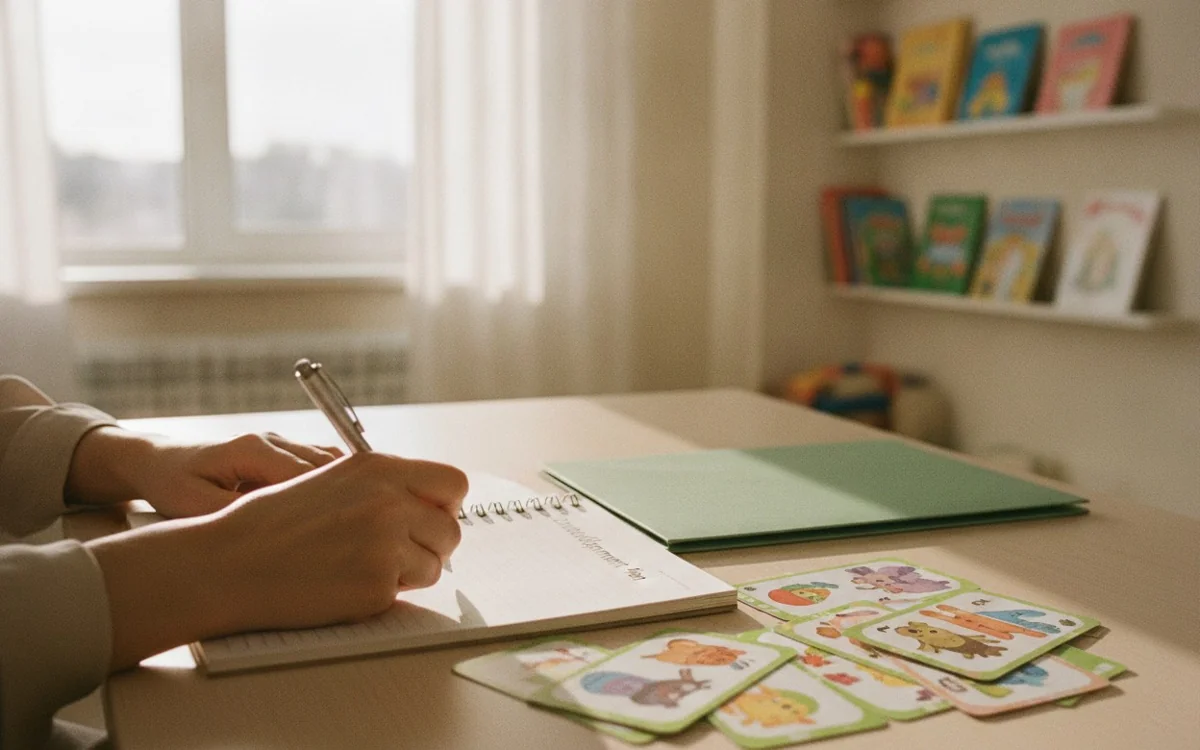
If a child at one year does not respond to sounds, does not babble, and does not try to imitate adult intonations, this is a reason to see a neurologist and a speech therapist. By one and a half years, a warning sign is the absence of a pointing gesture: the child does not point a finger at an object of interest but pulls the adult's hand. At two years, concern should arise if the child does not understand simple requests ("bring the cup," "show where the ball is") or their vocabulary consists of 3–5 words. At three years, if phrases are short and grammatically incorrect ("mom go" instead of "mom, let's go") or speech is so unclear that even the mother understands only half of what is said. Tip: keep a speech development diary — record new words and phrases every 2–3 weeks. If there is no growth in a month, this is a serious reason to consult a speech therapist for a 3-year-old.
Why It's Important to Start Early: Neuroplasticity and Sensitive Periods
A child's brain in the first three years of life develops at an enormous speed: up to 700 new neural connections are formed every second. This period is called sensitive — it is now that speech centers are laid, and any intervention has the maximum effect. The earlier we start classes, the faster the correct neural pathways are formed.
In practice, this looks like: a 2.5-year-old child with a speech delay, with regular sessions 2–3 times a week, catches up to peers in 3–6 months. If you start at 4–5 years, correction may take a year or more, plus secondary issues arise — problems with reading, writing, and behavior. That's why at our center we accept children from 1.5 years old: the earlier a speech therapist for the youngest starts working, the gentler and faster the correction proceeds. It's important to understand: early start does not guarantee instant results, but it significantly increases the chances of full speech recovery by school age.
How We Help Little Ones Start Speaking
When a non-speaking child aged 2–3 is brought to me, I don't start with sound production — it's pointless without a desire to speak. First, we spark an interest in communication, teach imitation, and develop speech comprehension. For this, we use a set of methods proven effective with hundreds of children in Almaty.
Speech initiation methods: from sound imitation to first phrases
Work with non-speaking children is based on the principle of "from simple to complex." We start not with words, but with sound imitations: how a cow says ("moo"), how rain drips ("drip-drop"), how a car goes ("beep-beep"). This reduces the fear of speech — the child understands that speaking is easy and fun. At the same time, we actively use gestures and facial expressions to reinforce each new word with a visual image.
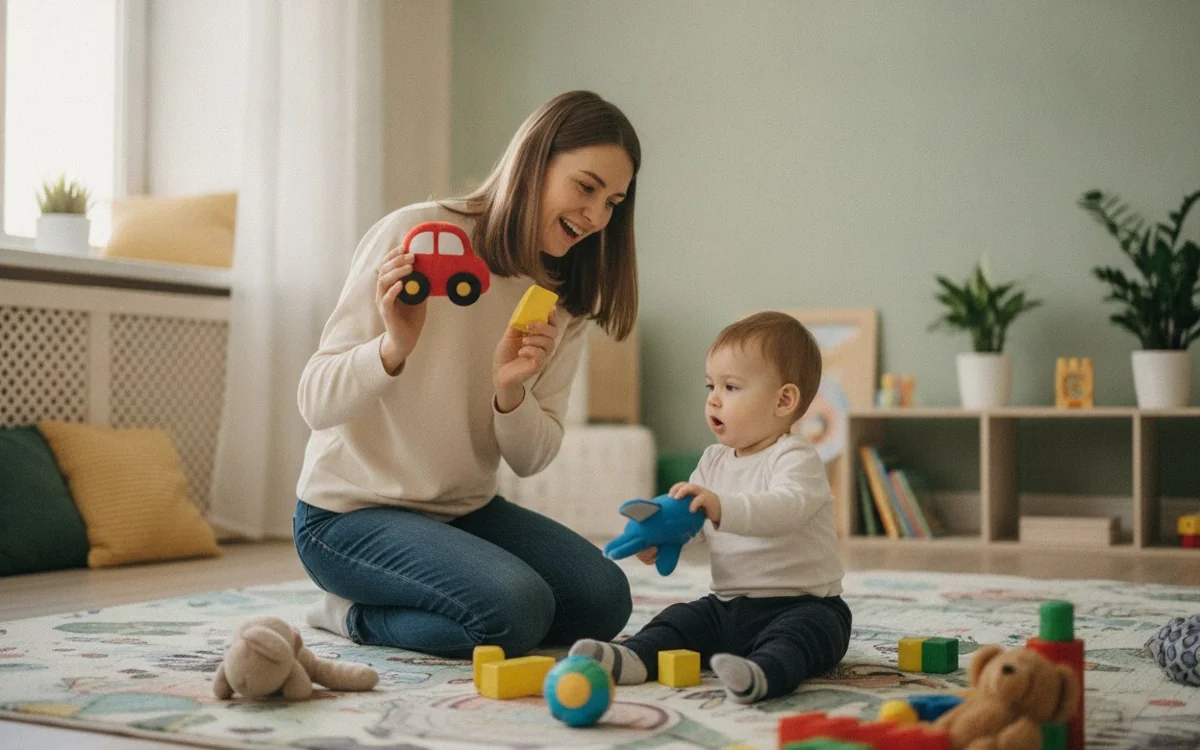
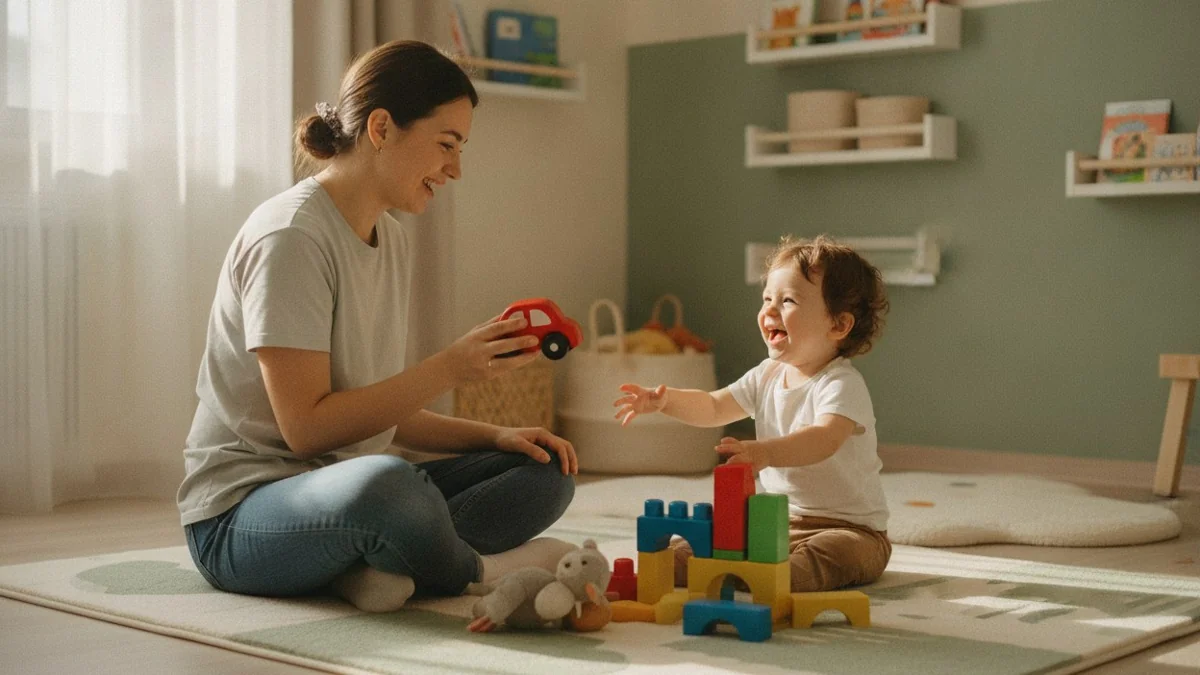
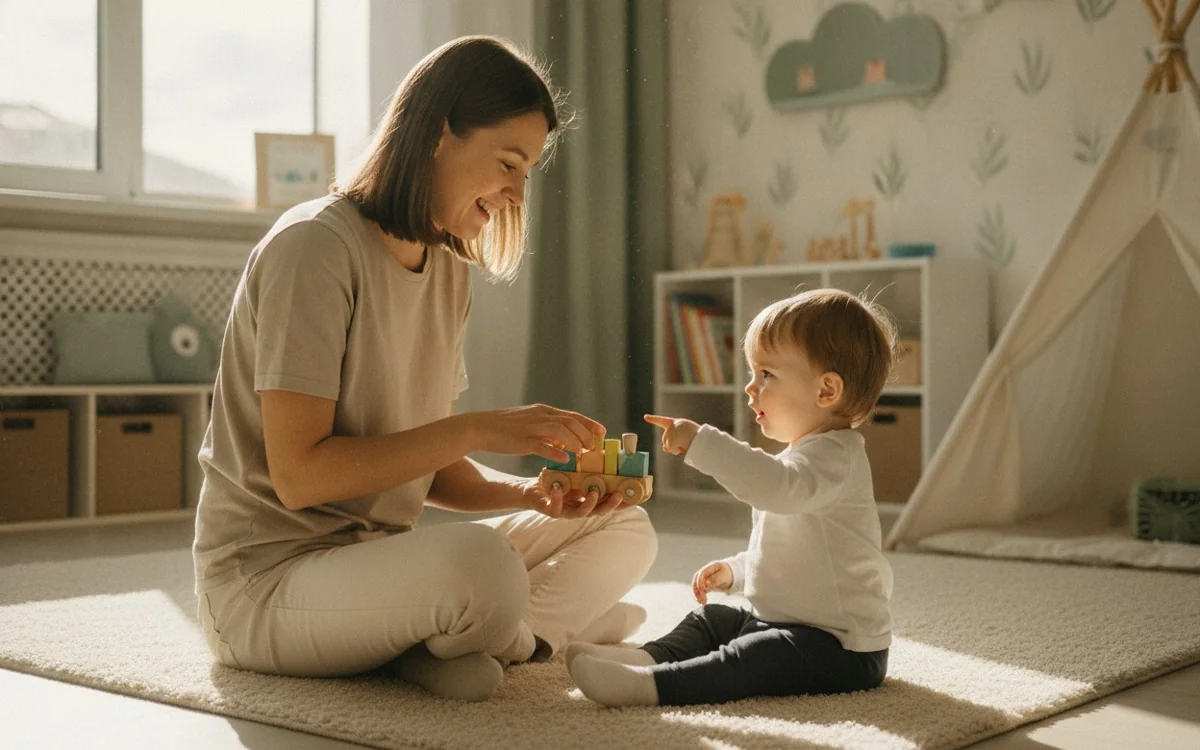
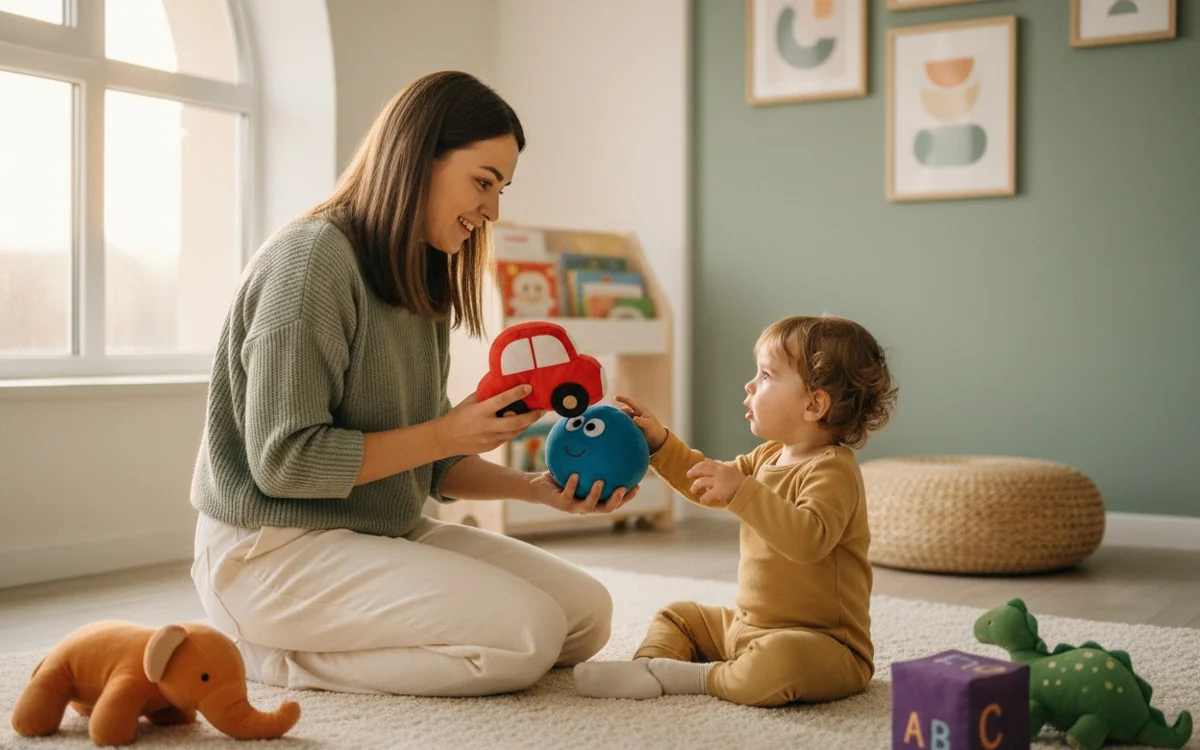
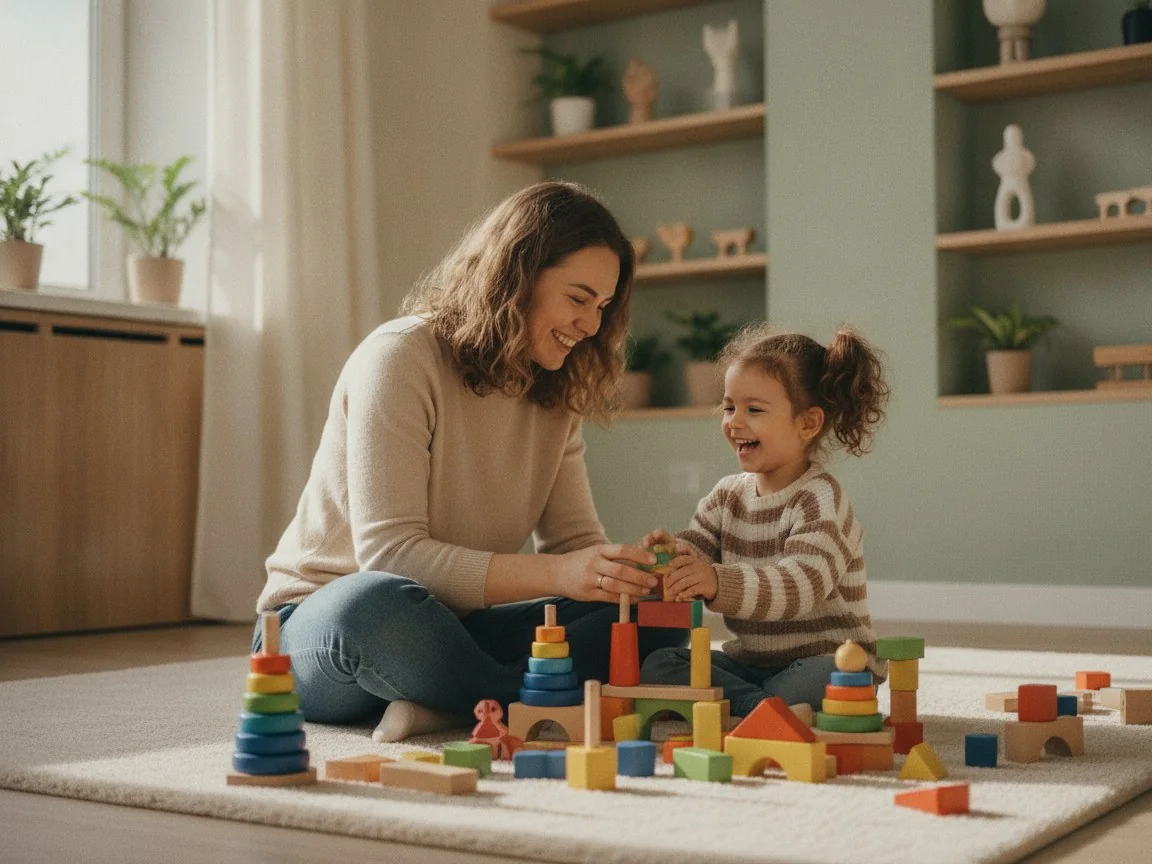
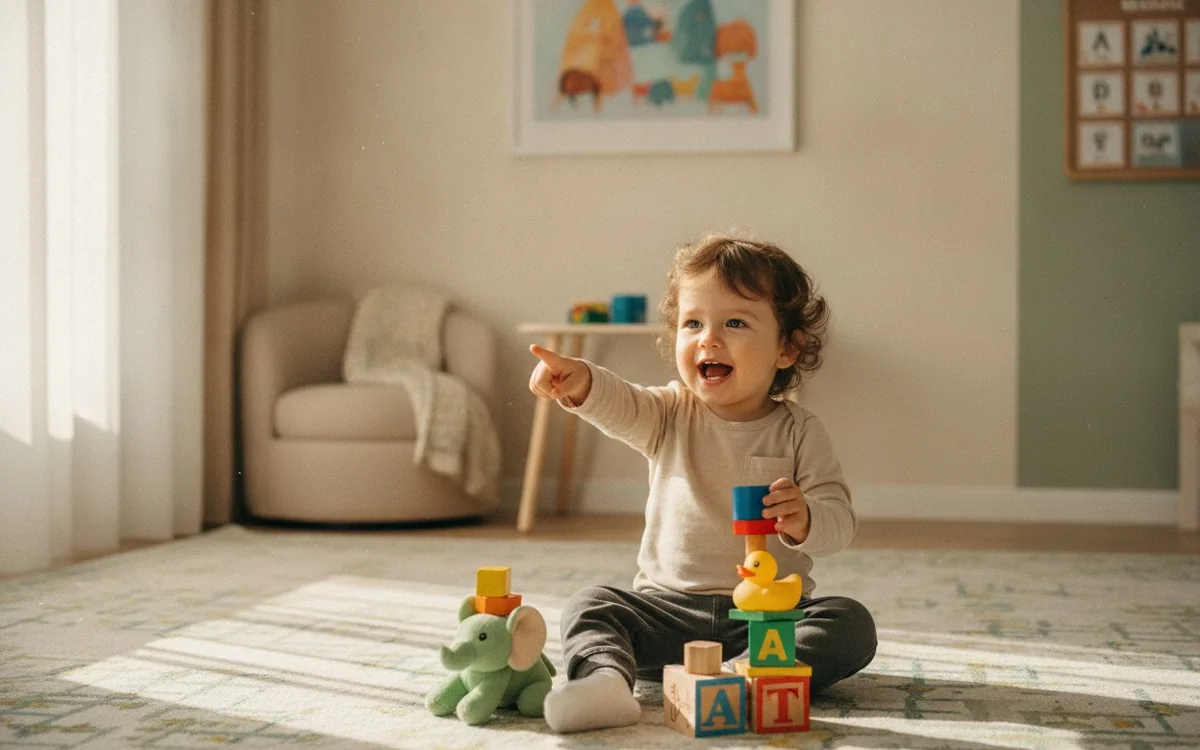
The second stage is introducing simple phrases. Once the child has mastered 10–15 sound imitations, we teach them to combine them: “give bee-bee,” “kitty nom-nom.” Sessions with a speech therapist for 2-year-olds are conducted exclusively through play: we roll a ball, feed toys, build block towers, and verbalize each action. An important principle is not to pressure or demand repetition. If the child doesn’t want to speak, we verbalize for them, gradually prompting a response. For example, we hold out a toy and wait: if the child reaches silently, we say “here” and give it, but next time we pause a bit longer. On average, speech initiation takes 2–4 months of regular sessions, but the timeline depends on the starting level and consistency.
Speech therapy massage and articulation exercises through play
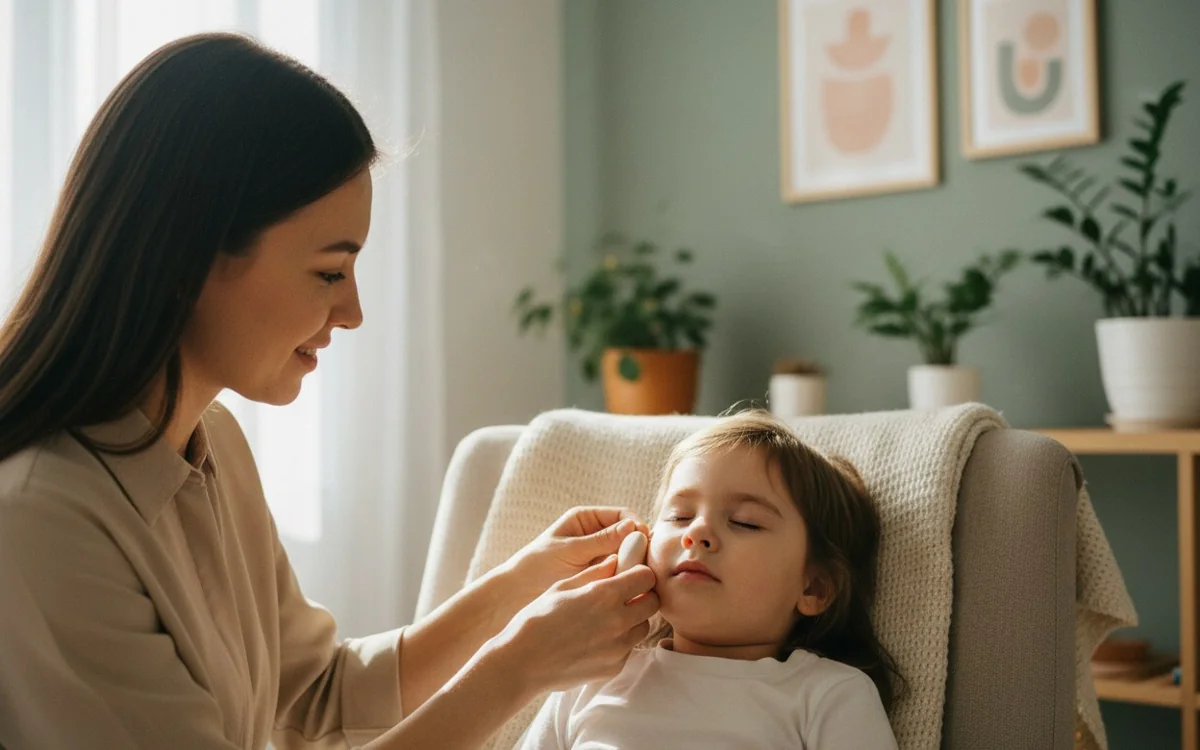
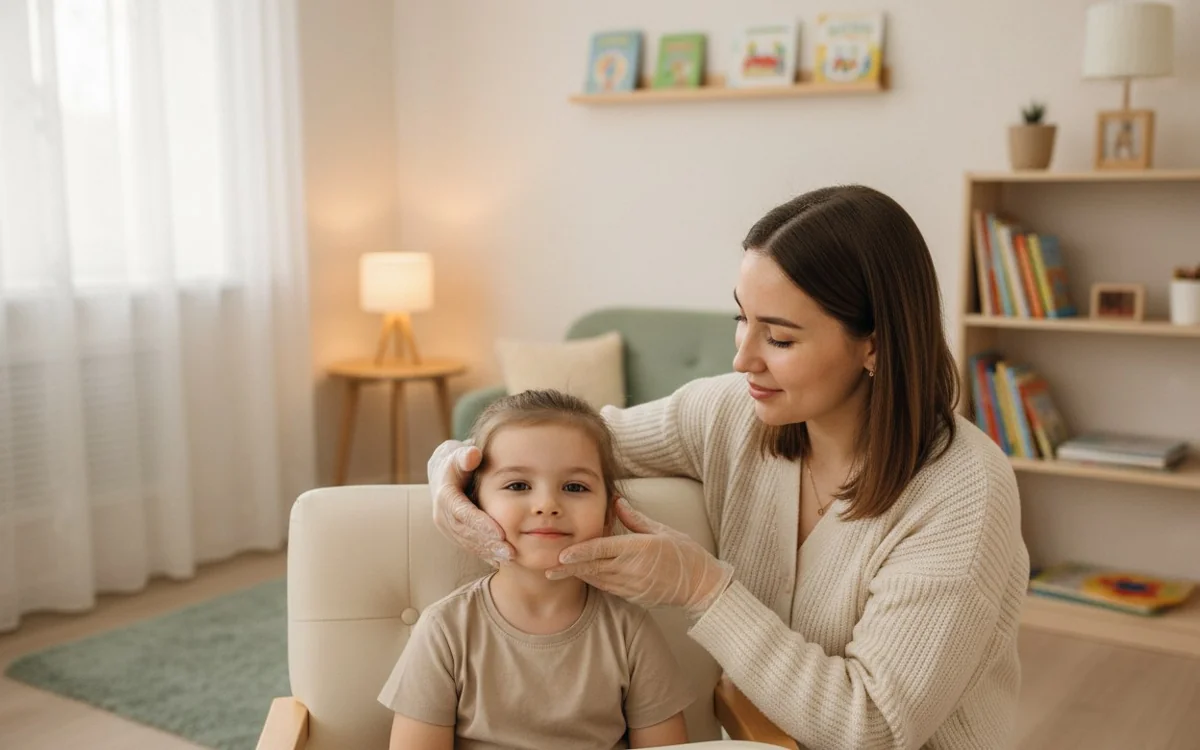
Many parents are alarmed when they hear "speech therapy massage" for a toddler—they imagine painful procedures. In reality, for children aged 2–3, it's a gentle stimulation of the facial, lip, and tongue muscles through play: we use special probes, massage balls, and sometimes just a mother's finger wrapped in gauze. Massage helps if the child has weak articulatory muscle tone—they can't hold a smile or lift their tongue up.
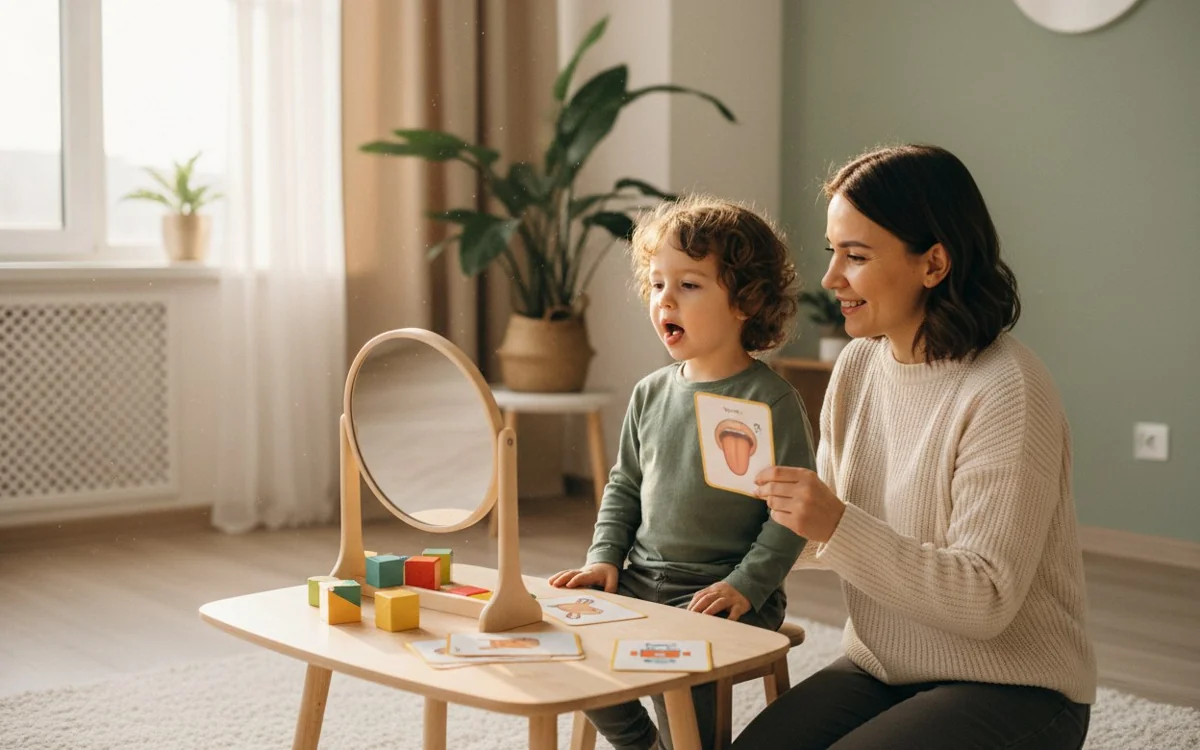
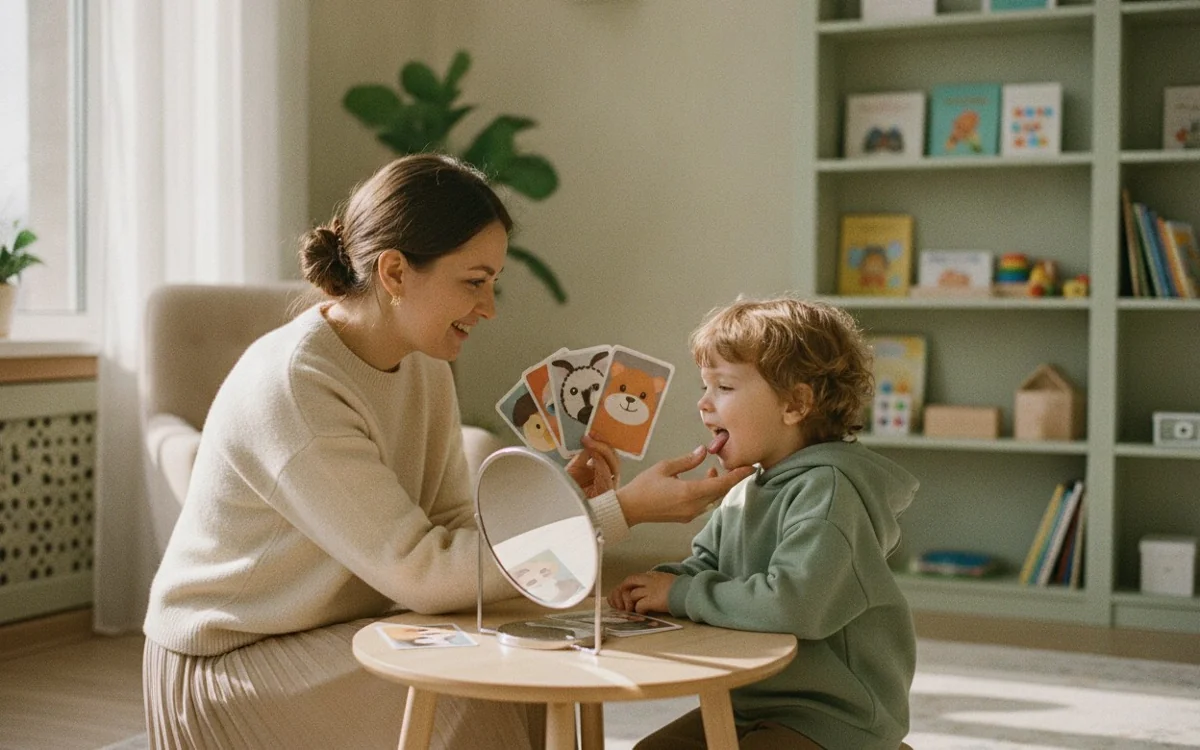
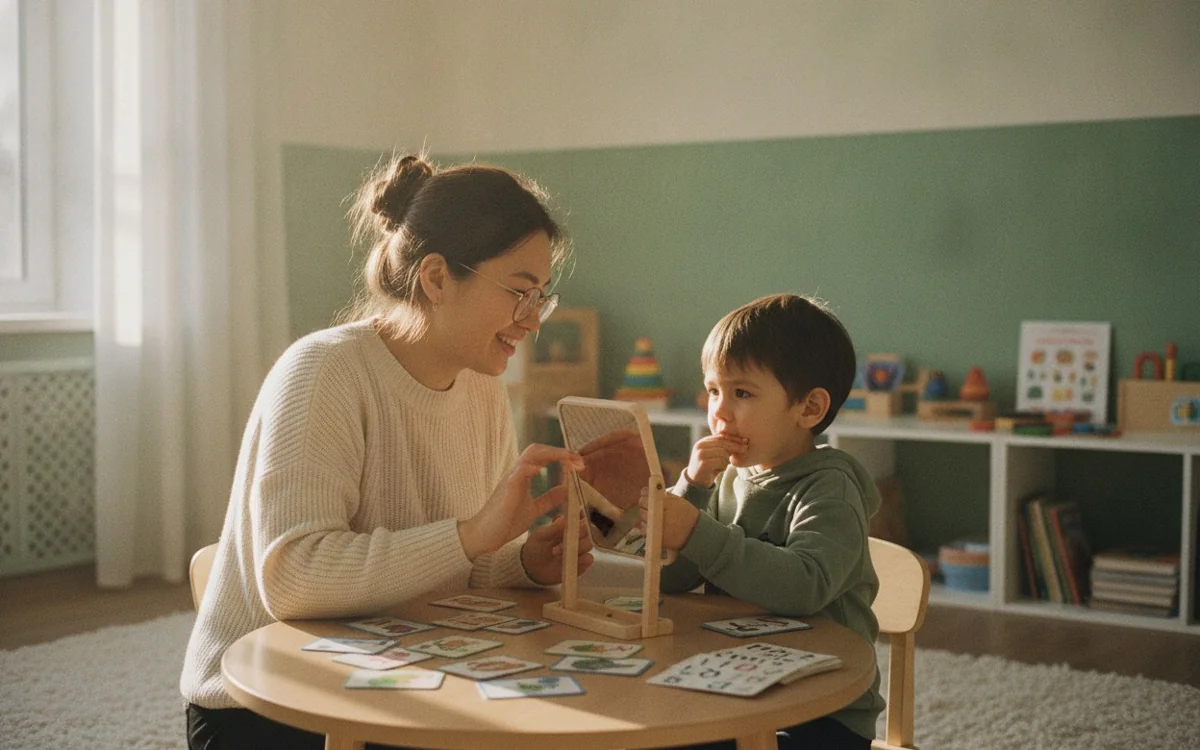
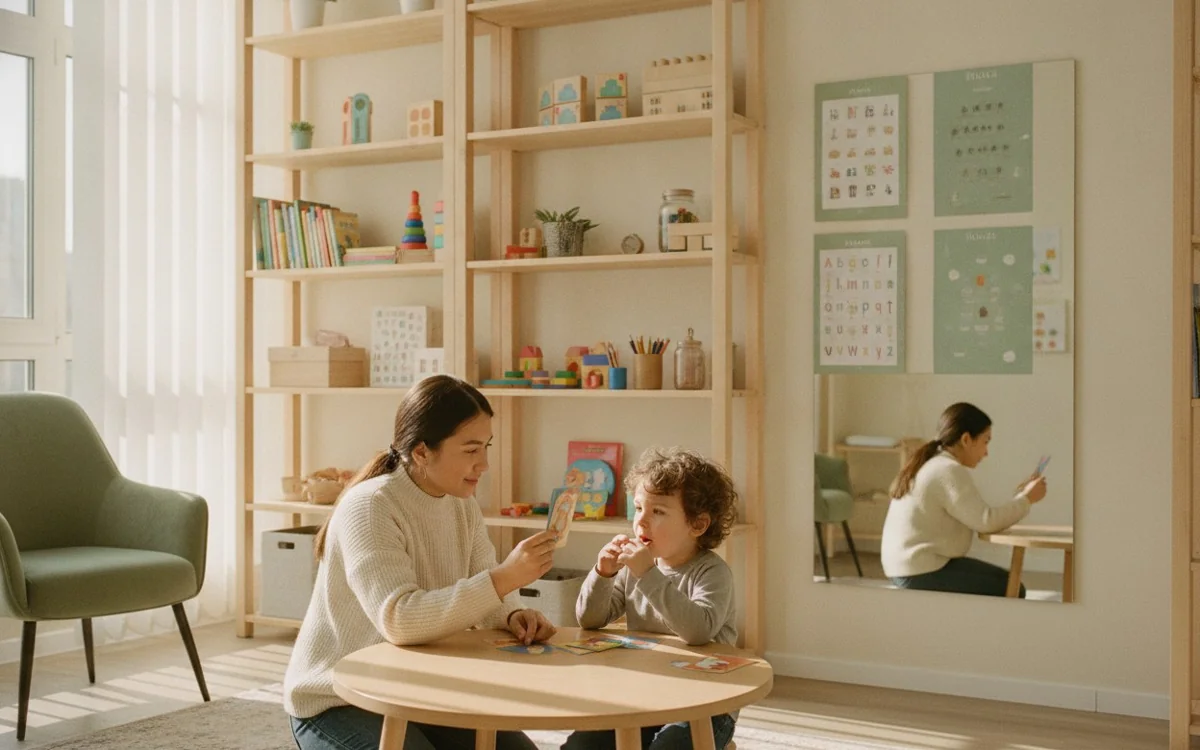
Articulation gymnastics for toddlers is not boring exercises in front of a mirror, but fun stories about a little tongue that went for a walk: "the tongue went on a swing (up and down), then drank tea from a cup (curl the tongue into a boat shape), then brushed its teeth (run the tongue along the upper teeth)." Each exercise takes 5–7 minutes and is repeated 3–4 times per session. We do the gymnastics in front of a mirror so the child can see their face and the speech therapist's face — this develops kinesthetic control. Tip: do the gymnastics together at home in front of a large mirror, turning it into a game of "who can make a funnier face." This strengthens muscles and creates a positive association with speech exercises.
Sensory stimulation and sound imitation: how the "hand-brain-speech" connection works
Speech does not exist separately from the body — it is closely connected to fine motor skills, tactile sensations, and the vestibular system. Therefore, when working with toddlers, we always include sensory stimulation: sorting grains, playing with kinetic sand, drawing with finger paints, splashing in water. Each action is accompanied by sound imitation: "splash-splash" in water, "crunch-crunch" on paper, "drip-drip" on the table with fingers.
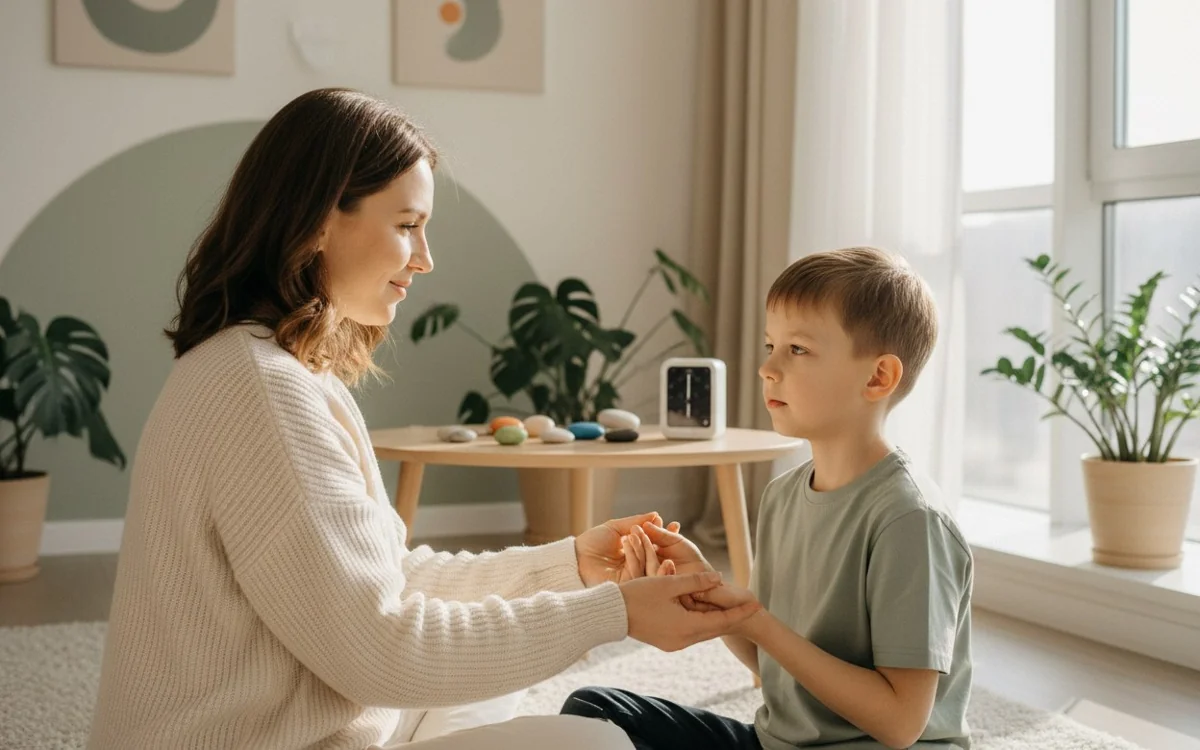
Research shows that activating tactile receptors in the palms stimulates the speech zones of the cerebral cortex. Therefore, in every session, we give the child something to touch, squeeze, or tap. For example, we sculpt a bun from dough and say "nom-nom" — the child not only develops motor skills but also remembers the sound image of the action. A speech therapist for 2-year-olds always uses bright tactile aids: rough letters, velvet cards, bags with different fillings. This creates multiple neural connections that accelerate speech onset.
Speech rhythmics for the youngest: movement + speech + rhythm
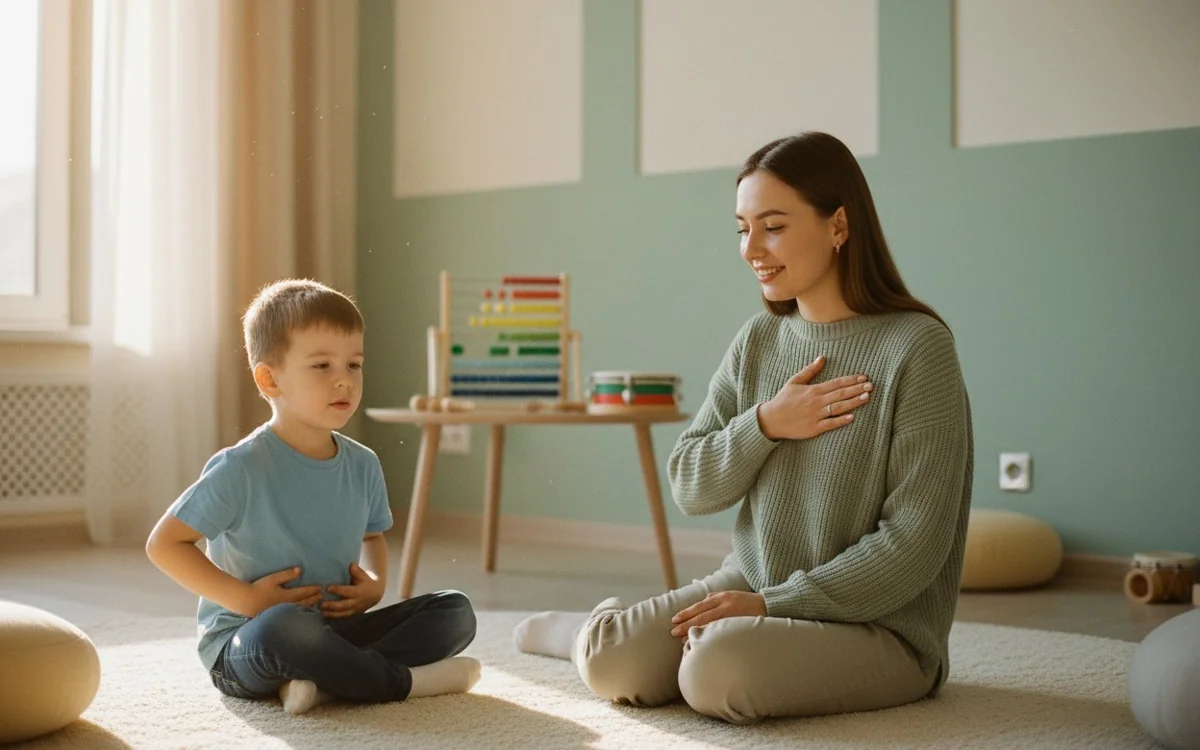
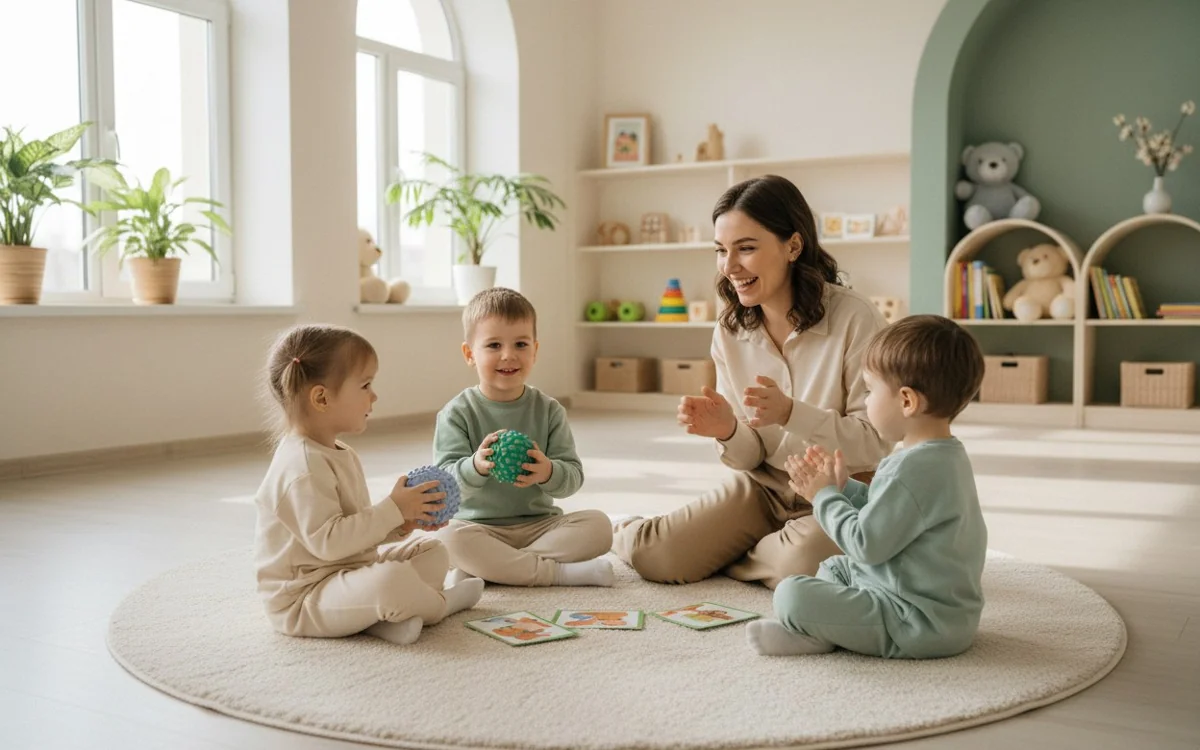
Logorhythmics is one of the most effective methods for children with speech delay, especially at ages 2–4. It combines movement, music, and words: we clap to the rhythm of poems, stomp along to songs, and imitate animals to music. Rhythm helps the brain structure information, while movements synchronize the hemispheres. For toddlers who are not yet speaking in phrases, logorhythmics becomes a bridge to active speech.
In our sessions, we use simple nursery rhymes and songs: "The clumsy bear walks through the forest" — the child stomps their feet and growls; "Magpie-crow cooked porridge" — they bend their fingers and say "give." Importantly, logorhythmics takes place in a group or in a pair with the mother — this reduces anxiety and boosts motivation. After 2–3 months of regular logorhythmics sessions, children begin not only to repeat movements but also to sing along, and later to pronounce individual phrases. We conduct such sessions for children from 1.5 years old, and this often becomes the first step toward the emergence of meaningful speech.
How speech therapy sessions go for ages 2–3–4
Parents often ask: "How can a 2-year-old sit through a 45-minute session?" The correct answer is — they can't. We don't work on a school model. Speech therapy sessions for 2-year-olds last 20–30 minutes, and for three-year-olds up to 40 minutes, but with a mandatory change of activity every 5–7 minutes. The entire process is built on play, and the child often doesn't realize they are learning.
First meeting and diagnostics: what we check in a toddler
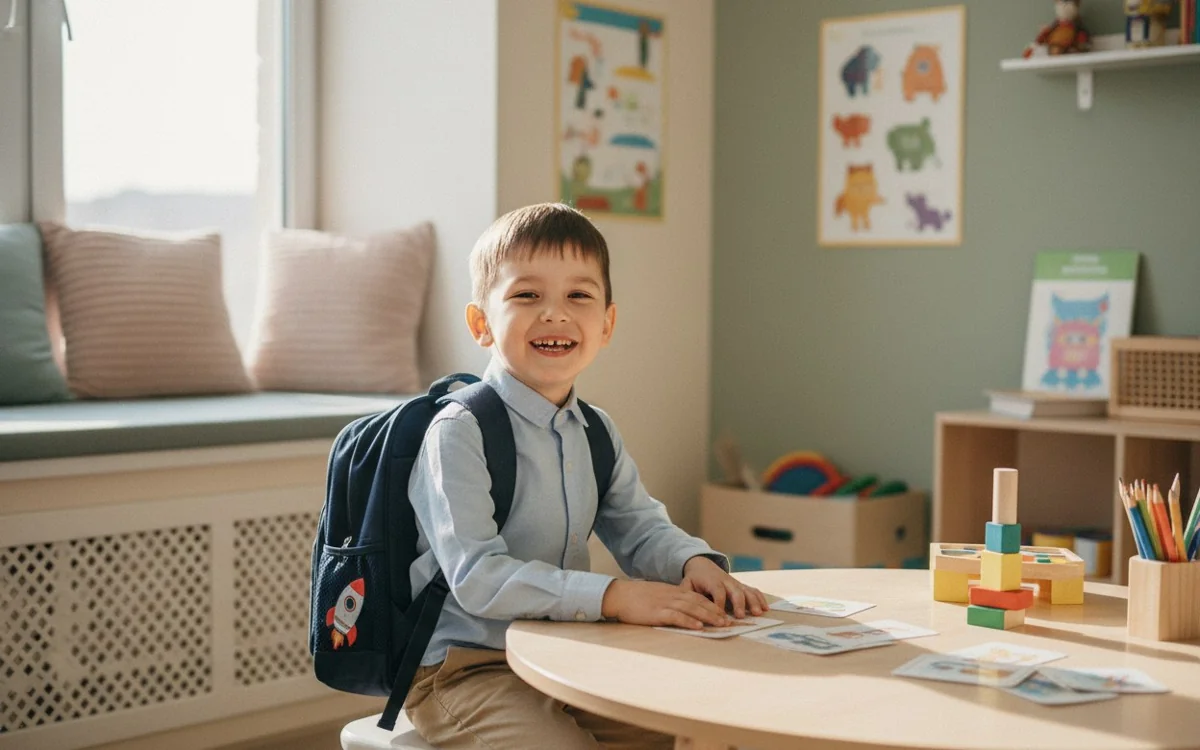
The first visit to a speech therapist for toddlers is not an exam, but a game. We don't sit the child at a table and demand "say the R sound." Instead, we play together with mom or dad: build a tower of blocks, roll a toy car, look at pictures in a book. In 30–40 minutes, I assess:
- Speech comprehension: does the child follow simple requests ("give the ball", "show me where the bear's nose is").
- Active vocabulary: what words or sound imitations does the child use, are there any phrases.
- Articulatory apparatus: mobility of lips, tongue, and lower jaw.
- Auditory perception: does the child distinguish sounds (e.g., "beep-beep" and "moo-moo").
- Play skills: can they imitate actions, is there interest in toys.
After the assessment, I explain to parents in detail what we see and give recommendations: whether regular sessions are needed, how many times a week, and what exercises can be done at home. If related issues are identified (hearing loss, neurological disorders), we refer to specialized professionals. The initial assessment is free, and I recommend all children have it at least once every 2 years — even if you think everything is fine.
Duration and format of sessions for toddlers: 20 to 40 minutes
The optimal session duration depends on the child's age and condition. For children aged 1.5–2 years, we conduct 20-minute sessions: 5 minutes for warm-up and articulation exercises, 10 minutes for the main game (sensory stimulation, sound imitation), 5 minutes for logorhythmics or relaxation. For children aged 2–3 years, the session lasts 30 minutes, and for ages 3–4, 35–40 minutes.
The format is individual because each child comes with their own pace and interests. We don't force them to sit at a table: if the child wants to play on the floor, we work on the floor; if they need to run, we incorporate movement into the lesson. Importantly, a parent must participate in the session — mom or dad sits nearby, helps, and repeats the exercises. This not only calms the child but also teaches parents the right techniques for home practice. Speech therapy sessions for ages 3–4 can already take place without a parent present if the child is ready for independent work.
The role of parents: what to do at home between sessions
A speech therapist is not a magician who can fix speech in one session. 80% of success depends on what happens at home between sessions. That’s why at each session we give parents specific weekly tasks: 2–3 articulation exercises, a list of words for sound imitation, a sensory game. It’s important to do them regularly but briefly — 5–10 minutes a day, preferably at the same time.
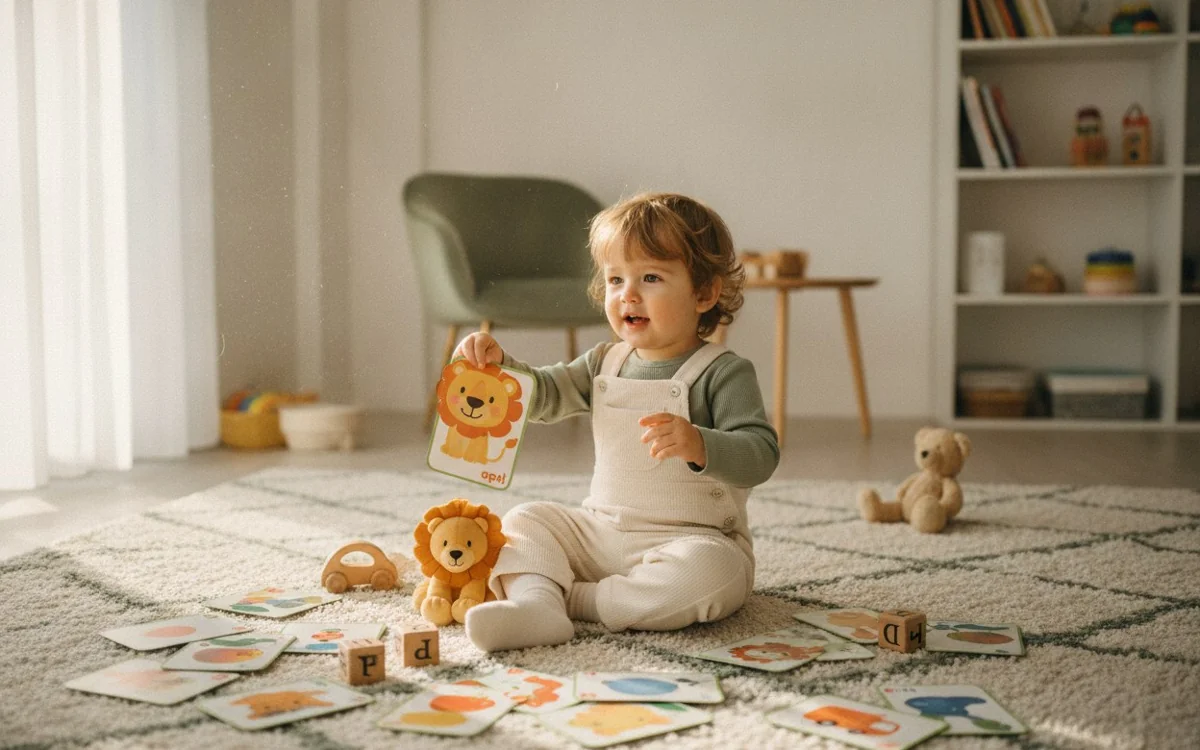
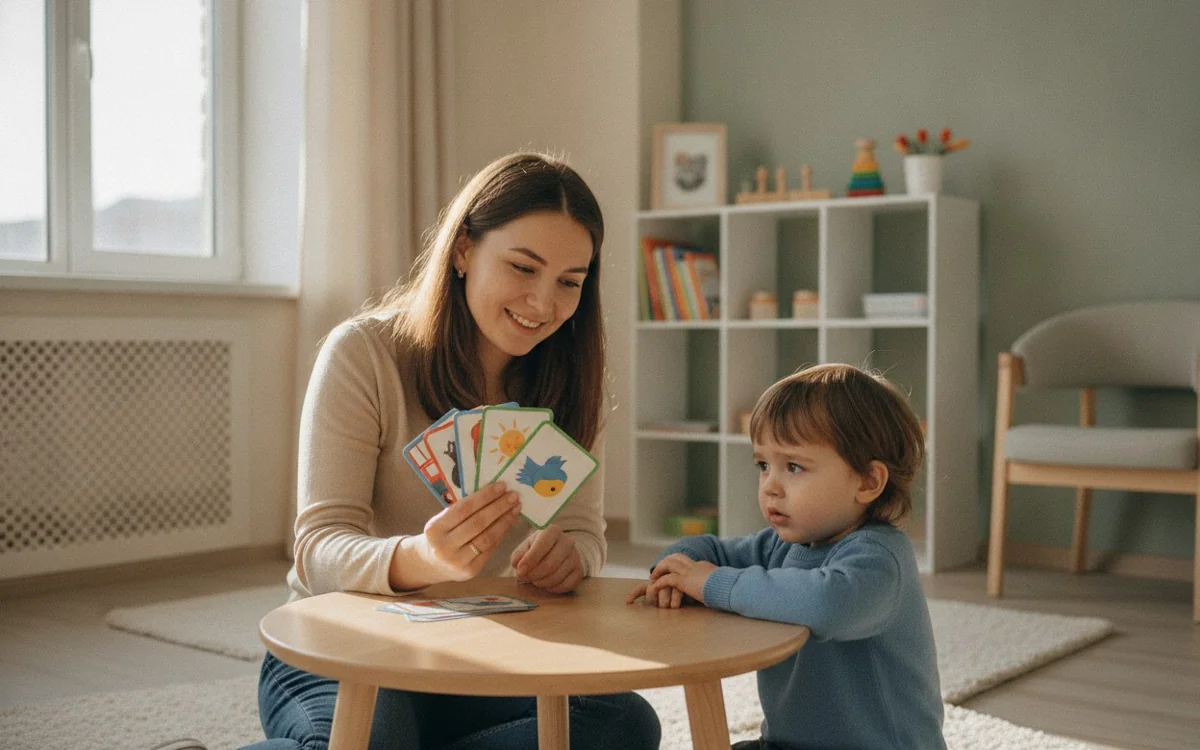
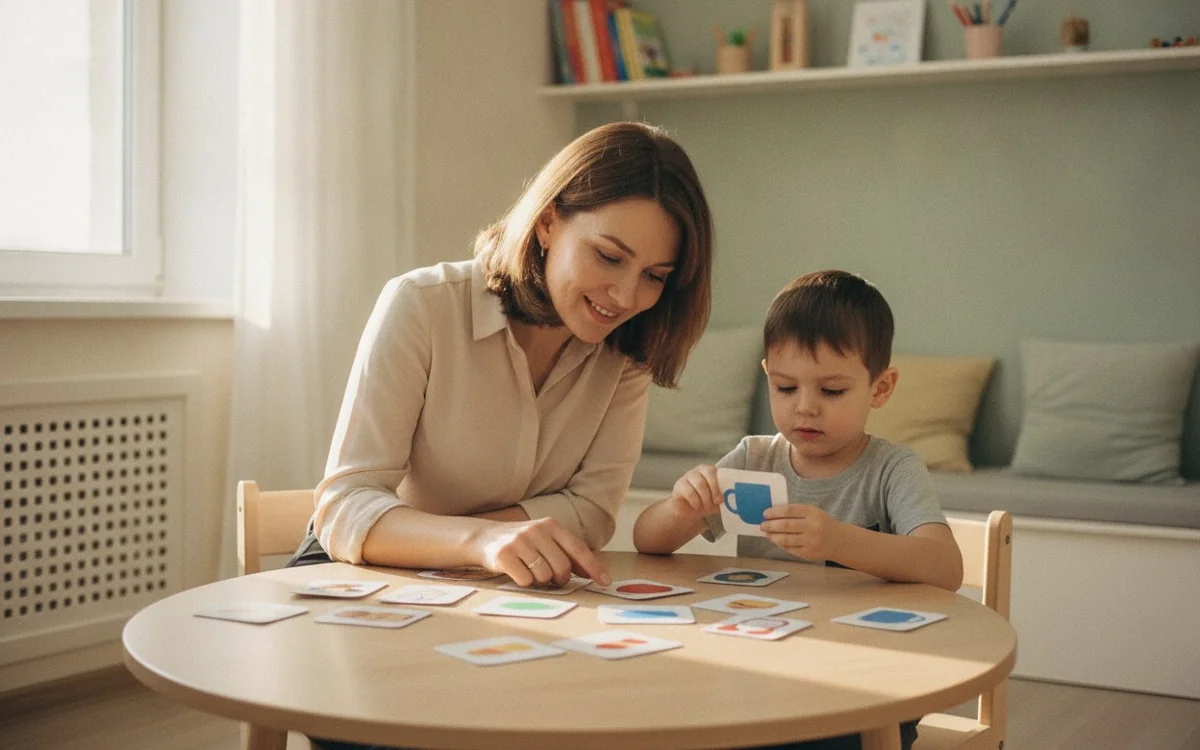
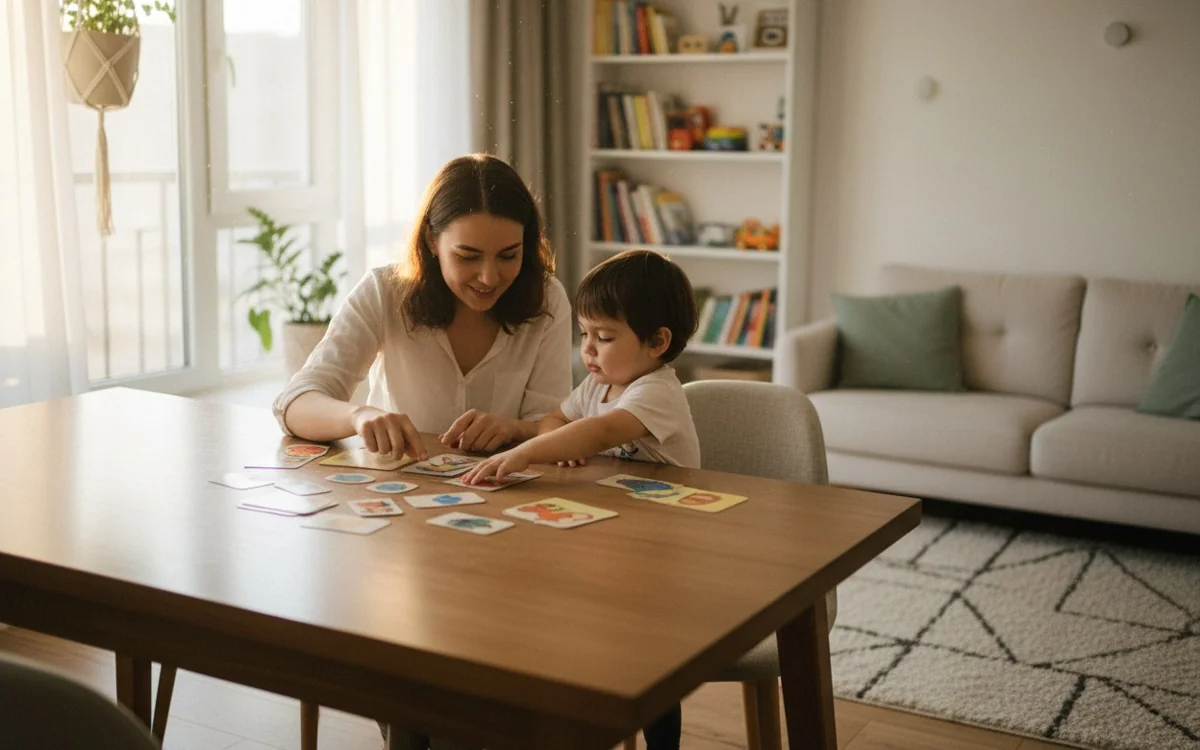
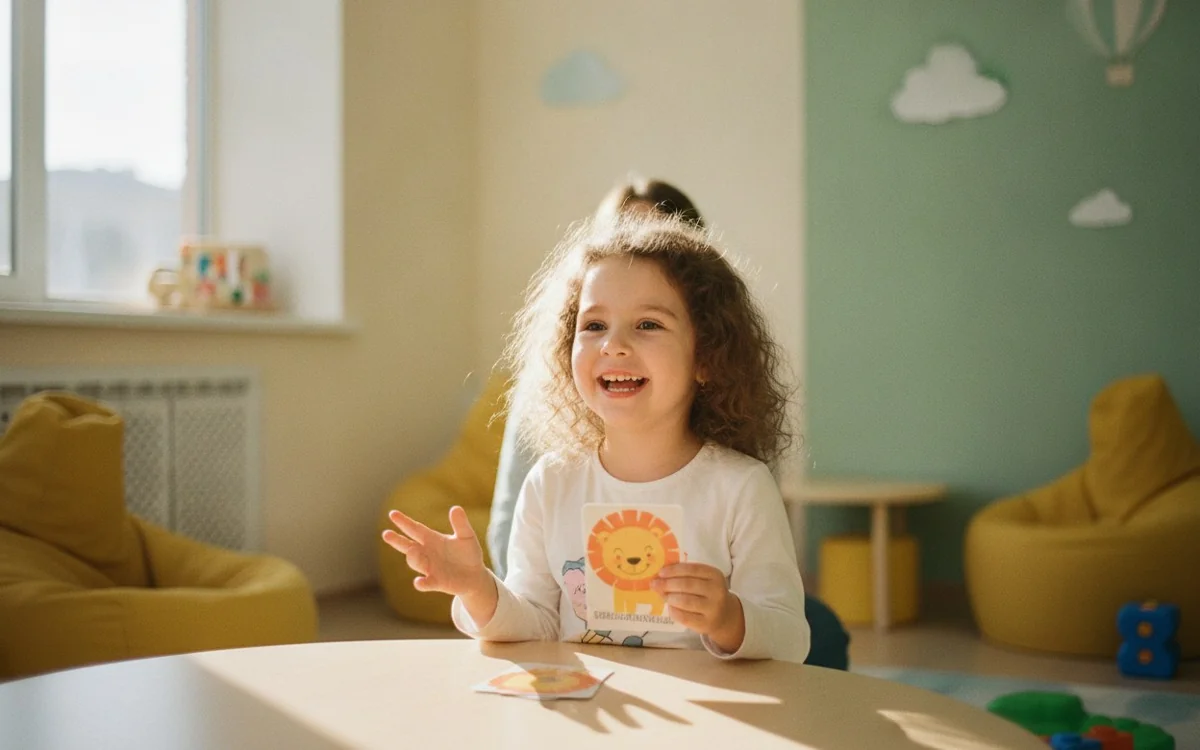
For example, if we are working on animal sound imitation, at home the mother shows flashcards with animals and asks the child to show how a cow, cat, or dog sounds. If the child is silent, the mother says the sound herself, and the child points to the picture — that is already progress. Another important point is the speech environment. Parents should comment on their actions more: "Now I am making soup. Put the carrot in. Careful, it's hot." This enriches the child's passive vocabulary. Tip: do not correct the child if they say something wrong; simply repeat the word correctly: they said "dawg" — you respond "yes, that's a dog." Without pressure, without demanding repetition. This creates a safe speech environment.
Where to study: at the center, at home, gentle online
Choosing the format of sessions for a toddler is not a matter of convenience, but of effectiveness. For children aged 2–4, the environment plays a crucial role: new walls, unfamiliar people, noise — all of this can frighten them and reduce results. We offer three formats, each with its own pros and limitations.
Why the atmosphere at the center is important for toddlers
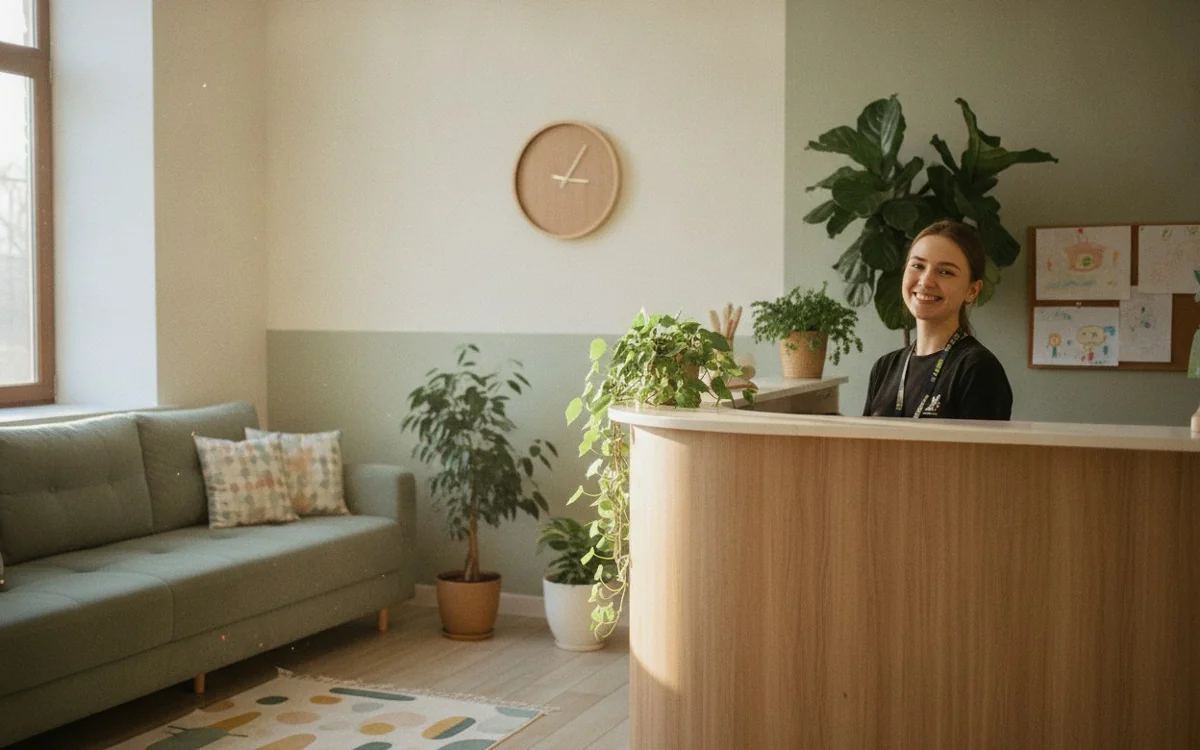
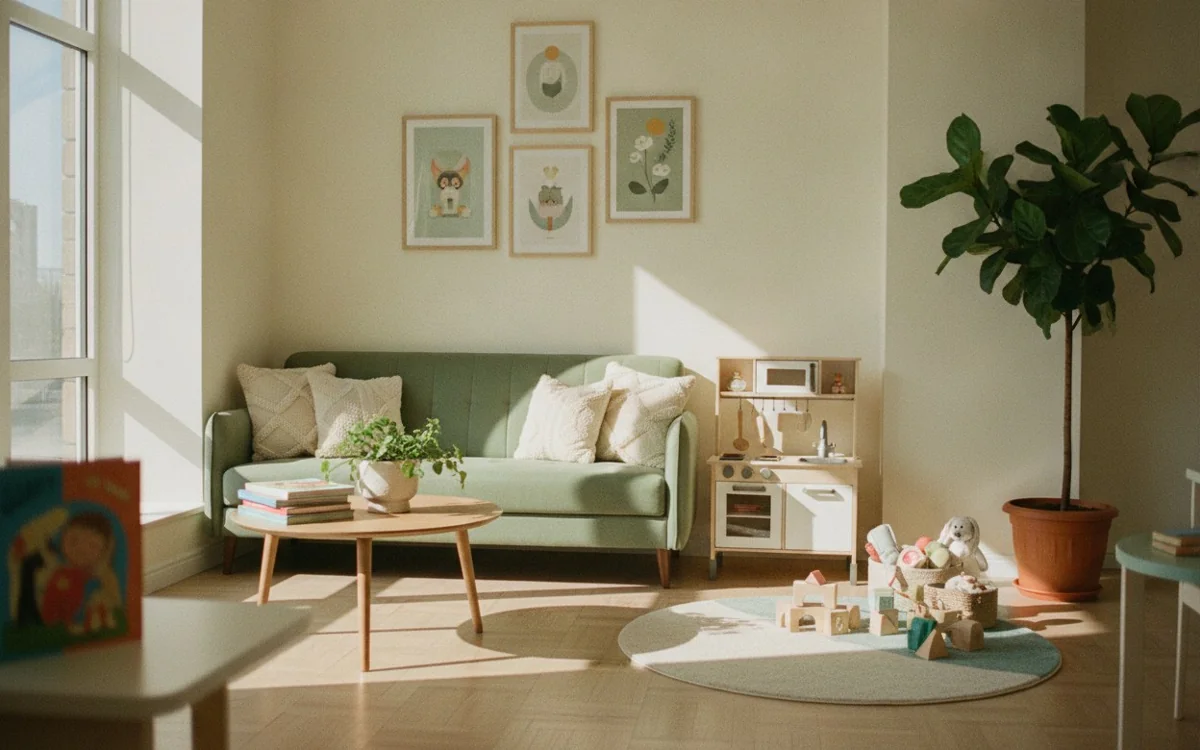
Sessions at our center are a fully adapted environment for young children. The room is equipped with soft modules, sensory toys, safe mirrors, and bright aids. There are no strict desks or boards — the space is zoned: a play area for speech rhythmics, a table for articulation gymnastics, a corner with sand and grains for sensory stimulation.
A child coming to the center sees other children playing and studying — this creates healthy competition and motivation. Additionally, the center has all the necessary equipment: probes for massage, speech therapy placement probes, audio materials, musical instruments. For children who are afraid of new environments, we conduct the first 2–3 sessions with the mother present, gradually increasing the time of independent work. The center is located in an area with convenient parking and is accessible to residents of all Almaty districts — from Alatau to Medeu.
Home visits: when they are justified
For some families, home sessions are the only option: if the child has difficulty with travel, has accompanying conditions, or experiences severe anxiety with a change of environment. In such cases, our speech therapist visits your home. However, it's important to understand: the home environment is relaxing, and the child may not perceive the speech therapist as a "teacher" — they are used to playing at home, not doing lessons.
For home visits to be effective, we ask parents to prepare the space: remove distracting toys, turn off the TV, and set up a small table and chair. The session duration is the same — 20–30 minutes, but we spend the first 5 minutes on adaptation so the child can switch from play to the session. Home visits are justified for children aged 2–3 with a strong attachment to home, but for most toddlers, after 2-3 sessions at the center, adaptation happens quickly, and the effectiveness of sessions in a specialized environment is higher.
Limitations of online sessions for the youngest
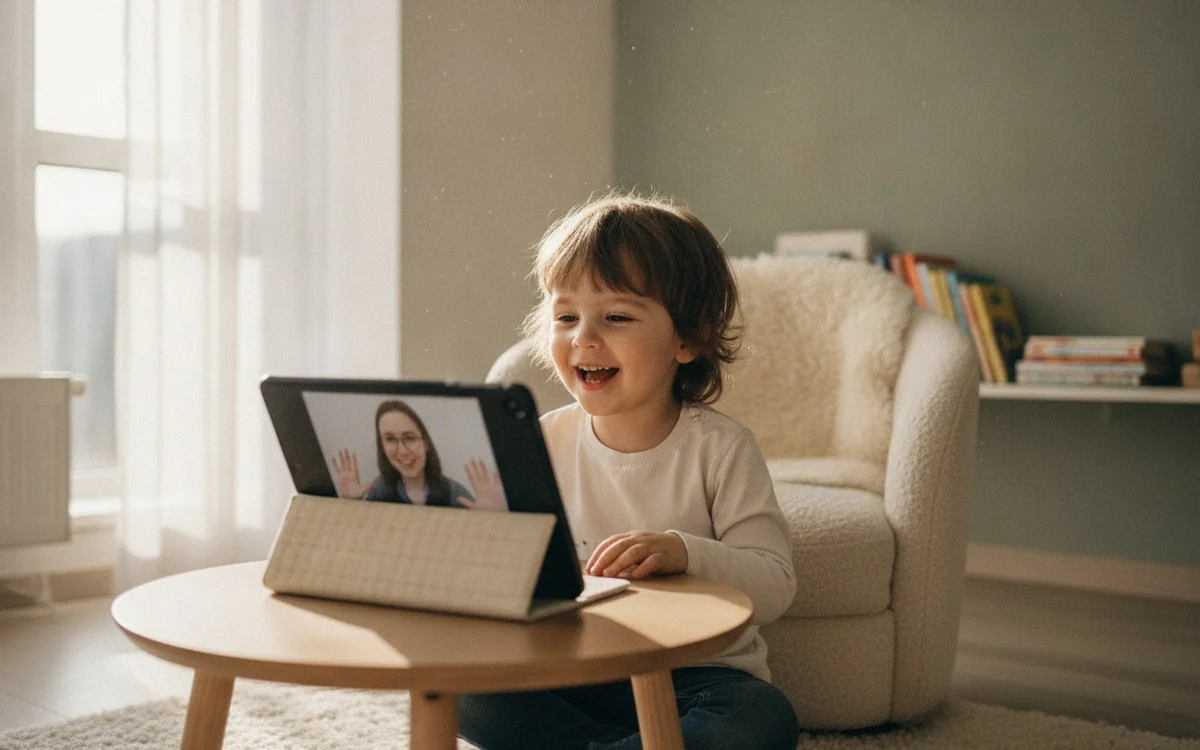
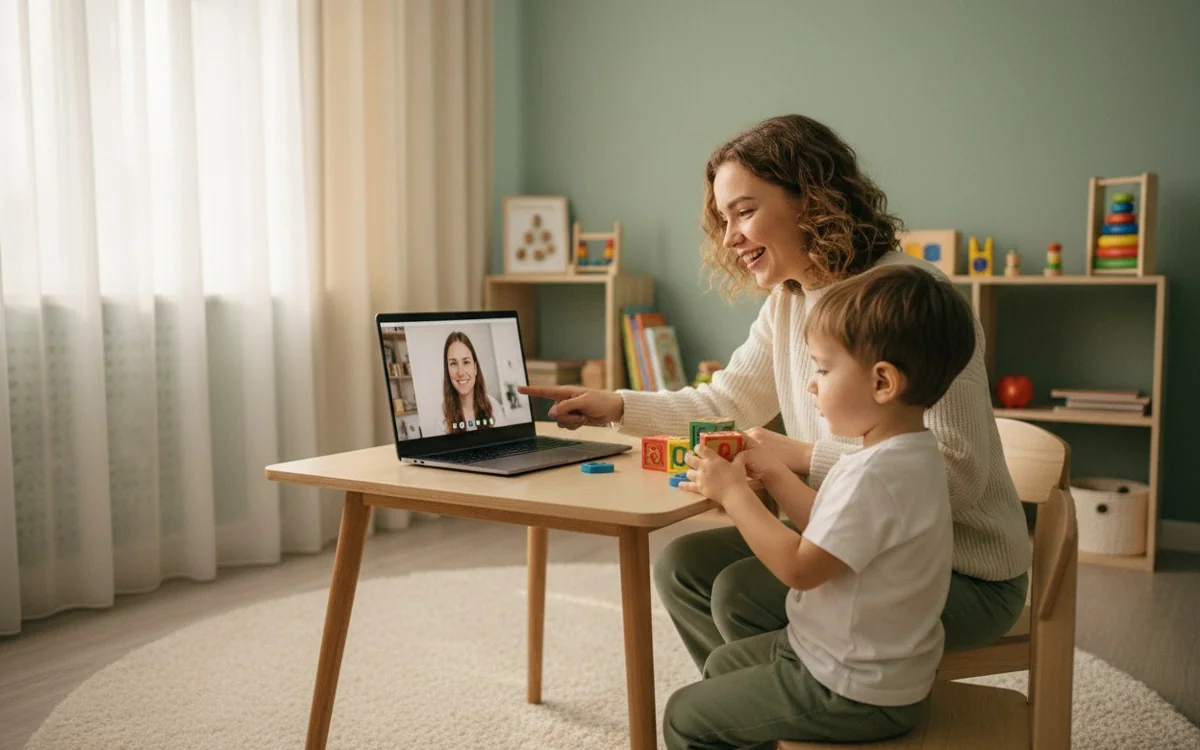
Many parents ask about online classes for toddlers aged 2–3. I immediately say: for children under 3.5 years old, the online format is not very effective. At this age, a child cannot hold their attention on the screen for longer than 5–7 minutes, cannot perform articulation exercises without the tactile control of a speech therapist, and sensory stimulation through a screen is impossible.
We use online sessions only in two cases: for children aged 3.5 and older with mild disorders (e.g., sound substitution) or for parent consultations when we need to show exercises for home practice. In all other cases, we recommend in-person meetings — at the center or at home. If you live far from the center, we can find the nearest office to you or arrange for a speech therapist to visit. Online sessions for very young children are more of an exception than a rule, and I do not advise relying on them as the main method.
How much do classes for the youngest children cost?
Prices for speech therapy sessions in Almaty vary depending on the format, specialist's qualifications, and duration. We strive to make correction accessible, so we offer several payment options. Below are the current prices for our services.
Price table: single sessions and subscriptions
| Class format | Duration | Single visit | Package for 8 sessions | Subscription for 12 sessions |
|---|---|---|---|---|
| Individual at the center (1.5–2 years) | 20 min | 4,500 tenge | 32,000 KZT (4,000/session) | 45,000 KZT (3,750/session) |
| Individual at the center (2–3 years) | 30 min | 5 500 ₸ | 40,000 KZT (5,000/session) | 57,000 KZT (4,750/session) |
| Individual session at the center (3–4 years) | 40 min | 6,500 tenge | 48,000 KZT (6,000/session) | 69,000 tenge (5,750/session) |
| Home visits (any age) | 30–40 min | +2,000 KZT to the cost | — | — |
| Logorhythmics in a group (1.5–3 years) | 30 min | 3,000 KZT | 20,000 KZT (2,500/session) | — |
| Initial assessment | 30–40 min | Free | — | — |
What’s Included in the Cost and How to Save
The cost of each session includes not only the speech therapist’s work but also preparing an individual plan, using all materials and aids, as well as a parent consultation after the session (5–10 minutes). When purchasing a package, you get a fixed time slot and a discount of up to 20% compared to single visits. The package is valid for 2 months; missed sessions can be rescheduled (no more than 2 per month).
We also offer a 10% discount for a second child from the same family and provide a free diagnostic assessment for all new clients. If you plan long-term sessions (from 3 months), a package of 12 sessions is the most cost-effective option. Important: prices may change, please confirm the exact cost when booking. For many families, our center offers the optimal price-quality ratio, as we work with experienced speech therapists specializing in early development.
How to Choose a Speech Therapist for a Toddler
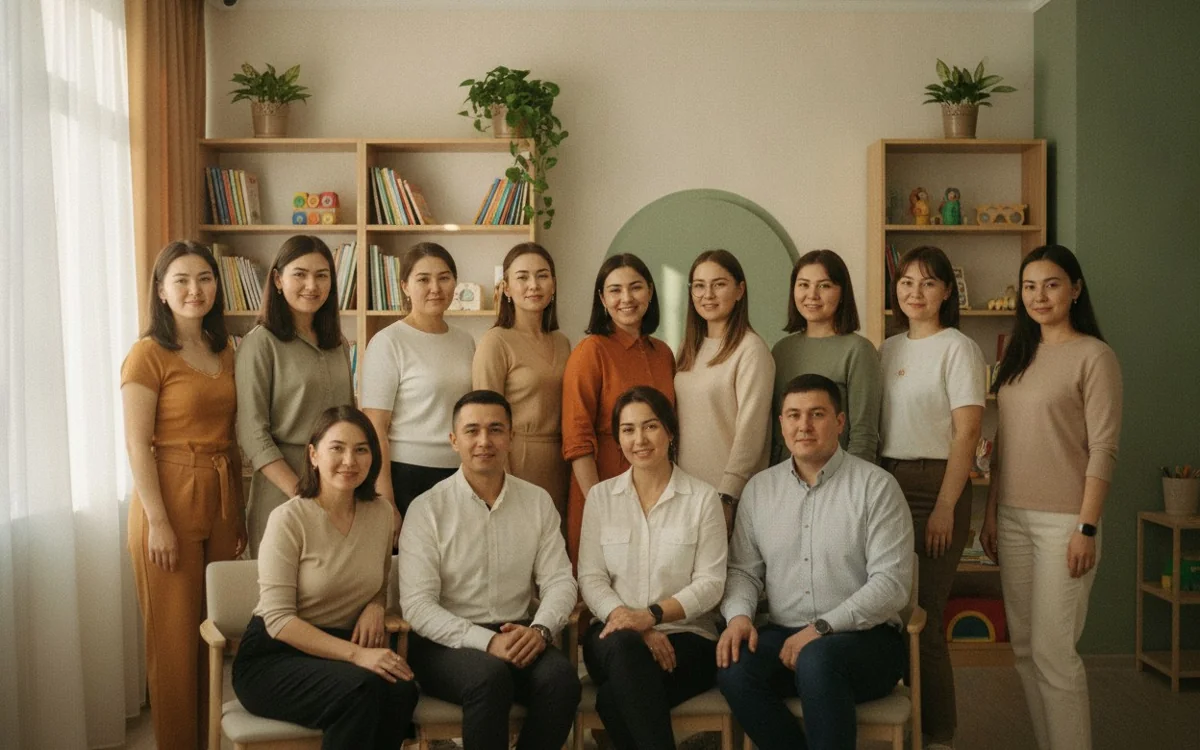
Choosing a specialist for a child aged 2–3 is a responsible decision. Not every speech therapist who works with schoolchildren can handle a non-speaking toddler. Special skills are needed: the ability to make contact through play, patience, knowledge of early childhood neuropsychology. Here is what I advise paying attention to when choosing.
Education: a degree from a defectology faculty or a special education faculty. Additional courses in early development, neuropsychology, and sensory integration are a plus.
Experience with young children: at least 2 years of practice with children aged 1.5 to 4 years. Ask how many non-speaking children the specialist has helped start speaking in the past year.
Working methods: whether they use play techniques, speech rhythmics, sensory stimulation. Avoid those who immediately start producing sounds without preparing the speech base.
Contact with the child: at the first session, the speech therapist should not force, shout, or sit the child down by force. A good specialist will find an approach through toys, music, or movement.
Reviews and recommendations: ask for contacts of parents who have already had sessions. Find out how quickly the first results appeared and how the child engaged.
Readiness for dialogue with parents: the speech therapist should explain in detail what and why they are doing, give homework, and answer questions. If you remain in the dark after a session, this is a warning sign.
License and place of work: check if the center has permission for educational activities. Many private specialists work in Almaty, but it is better to choose those registered at a licensed center.
When choosing a speech therapist for young children, trust your intuition: if you feel comfortable with the specialist, if the child is drawn to them — that's a good sign. We always invite parents to the first free session so you can assess the atmosphere and approach. Remember: early help is an investment in your child's future, and the right choice of specialist shortens the path to clear and rich speech.