
























·
Individual sessions with a speech therapist in Almaty — what is important to know
Parents often ask me: what's so special about one-on-one work, why does it cost more than group sessions? I'll answer directly: when we work individually, I see not just a child with speech issues, but a specific mechanism of a stutter, a specific tongue position, or weakness in a specific muscle. In 40 minutes, I can accomplish what would take three group sessions.
What are individual sessions with a speech therapist
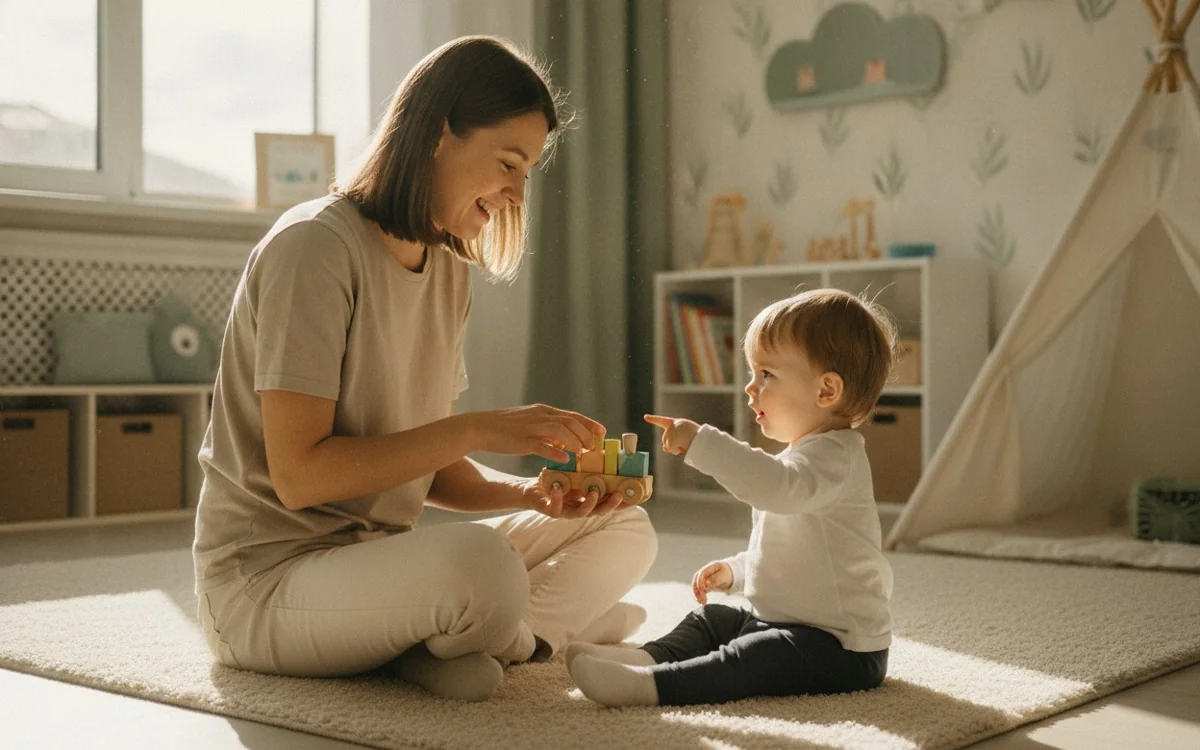
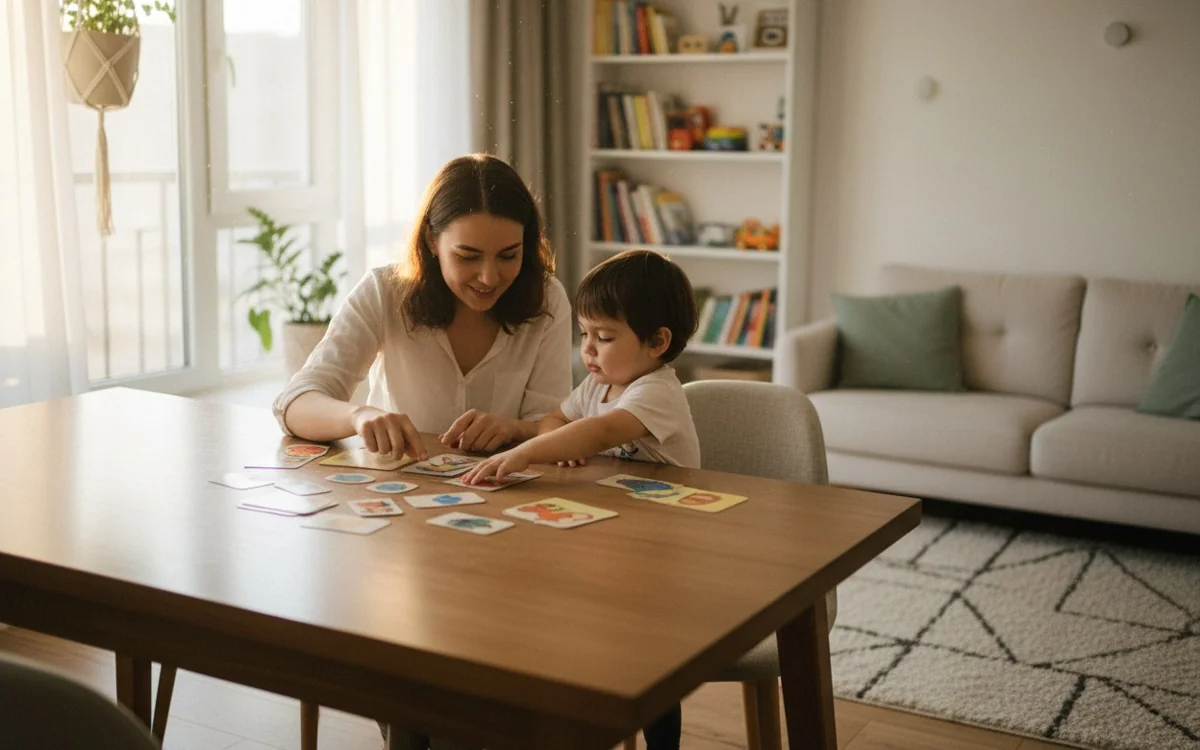
When we talk about an individual speech therapy session, we mean a format where the entire focus is on one person. No queue, no waiting for another child to finish. Just you or your child, the speech therapist, and a specific speech task.
Why the one-on-one format gives faster results
An individual speech therapy session is not built on a template, but tailored to a specific articulation problem. If a child has a lateral lisp, we do not waste time on producing the sound R until we correct the tongue position for sibilants. In a group, such flexibility is not possible — the program follows a generalized plan.
The speech therapist individually sees micro-movements: how the soft palate rises, where the tongue tip is, whether there is closure. In Almaty, we often work with bilingual children where sounds from Kazakh and Russian mix. In an individual format, we immediately correct the phonetic foundation without waiting for the incorrect habit to solidify.
Maximum attention means that in one session we go through up to 15-20 repetitions of the target sound in different positions. In a group, a child gets at most 3-4 attempts. The difference in work density is 4-5 times.
How work is structured for a single goal
We don't spread ourselves thin. If the goal is to produce the sound "Sh," we don't jump between "S," "Z," and "Ts." Individual sessions with a speech therapist allow us to concentrate on one articulatory posture until it's automated. In our center, we have cases where the sound "R" was established in just 4 sessions — simply because we didn't get distracted by other topics.
Working toward a single goal means the speech therapist selects exercises strictly for the type of disorder. For example, with nasality, we work on the palatal arch and breathing, not the tongue. For each client, we create a plan: from articulation exercises to introducing the sound into spontaneous speech.
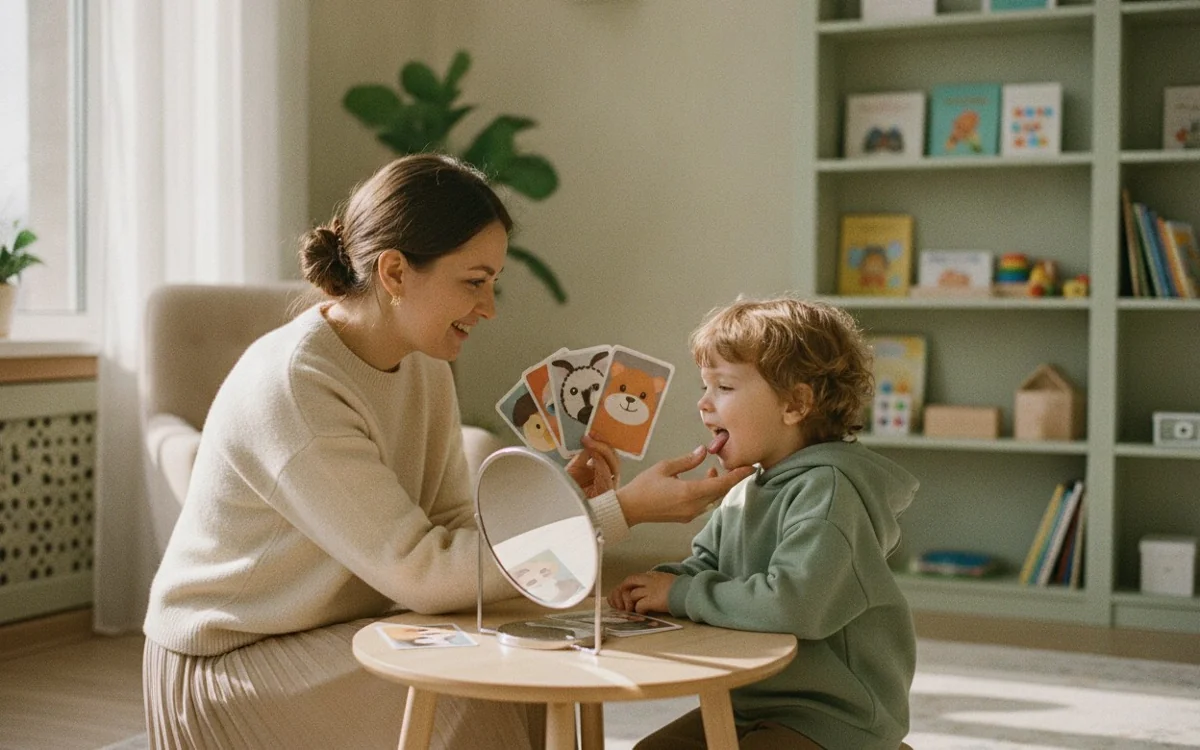
Individual speech therapy sessions allow us to change tactics on the fly. If a child gets tired of the mirror, we switch to tactile sensations: using a finger, spatula, or probe. There's no such flexibility in a group setting.
Who this format is best suited for
The one-on-one format is ideal for children with low attention spans. In Almaty, there are many hyperactive children who find it difficult to sit in a group for 40 minutes. Individually, the speech therapist holds their attention by changing activities: 3 minutes of articulation gymnastics, 2 minutes of playing with a ball, 5 minutes of working in front of a mirror.
This is also a choice for adults after a stroke or injury — they need privacy and a pace they aren't embarrassed to show to others. And for shy children who stay silent in a group but speak one-on-one.
Who individual speech therapy sessions are for
Not everyone needs an individual format, but there are situations where only it works. We see this every day at our center: a child comes after six months of group sessions with no progress. We switch to individual sessions — within a month, we hear a clear sound.
Children with severe speech disorders
For alalia, dysarthria, rhinolalia, or stuttering, individual speech therapy sessions are not a luxury but a necessity. A severe disorder requires constant control of the articulatory apparatus: the therapist positions the tongue with fingers, fixes the jaw with a spatula, and massages the palate with a probe. This is physically impossible in a group setting.
In Almaty, we work with children whose speech apparatus is underdeveloped due to neurological issues. Individually, we manage neuromuscular stimulation, speech therapy massage, and sound placement in one session. For moderate dysarthria, placing one sound takes 8-12 sessions with twice-weekly work.
For children with stuttering, the one-on-one format removes the fear of speaking. The child is not afraid of being interrupted or laughed at, and we work on speech fluency without psychological pressure.
When sound production and pronunciation correction are needed
Sound production is delicate work. A speech therapist conducts individual sessions as follows: first, we establish the isolated sound, then syllables, then words, and only then phrases. Each stage requires 50–100 repetitions. In a group, a child manages only 10–15 repetitions per session—progress stretches over months.
We had a case: a 6-year-old boy couldn't pronounce the "R" sound. He attended group sessions at kindergarten for a year with no result. He came to us, and after 9 individual sessions, we established a hard "R," and after another 12, we automated it in his speech. The secret is that each individual session with the speech therapist started with an articulation warm-up specifically for the "R" sound, without wasting time on general exercises.
Pronunciation correction for adults is a different story. An adult needs not only to produce a sound but also to break an old automated habit. This requires conscious control, which is only possible in an individual format.
Adults and shy children
Adult clients in Almaty often come with the request, "I want to speak clearly, but I'm embarrassed to study in a group." Individually, we work on voice, diction, and speech tempo. For an adult, there is no risk of someone hearing their defect, and they relax — which is 50% of the success.
Shy children are another category where individual speech therapy sessions are indispensable. A child who remains silent in a group due to fear of mistakes starts speaking within 2-3 sessions in an individual format. We create an environment where any attempt to produce a sound is encouraged, and a mistake is simply a reason to try differently.
How individual sessions differ from group sessions
The difference is not just in the number of children. These are fundamentally different approaches to speech correction. I have compiled a table so you can see the differences clearly.
Format Comparison: Table
| Criterion | Individual sessions | Group classes |
|---|---|---|
| Number of children | 1 | 4-6 |
| Speech therapist's attention | 100% one-on-one | 15-20% off each |
| Work pace | Customized | Average |
| Program | Individual plan | General topic |
| Articulation Gymnastics | With correction of each movement | General, without monitoring |
| Sound production | Possible | Impossible |
| Cost in Almaty | 4000-7000 tenge | 2000-3500 tenge |
| Results in a month | Notable progress | Slow |
When the individual format wins
Individual speech therapy sessions are advantageous when a new articulatory pattern needs to be formed. In a group, children often copy each other's mistakes — one pronounces a sound incorrectly, and others follow suit. Individually, we control every movement and prevent the reinforcement of incorrect patterns.
We can also work on breathing individually. Setting up diaphragmatic breathing requires physical control: the speech therapist's hand on the stomach, monitoring exhalation, phonation duration. This is impossible in a group — the speech therapist physically can't check everyone.
For children with phonemic hearing disorders, the individual format allows them to repeatedly listen to sound pairs (S-Sh, R-L) and get immediate feedback. In a group, the child may simply not hear the difference and make mistakes.
Disadvantages of the individual format
One downside is the price. An individual session with a speech therapist costs more than a group one because it requires high qualifications and full concentration. Another downside is the lack of socialization. In a group, children learn to listen to each other, wait their turn, and interact. Therefore, we often recommend combining: 2 times a week individually for sound production and 1 time in a group for reinforcement in speech.
How an individual speech therapy session works
Many imagine a speech therapy session as boring sitting in front of a mirror. In reality, it's dynamic work where the type of activity changes every 3-5 minutes. I'll explain how it works at our center.
Diagnostics and plan creation
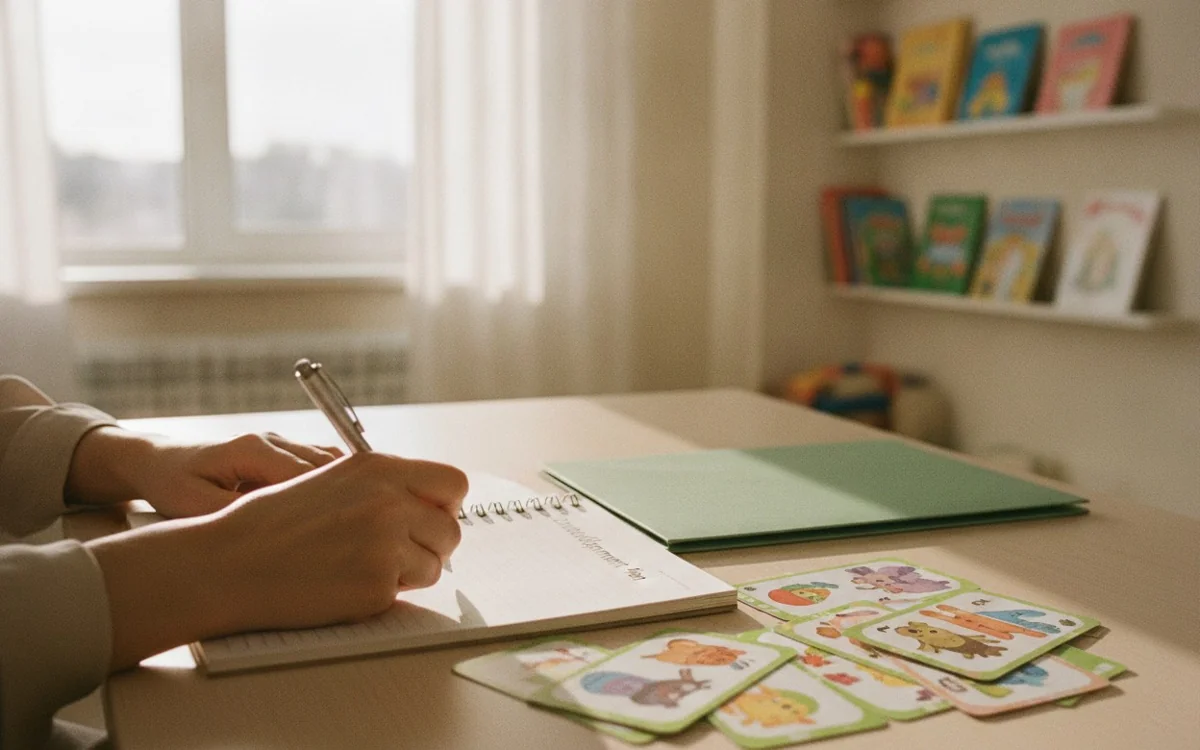
The first individual speech therapy session is a diagnostic assessment. It lasts 40-60 minutes and includes: examination of the articulatory apparatus, checking phonemic hearing, assessing vocabulary and grammatical structure, analyzing sound pronunciation. For children under 3, it's a game; for adults, it's test tasks.
After the assessment, we create an individual plan. For example: “Sound S establishment — 3 sessions, automation in syllables — 4 sessions, automation in words — 5 sessions, introduction into speech — 6 sessions.” That’s 18 sessions per sound. Timelines are adjusted as we work.
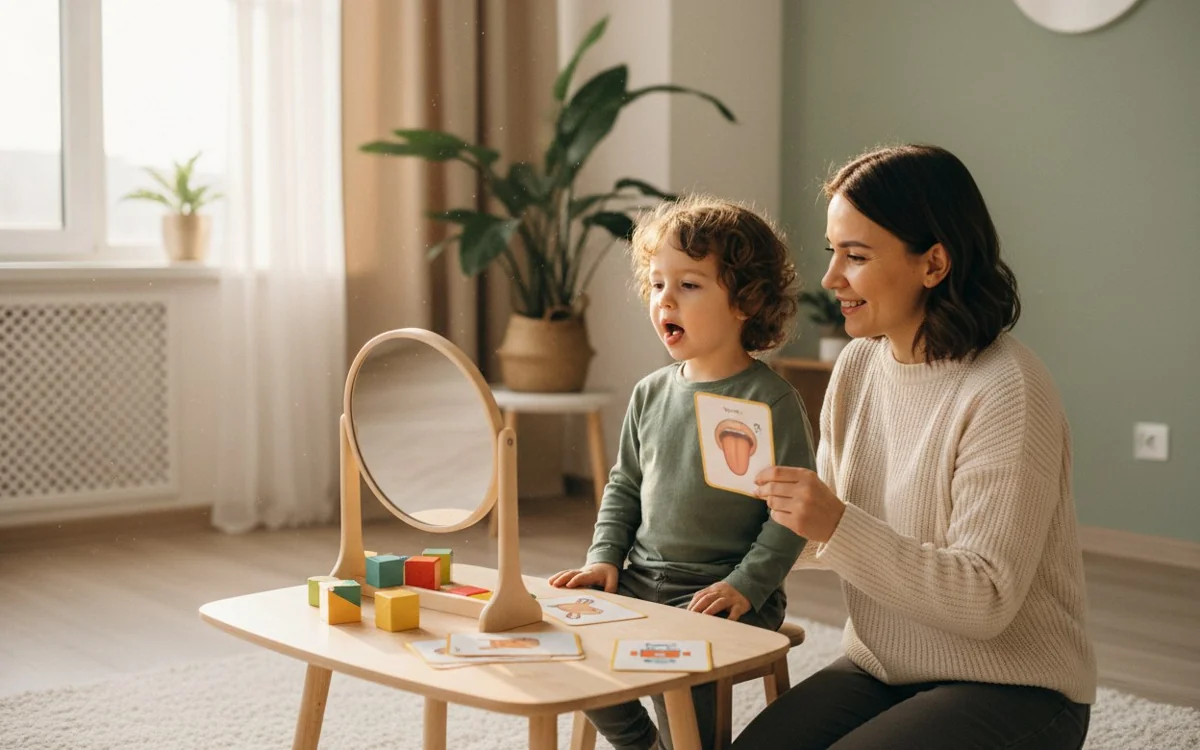
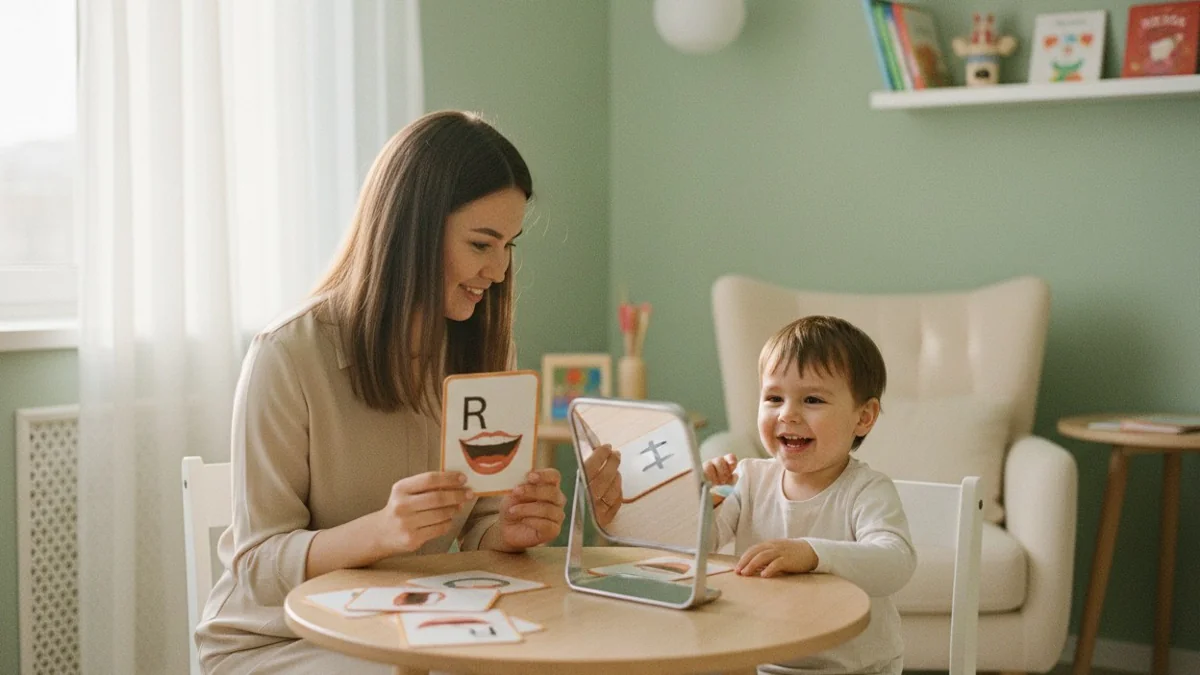
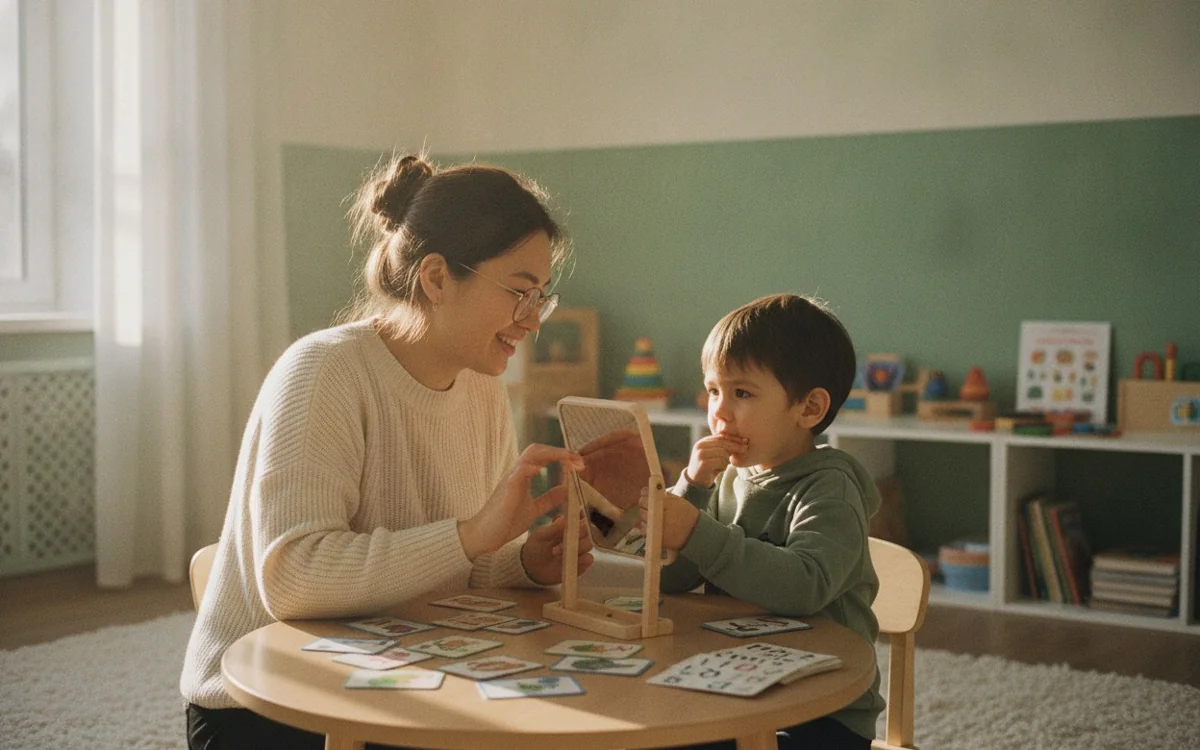
An important point: individual speech therapy sessions begin with articulation exercises. We don't jump straight into the sound — we prepare the muscles first. This usually involves 5-7 exercises that the child does in front of a mirror, while the speech therapist corrects the tongue position.
Session structure: from warm-up to consolidation
A typical individual speech therapy session lasts 40 minutes and is divided into blocks:
1. Articulation exercises — 5-7 minutes 2. Breathing exercises — 3-5 minutes 3. Sound placement or automation — 10-15 minutes 4. Phonemic awareness development — 5 minutes 5. Lexical-grammatical games — 5-7 minutes 6. Connected speech development — 5 minutes
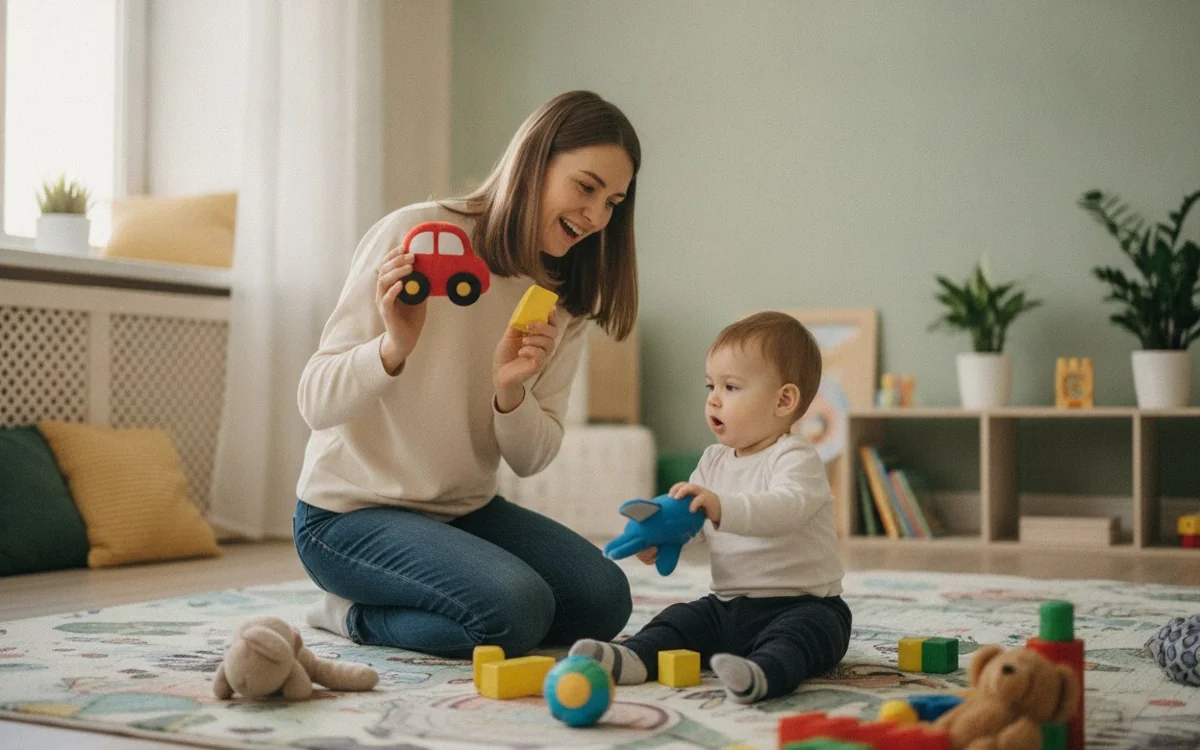
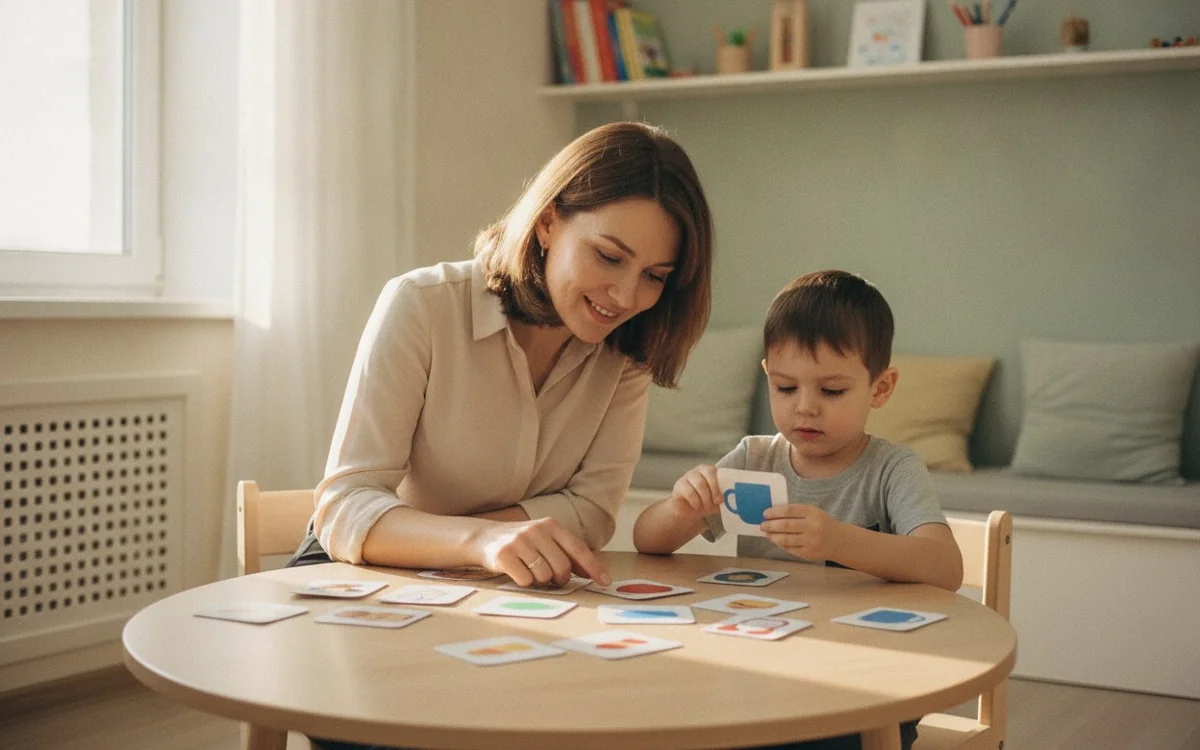
Each block involves a change of activity. If a child gets tired of the mirror, we move on to a card game or sand work. In Almaty, we often use bilingual materials: Kazakh fairy tales for speech development and Russian poems for sound production.
We give homework after every session. It's 5-7 minutes of work per day: repeating articulation exercises, practicing syllables, and games for phonemic awareness. Without homework, correction time increases by 2-3 times.
How often should sessions be held for results
Optimal frequency is 2-3 times per week. For sound production, 3 times; for automation, 2 times. If you attend once a week, progress will be slow: the skill won't have time to consolidate between sessions.
We've had cases where, with severe dysarthria, we started with 5 sessions per week (30 minutes every day), and after a month switched to 3 times a week. The timeline and results depend on the diagnosis and regularity of sessions — it's important to understand this.
How much do individual speech therapy sessions cost
Prices in Almaty vary depending on the speech therapist’s qualifications, location, and format. I will provide average prices from our center — they are market rates for the city.
Cost of single sessions and packages
| Format | Single session (40 min) | Subscription for 8 sessions | Subscription for 12 sessions |
|---|---|---|---|
| Individual with a speech therapist-defectologist | 6000 KZT | 44,000 tenge (5,500 per session) | 60,000 KZT (5,000 per session) |
| Individual session with a speech therapist of the highest category | 7,000 KZT | 52,000 KZT (6,500 per session) | 72,000 tenge (6000 per session) |
| Individual session with a trainee speech therapist | 4000 KZT | 28,000 tenge (3,500 per session) | 36,000 KZT (3,000 per session) |
| Speech therapy massage (20 min) | 3500 тг | Included in the subscription | Included in the subscription |
Free assessment and first sessions
Our first diagnostic session is free. It lasts 40 minutes, during which we assess speech, provide a conclusion, and suggest a correction plan. You don't pay for the initial consultation. If you decide to continue after the diagnosis, we schedule individual speech therapy sessions according to your chosen plan.
We also have a promotion: the first session after the diagnosis is 50% off. So you can evaluate how the speech therapist works and see if the format suits you.
What affects the price in Almaty
The price depends on three factors: the speech therapist's qualifications, the complexity of the disorder, and the district. Our center is located in the Bostandyk district, near the Alatau metro station. Prices here are average for the city. In the Medeu district or downtown, prices are 15-20% higher; in outlying districts, they are 10-15% lower.
An individual session with a speech therapist teacher with over 10 years of experience costs more, but also yields faster results. Beginner specialists charge less, but may need more time for correction.
How to choose a speech therapist for individual sessions
Choosing a speech therapist is not about "liking or disliking." It is about competencies, methods, and compatibility with the client. I have compiled criteria to help you avoid mistakes.
Selection criteria: list
Education: A speech therapist must have a higher education in defectology or speech therapy. Not courses, not retraining, but a university degree. In Almaty, this is KazNPU named after Abai or KazNU.
Experience with your disorder: Ask how many cases of dysarthria, alalia, or stuttering the specialist has handled. If the speech therapist has only worked with phonetic-phonemic underdevelopment, they will not manage a severe disorder.
Methods: A good speech therapist uses not only a mirror but also probes, spatulas, massage, bioenergoplasty, and speech rhythmics. If you are only offered "look at me and repeat" — look for another therapist.
Diagnostics: A true specialist conducts diagnostics for at least 30 minutes, rather than making a conclusion in 5 minutes. They check articulation, hearing, vocabulary, grammar, and coherent speech.
Homework: A speech therapist should assign homework after each session. If there is none, the sessions will be less effective.
Feedback: After each session, you should receive a report: what was done, what was achieved, what to work on at home. If the speech therapist is silent, that's a bad sign.
Reviews: Look for reviews from parents with a similar issue. In Almaty, there are WhatsApp and Telegram chats where speech therapists are discussed. Ask there.
What to look for at the first meeting
The first meeting is an assessment. Watch how the speech therapist interacts with the child: no pressure, no rushing, no shouting. If the child cries or tenses up — this is not your specialist.
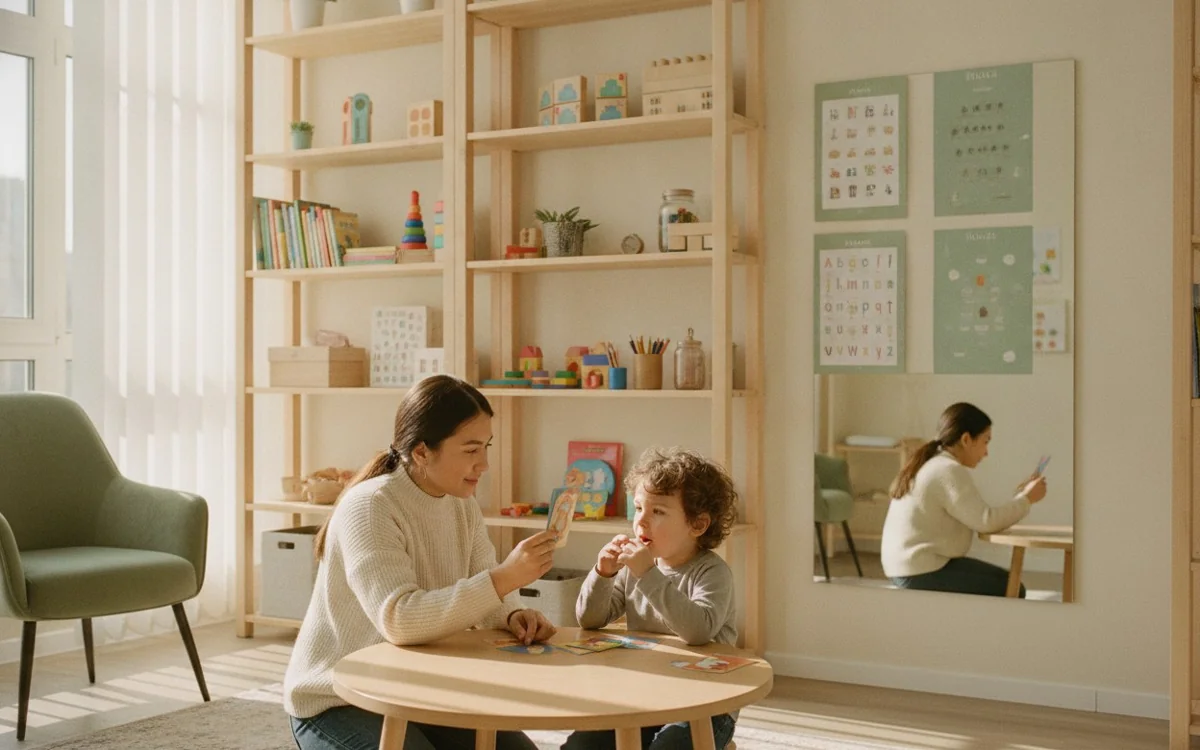
Pay attention to the office: is there a mirror, probes, didactic materials, toys. If the office is empty — the speech therapist works "verbally," without tools.
Ask about the plan: how many sessions are needed for sound production, what the timeline is, and what methods will be used. If the speech therapist says, "I don't know, we'll see how it goes," that's not an expert. The plan should be specific: "3 sessions — articulation gymnastics, 5 sessions — sound production, 10 — automation."
When to Consider Changing Your Speech Therapist
If there is no progress after 10 sessions, it is a reason to reconsider. With proper work, at least an isolated sound should appear within 10 sessions. If there is no sound, either the speech therapist is using the wrong method, or the child has neurological issues requiring a neurologist's involvement.
It’s also worth changing the speech therapist if the child goes to sessions crying. Fear blocks articulation, and the sessions become useless. It’s better to spend time finding another specialist than to torment the child.
At our center, we guarantee that after the first 5 sessions, you will see changes: either a new sound will appear, articulation will improve, or the child will start talking more. Individual sessions with a speech therapist yield quick results if the specialist knows their craft.