







·
Speech therapist for autistic individuals in Almaty — what is important to know
When parents hear the diagnosis "autism spectrum disorder," the first question they face is: will my child speak? As a practicing speech therapist, I see that the myth "autistic means non-verbal" has long been debunked: with proper intervention, speech can be initiated even in the most complex cases, and our task is to find the key to communication for your specific child.
Why a child with ASD needs a speech therapist
Many think a speech therapist is only needed for sound production, but with autistic children, it is different. In our center, speech therapy sessions for autistic children begin not with sounds, but with establishing basic contact and understanding how the child perceives the world. Speech features in autism are not just a delay; they are a different thinking structure, and we work with it directly.
Speech characteristics in autism
The speech of a child with ASD often resembles a collection of cartoon fragments, repetition of heard phrases without understanding their meaning, or complete silence. Echolalia — when a child repeats your words verbatim — is not nonsense but an attempt at communication, which we turn into meaningful dialogue. Communication difficulties manifest when a child does not make eye contact, does not respond to their name, or does not use pointing gestures. We learn to read these signals and give the child a tool to express their desires. Without speech therapy help, these traits can become lifelong, but with it, they can become a bridge to full communication.
Non-verbal autistic child: where to start
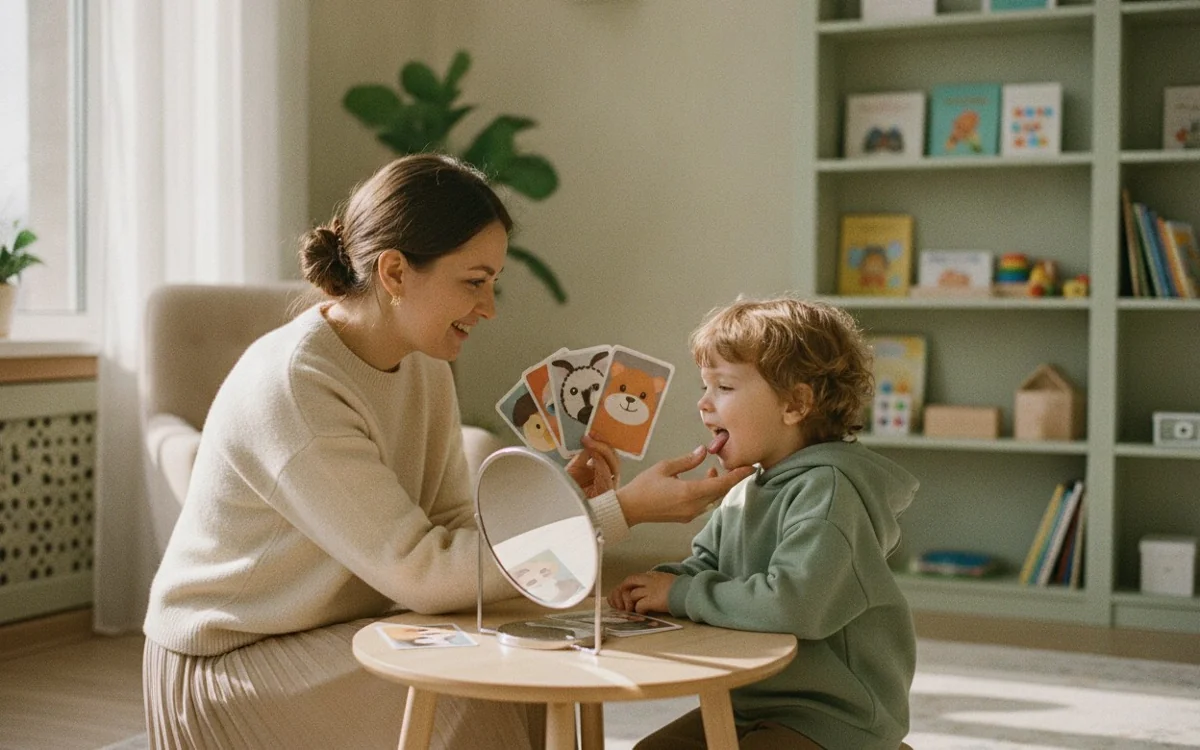
Work with a non-verbal autistic child begins with observation: we look at what sounds they make, how they breathe, whether they babble or coo. A speech therapist's work with a non-verbal autistic child is a meticulous process where the first goal is not a word, but any conscious sound. We use vocalizations, lip movement imitation, and vibrational massage of the articulatory apparatus. In our practice, there have been cases where a child spoke their first word after 3-4 months of daily sessions, but longer periods have also occurred. It is important to understand: speech initiation is possible at any age, but the earlier you start, the higher the chances of developing phrasal speech.
Echolalia as a resource, not a problem
Echolalia is often seen as meaningless repetition, but I see potential in it. When a child repeats "Let's eat" right after you say it, they are not just copying — they are trying to hold the situation in memory. We turn echolalia into meaningful speech: we take their repetition and connect it to a real action. For example, if they echolalically say "Ball," we immediately give them the ball and say: "Yes, this is a ball." Gradually, the child begins to use the word not as an echo, but as a request. This method works in 80% of cases with systematic work by a speech therapist for autistic individuals.
How we work with children with autism
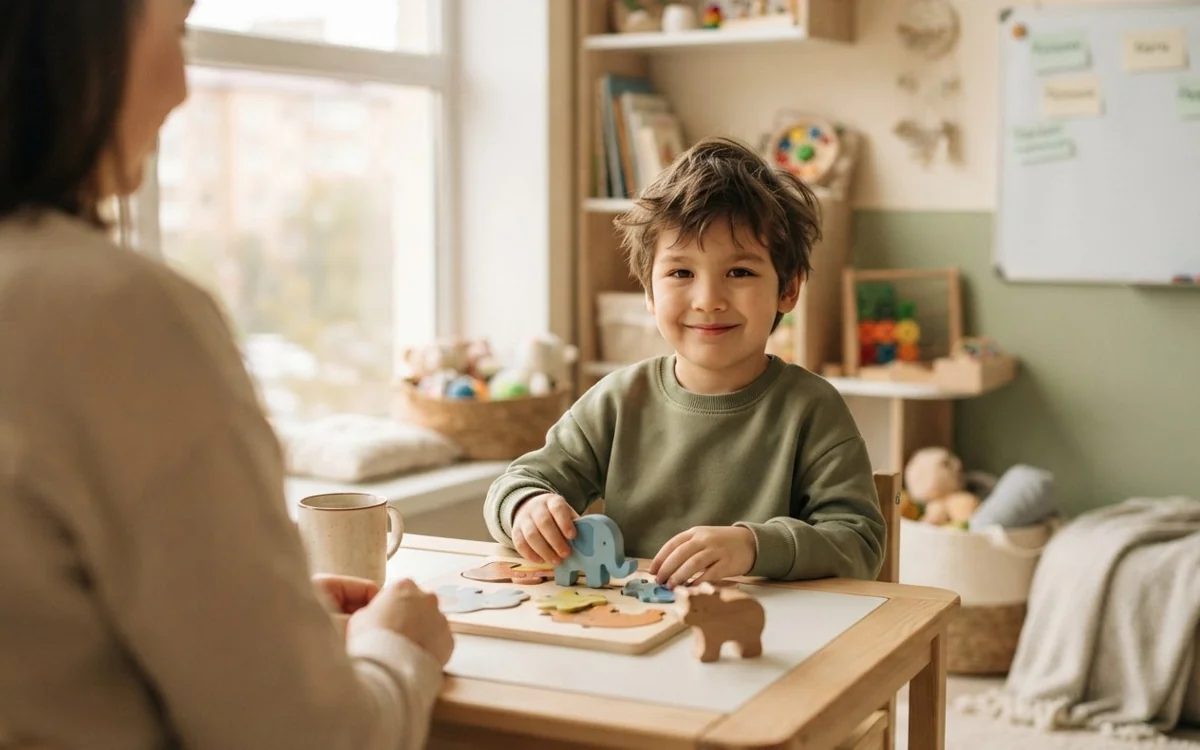
In our center, there are no templates: we don't sit a child at a desk and demand they "sit still." Speech therapy work with autistic children is built on predictability and visual support, because chaos scares children with ASD the most. Each session is a small system where the child knows what will happen in 5 minutes, and this reduces anxiety.
Structured approach and visual schedule
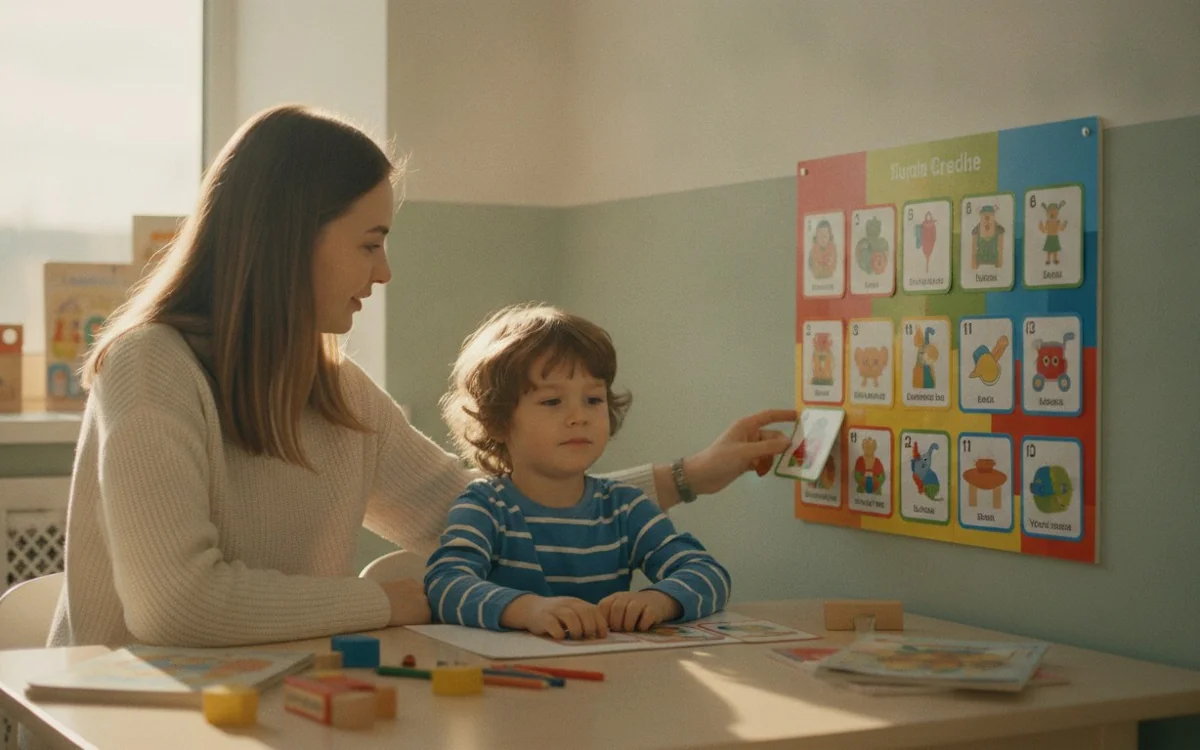
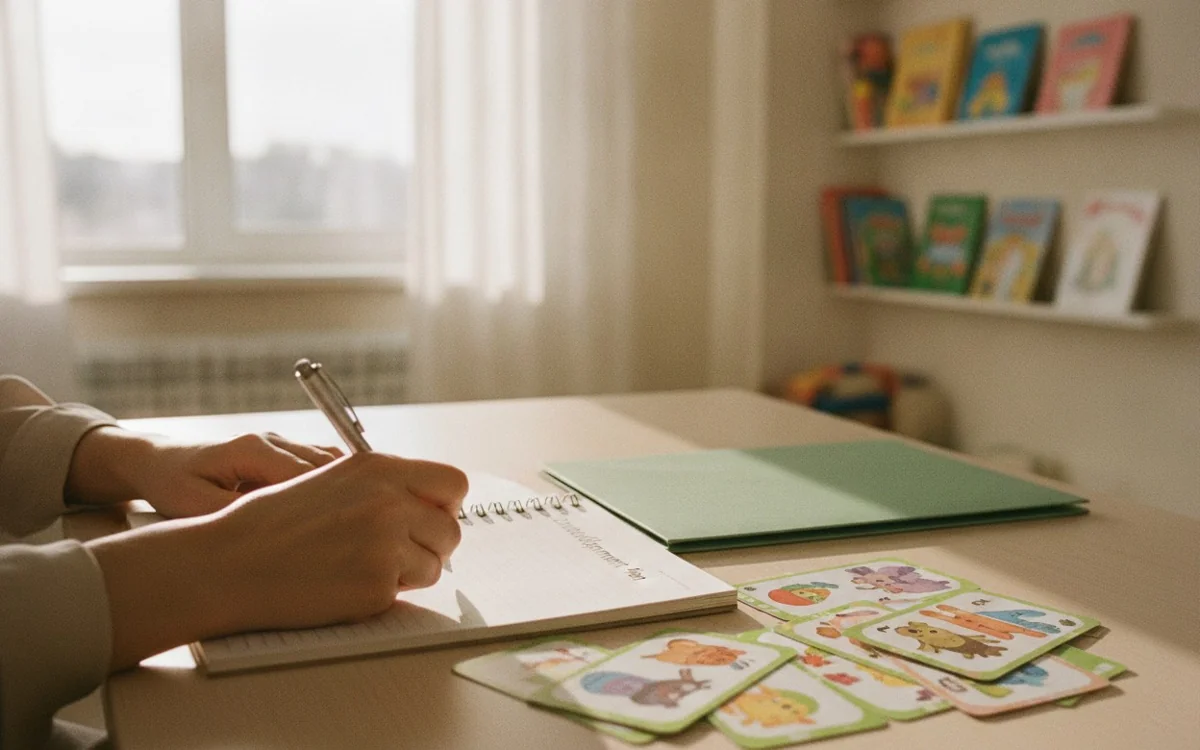
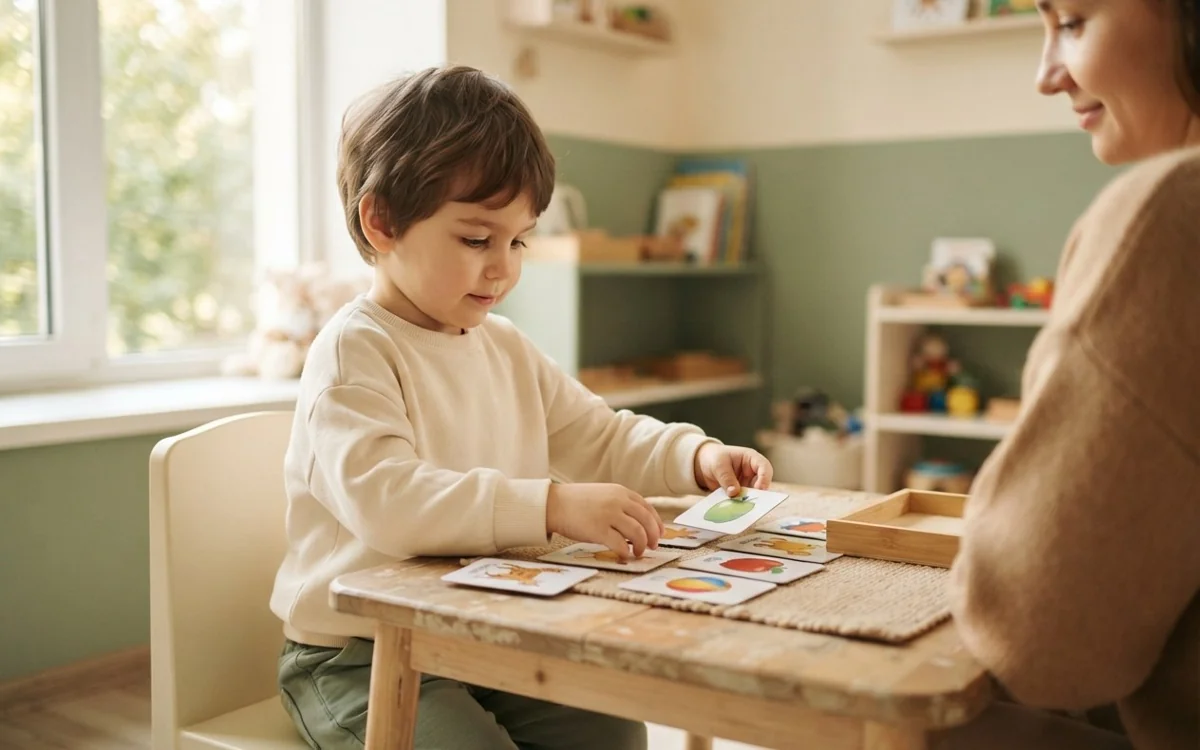
Children with autism learn best in a clear sequence. We hang a visual schedule with pictures: first play, then speech therapy, then juice. The child sees what comes next and stops resisting. Visual schedules reduce stress levels by 60%, based on our observations. We use magnetic boards, cards, and even tablets—whatever works best for the child. It’s important that the schedule is consistent: if today it’s speech therapy and tomorrow it’s a defectologist, the child doesn’t get confused. A structured approach teaches them to plan their time, which then carries over into home life.
PECS and alternative communication
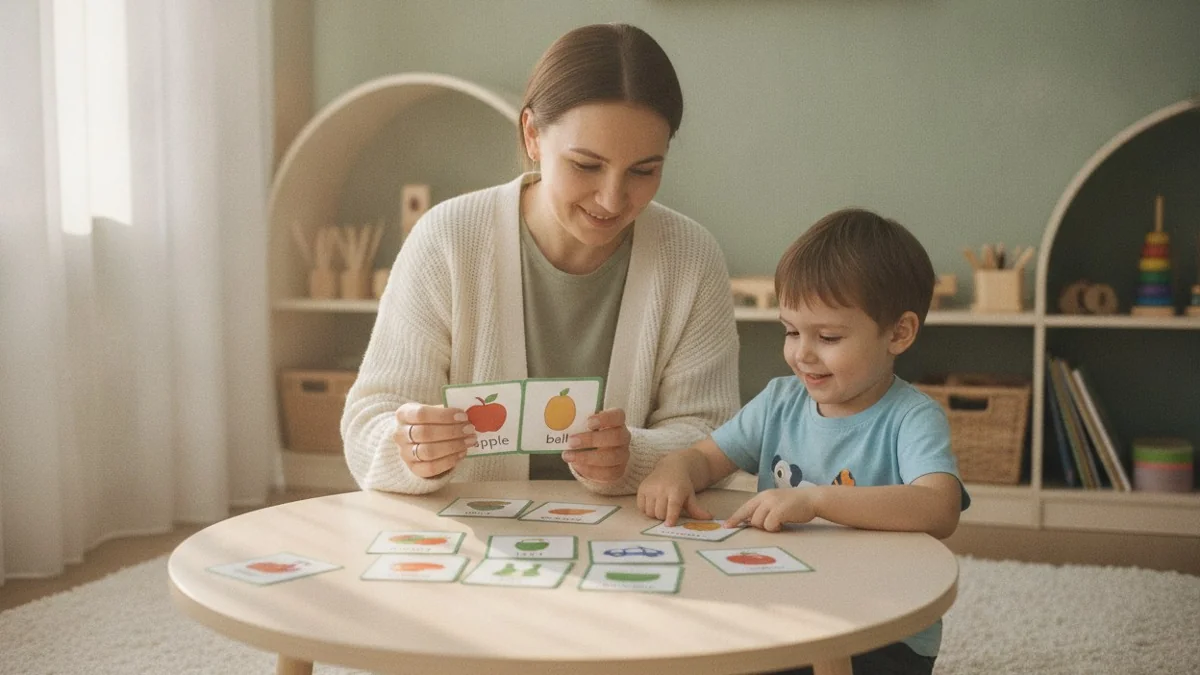
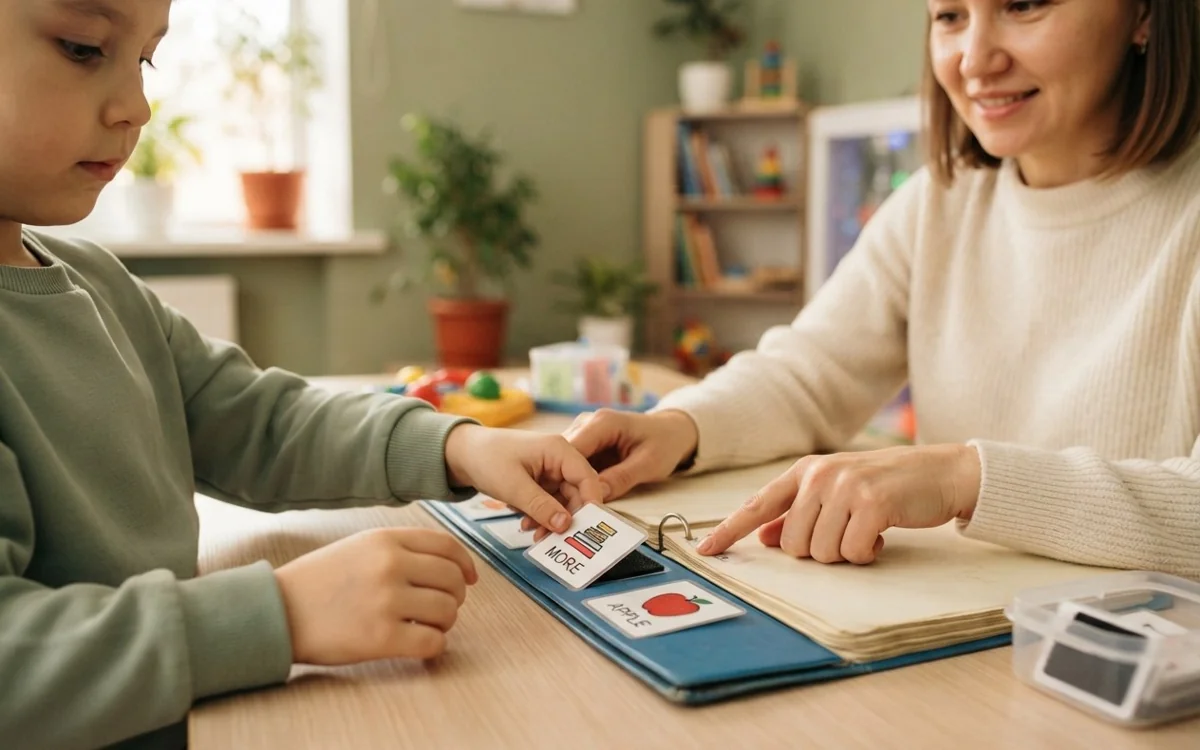
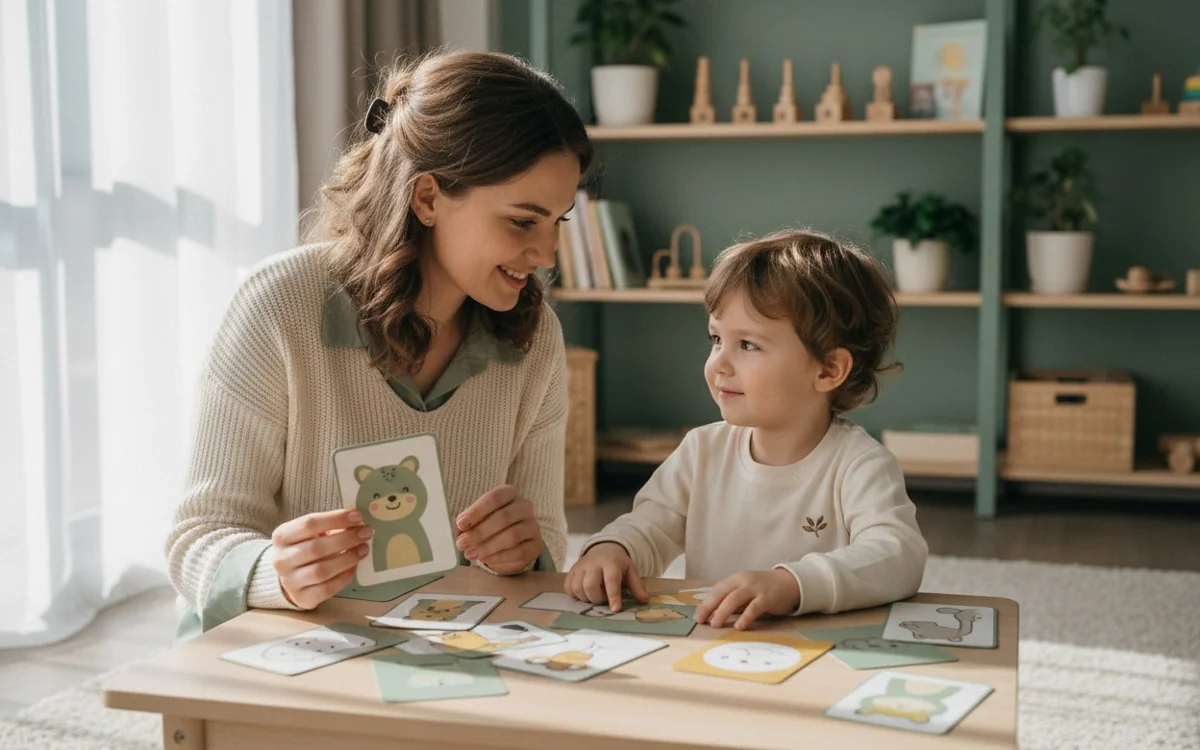
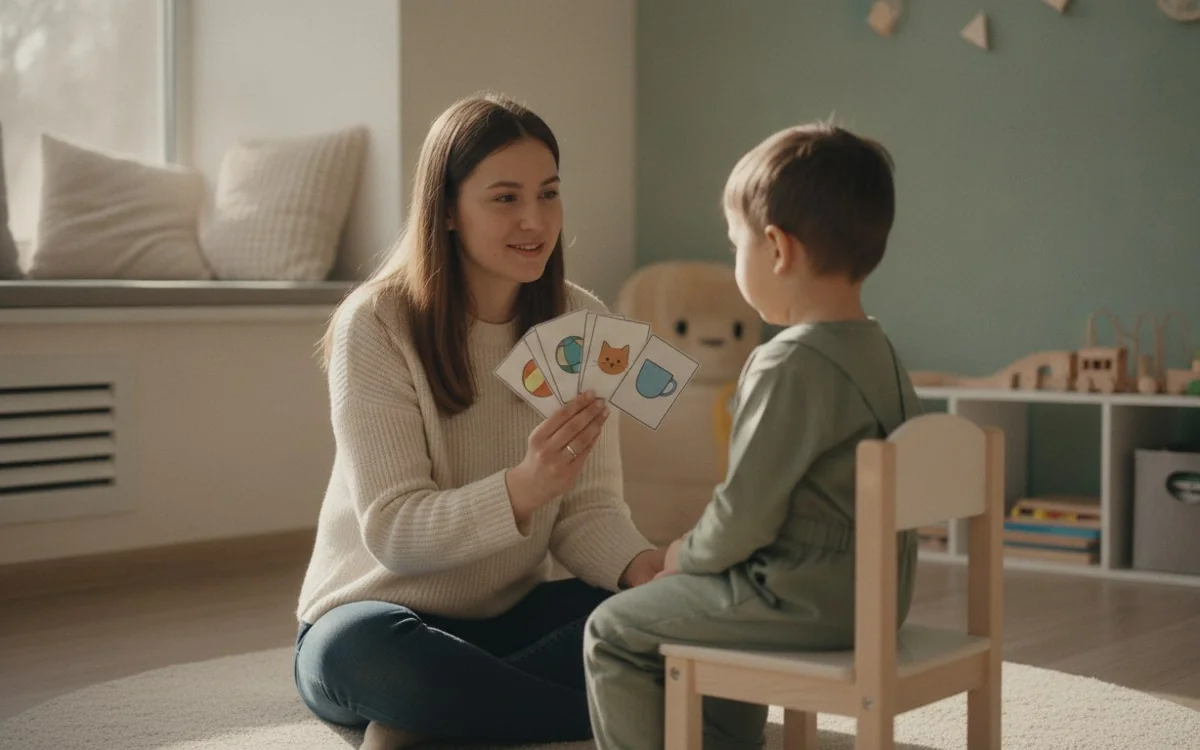
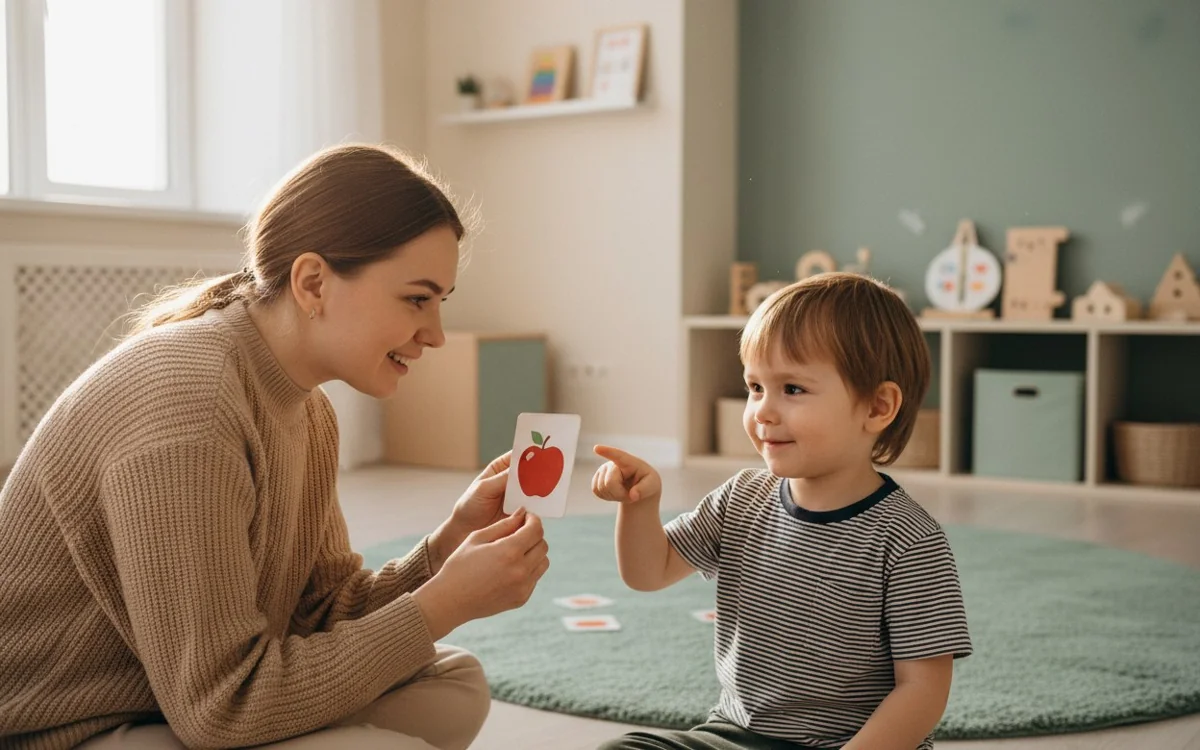
When oral speech does not develop for a long time, we do not wait — we introduce PECS (Picture Exchange Communication System). This is not a "replacement" for speech, but its foundation. The child learns to choose a card with what they want (cookie, swing, toilet) and give it to an adult. This is the first step toward conscious communication. PECS works even with non-verbal children from age 2. We have seen children who mastered PECS begin to vocalize the pictures after 6-8 months — first with single words, then with phrases. Alternative communication does not hinder speech; it relieves the brain from the stress of "I have to say it, but I can't."
Speech initiation in a non-speaking autistic child
Speech initiation for non-verbal autistic children is our main focus. We start with sensory integration: if a child does not feel their body, they will not feel the language either. We use facial massage, vibration games, and imitation of animal sounds. Then we introduce simple syllables: "ma," "pa," "ba" — through play. One of our methods is the "sound bridge": we take a child's favorite sound (e.g., "ooo") and link it to an action (swinging on a swing). After 2-3 weeks, the child begins to use "ooo" as a request to be swung. This is the first step toward conscious speech. Timelines are always individual: from 3 months to a year, but progress is visible within the first few weeks.
Working through the child’s interests
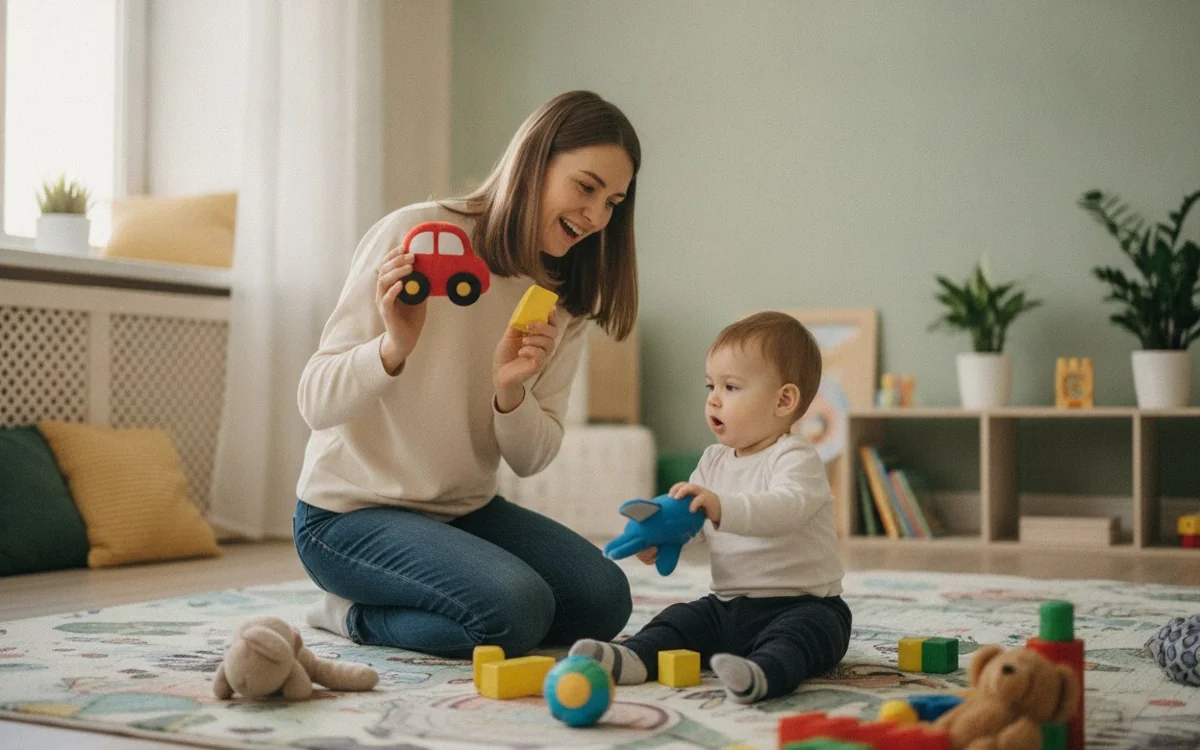
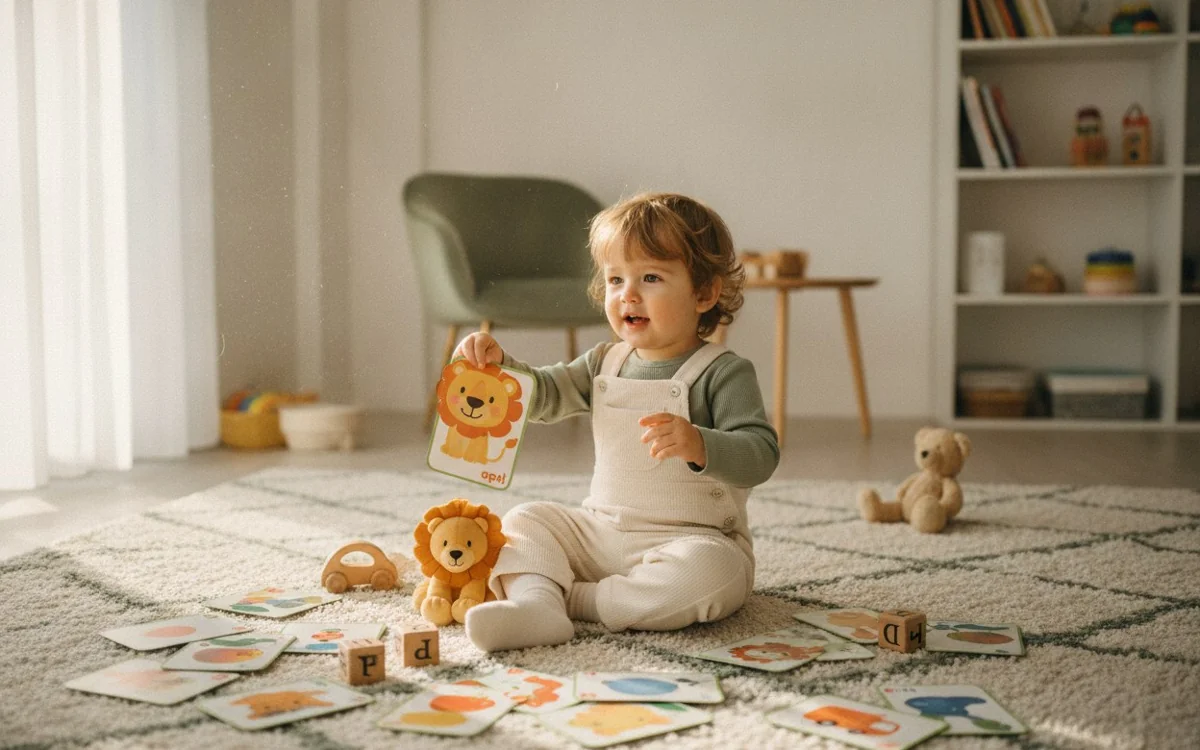
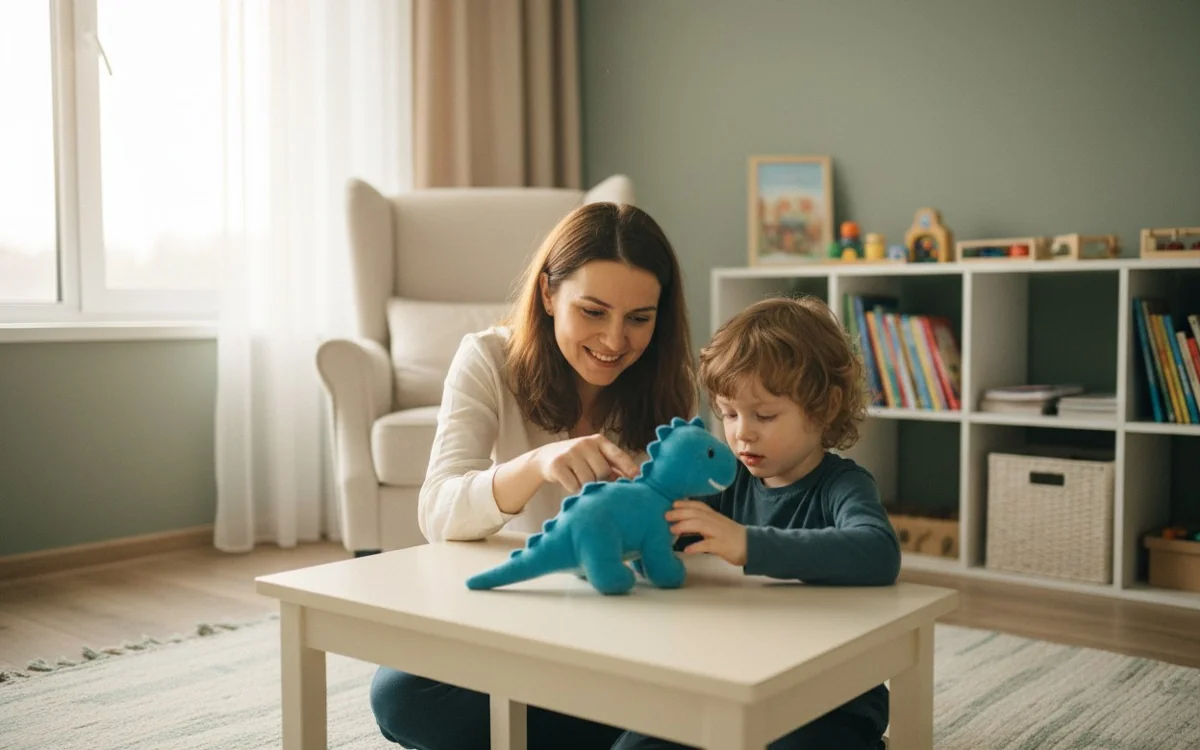
If a child is obsessed with trains, we don’t force them to look at apple cards—we teach them to say “train,” “choo-choo,” “wheel.” Working through a child’s interests boosts motivation significantly. We use their favorite toys, cartoons, and themes as both rewards and learning materials. For example, if a child doesn’t speak but loves spinning car wheels, we teach them to say “spin” or at least point to the wheel. This gives them a sense of control and joy from interaction. In our practice, there have been cases where children who hadn’t spoken for years began to utter words through their favorite object.
Stages of speech therapy work with autistic children
We divide the entire journey from silence to dialogue into clear stages. Each stage has its own goal and methods. A speech therapist's work with autistic children is not a sprint but a marathon, where every small victory matters. Below, I have provided a table showing how we move from contact to speech.
| Stage | Task | What we do |
|---|---|---|
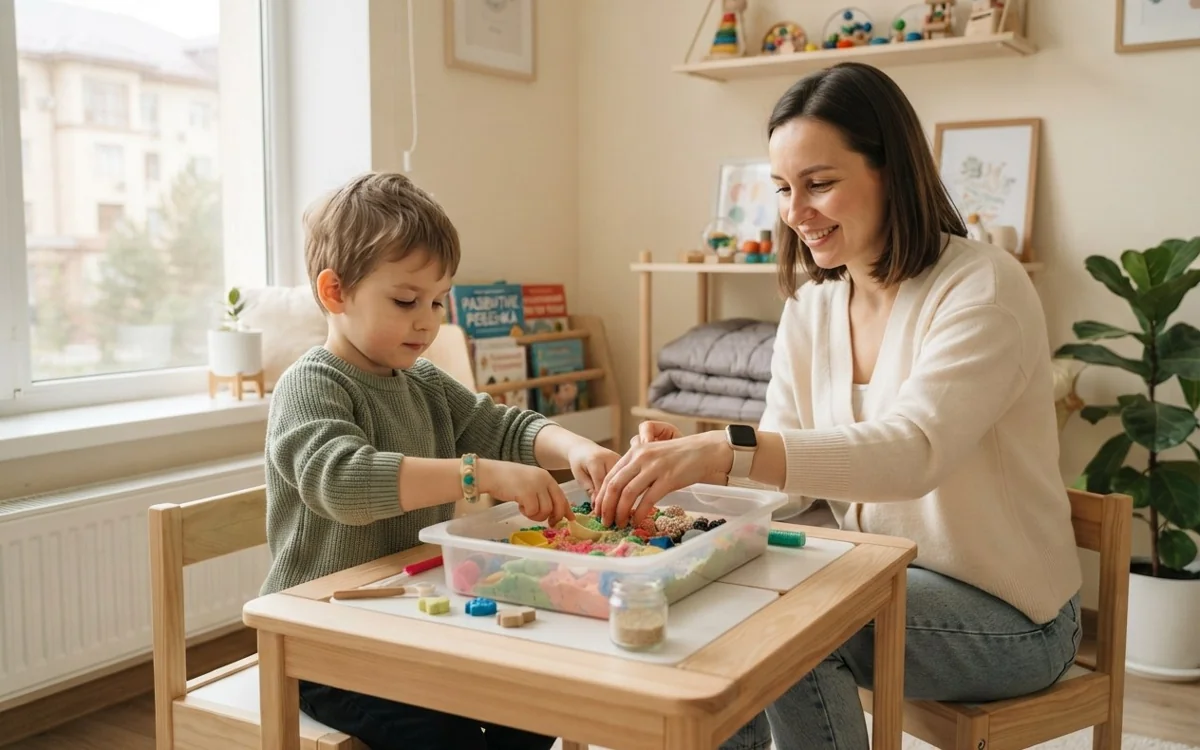
| Establishing contact | Reduce anxiety, build trust | Floor games, sensory bins, imitating the child's actions |
| Non-verbal communication | Teach expressing desires without screaming | Pointing gesture, nod, eye contact, PECS |
| Speech Elicitation | Launch first sounds and syllables | Articulation gymnastics, vocalizations, sound imitation |
| Speech Development | Expand vocabulary to 50+ words | Flashcards, books, naming everyday objects |
| Dialogue | Teach to answer and ask questions | Question-based games, role-playing games, discussing cartoons |
Establishing contact
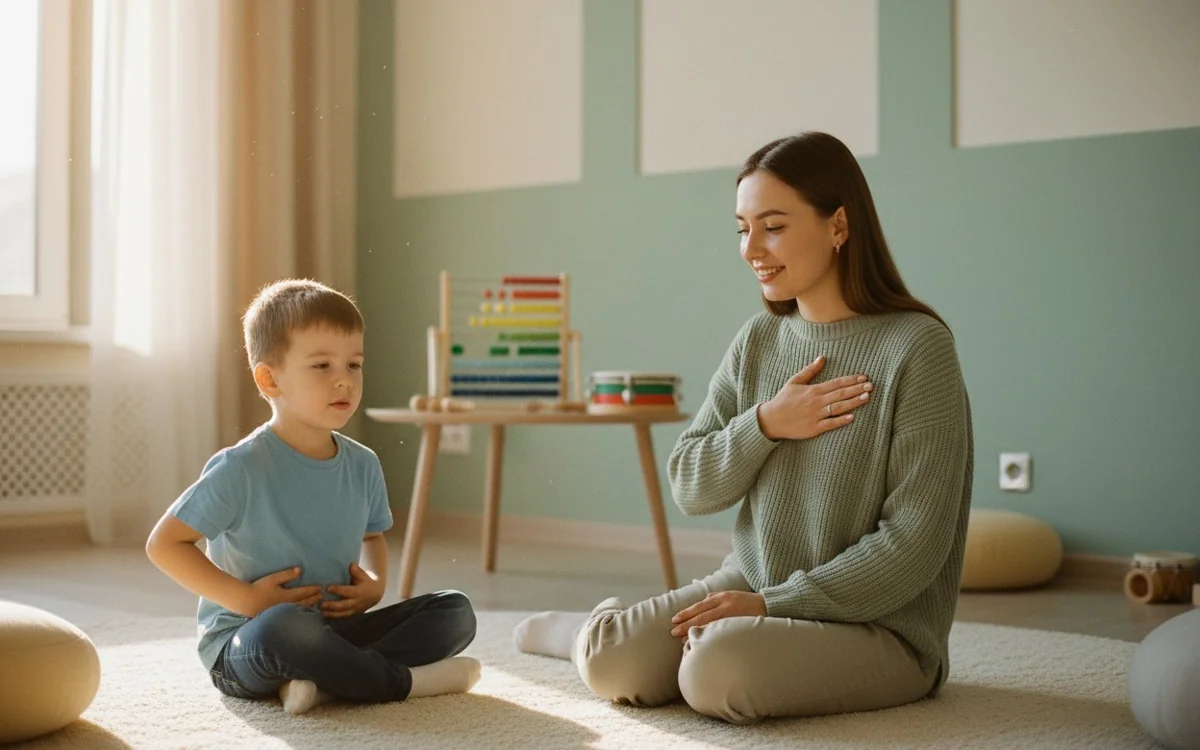
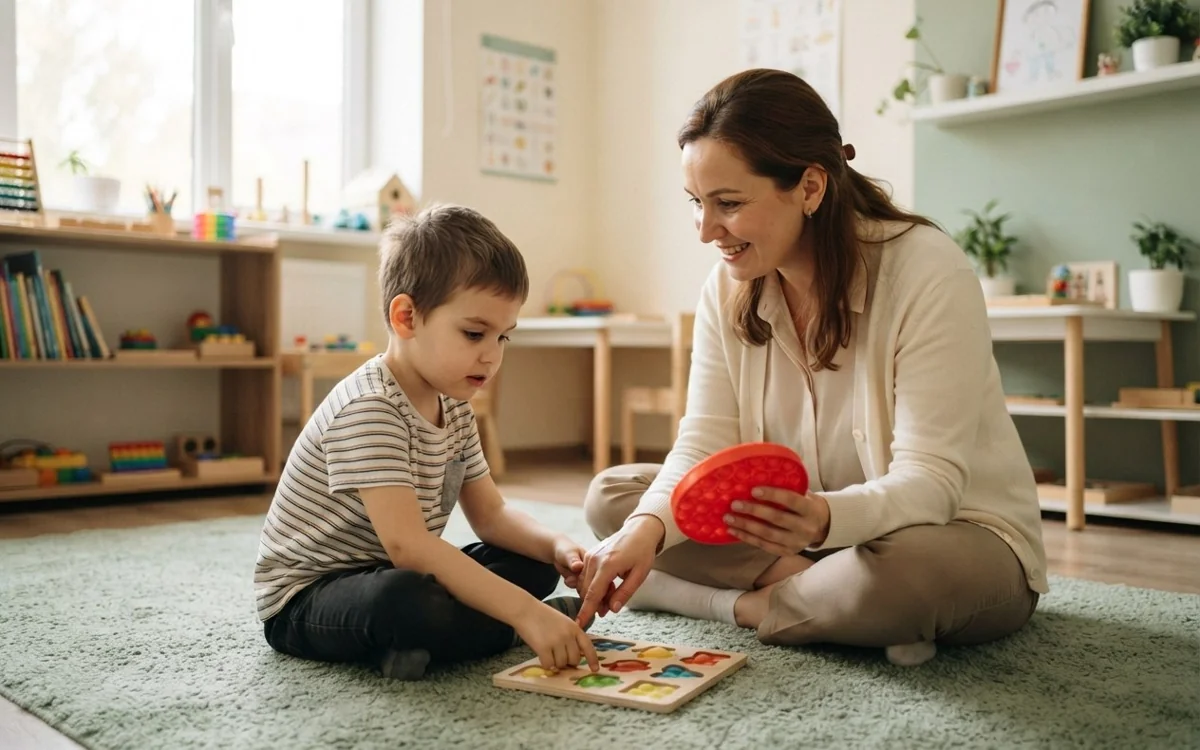
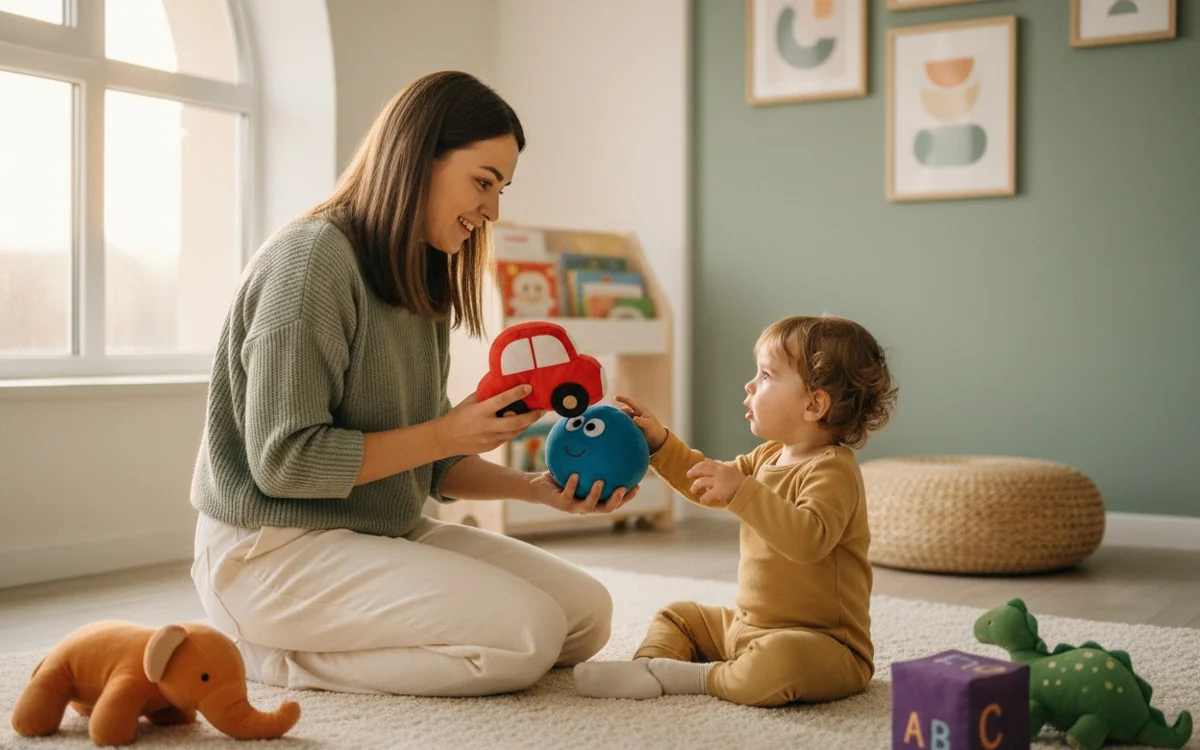
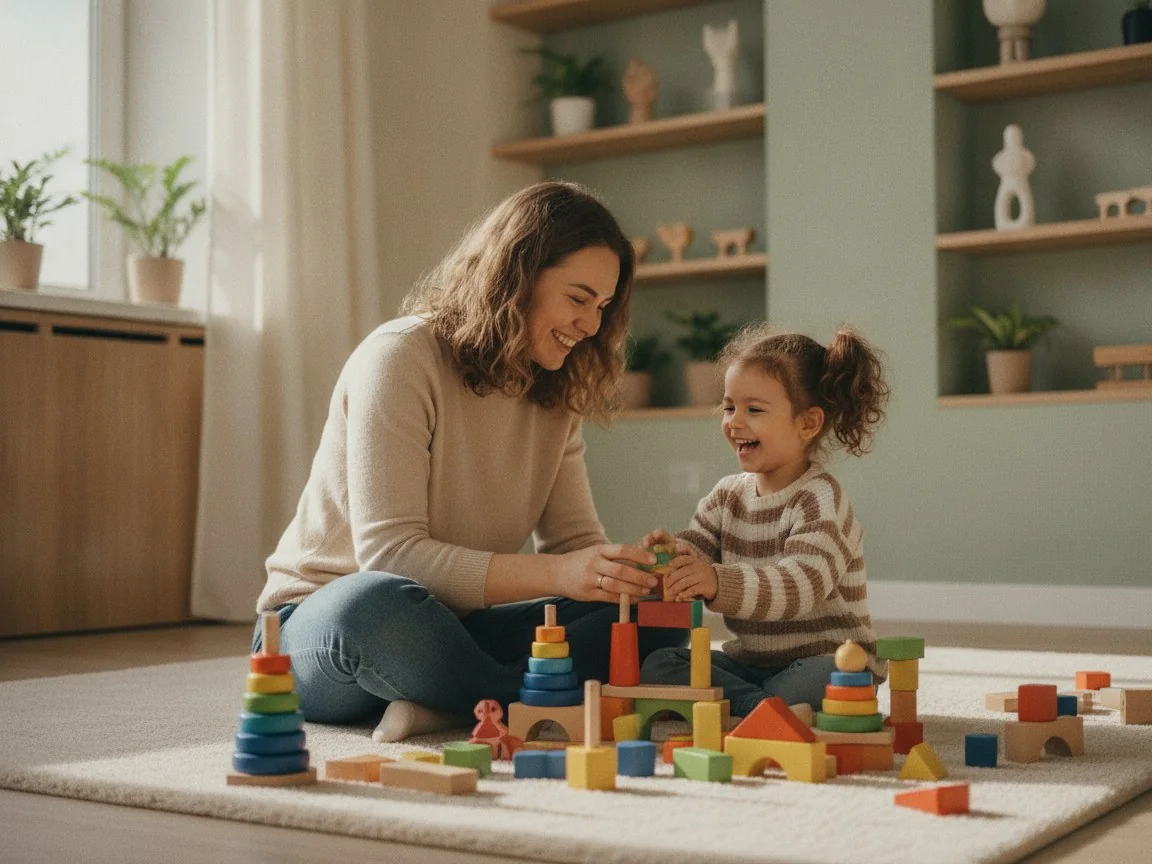
The first stage is the most important. If a child is afraid of the speech therapist, no methods will work. We start by sitting on the floor at the child’s level, mirroring their actions, and not invading their personal space. This can take from 2 to 10 sessions. We don’t demand eye contact or touch without warning. Gradually, the child gets used to our voice, scent, and tone. When they start approaching us or taking our hand—that’s a sign that contact has been established. Without this stage, speech therapy sessions with autistic children turn into a struggle rather than help.
Non-verbal communication
Before a child starts speaking, they must learn to communicate without words. We teach them to point at what they want, nod, shake their head "no," and look at an object when we name it. Nonverbal communication is the foundation for speech. If a child cannot ask for a toy with a gesture, they will not be able to ask for it with a word. We use games: "Where is the bear?" — the child points; "Do you want juice?" — they nod. This stage takes 1-3 months and is essential for initiating speech.
Speech Elicitation
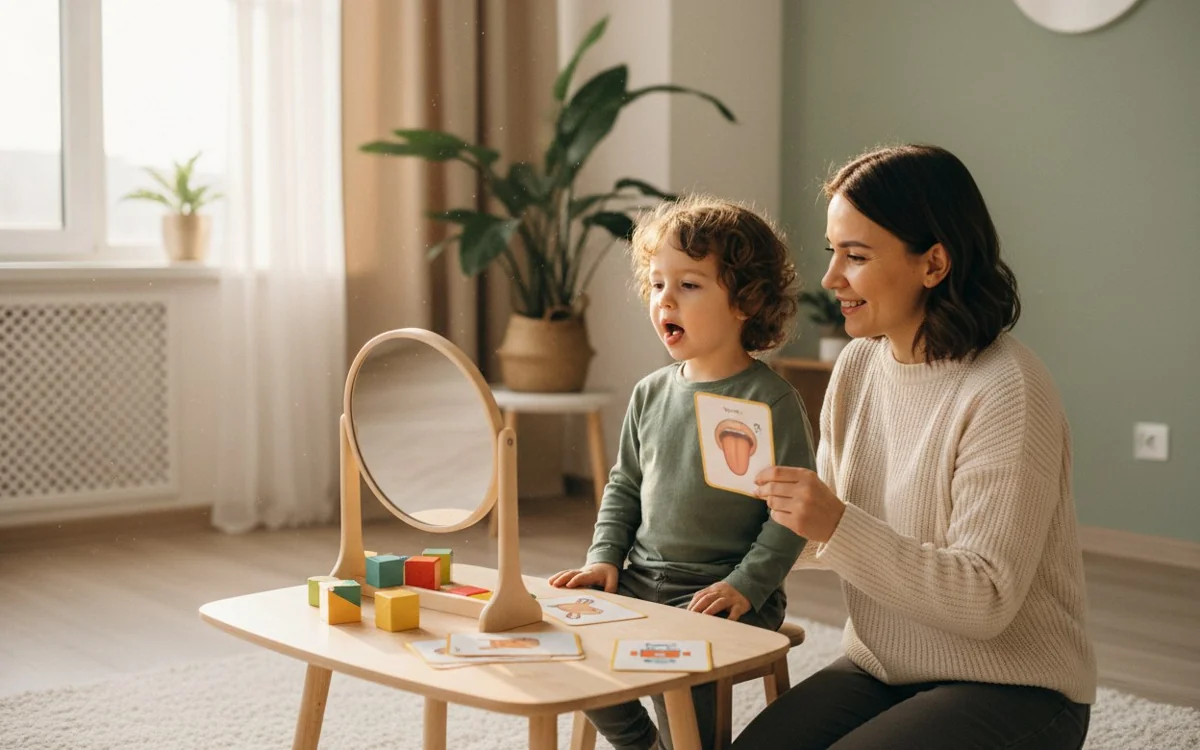
When contact is established and the child can point, we begin eliciting sounds. We use imitation: I say "ahh," the child repeats. If it doesn't work, we help with hands, massage, and vibration. Eliciting speech is a technical stage where regularity is important. We work on each sound individually: first vowels, then consonants, then syllables. Timeline: from 2 weeks to six months. It's important not to push: if the child is tired, we return to play. Every spoken word is a victory, and we celebrate it.
Speech and dialogue development
When words appear, we expand vocabulary to simple phrases: "give ball," "want drink." Then we teach answering questions: "What is this?", "Who is there?" Speech and dialogue development includes story-based games, reading books, and discussing everyday situations. We teach the child not just to name objects but also to express feelings: "I'm sad," "I'm happy." Dialogue is the highest level, which is not achievable for all children with ASD, but we strive for it. In our practice, about 40% of children reach full dialogue by ages 5-6, while the rest reach the level of everyday communication.
How sessions are conducted
Each session at our center is not just 40 minutes of work, but a whole system. We start with an assessment to understand where the child is: at the level of sounds, words, or phrases. A speech therapist for autistic children in Almaty must consider that each child is unique, and we tailor the program to their pace.
Assessment and individual program
The first session is not a test, but an observation. We see how the child reacts to new objects, how they breathe, and if they have favorite toys. Diagnostics take 1-2 meetings, after which we create an individual program. The program outlines monthly goals: for example, "learn to pronounce 5 vowel sounds" or "master 10 PECS cards." We don't rush the plan but follow the child. If they are not in the mood today, we play, but with a speech therapy focus. The individual program is reviewed every 3 months.
Duration and role of parents
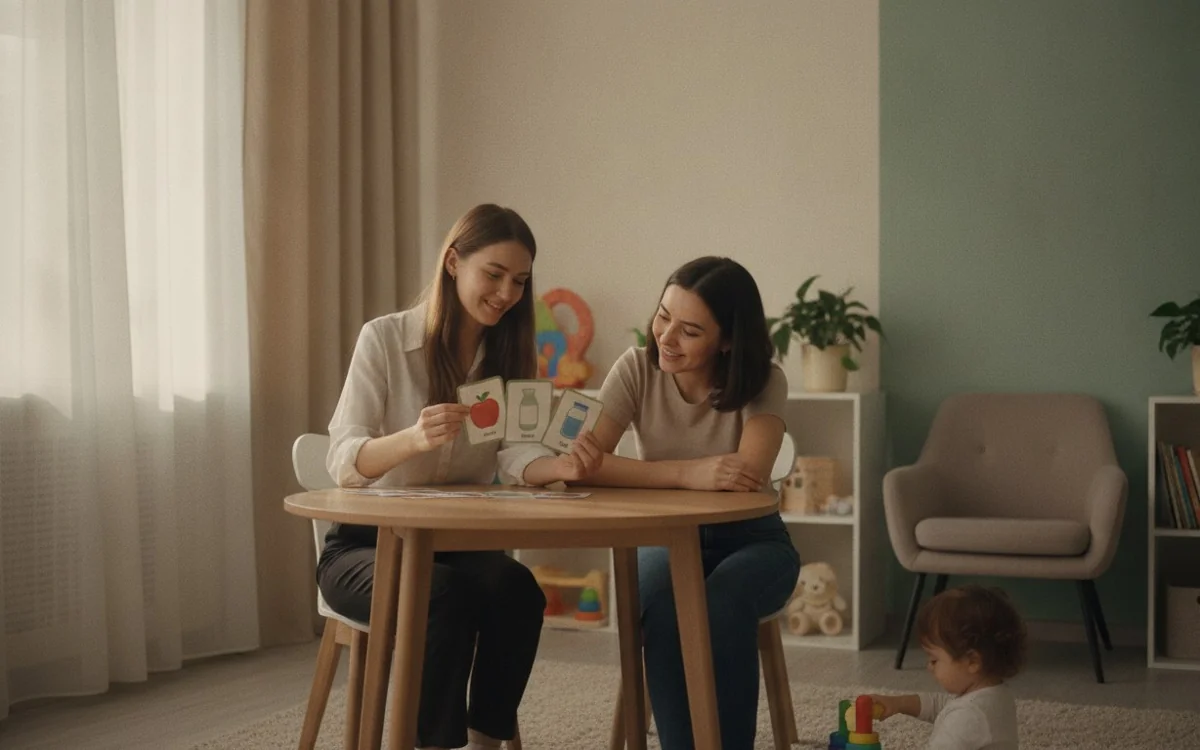
A session lasts 40–50 minutes, but for young children or those with severe fatigue — 20–30 minutes. Parents play a key role: we teach them to reinforce skills at home. Without homework, progress slows down by 2–3 times. We give simple exercises for 5–10 minutes a day: blow on a feather, stick out your tongue, name a picture. Parents attend sessions to see the method and repeat it. We don’t ask you to be “teachers,” only partners in play.
Teamwork: speech therapist, neuropsychologist
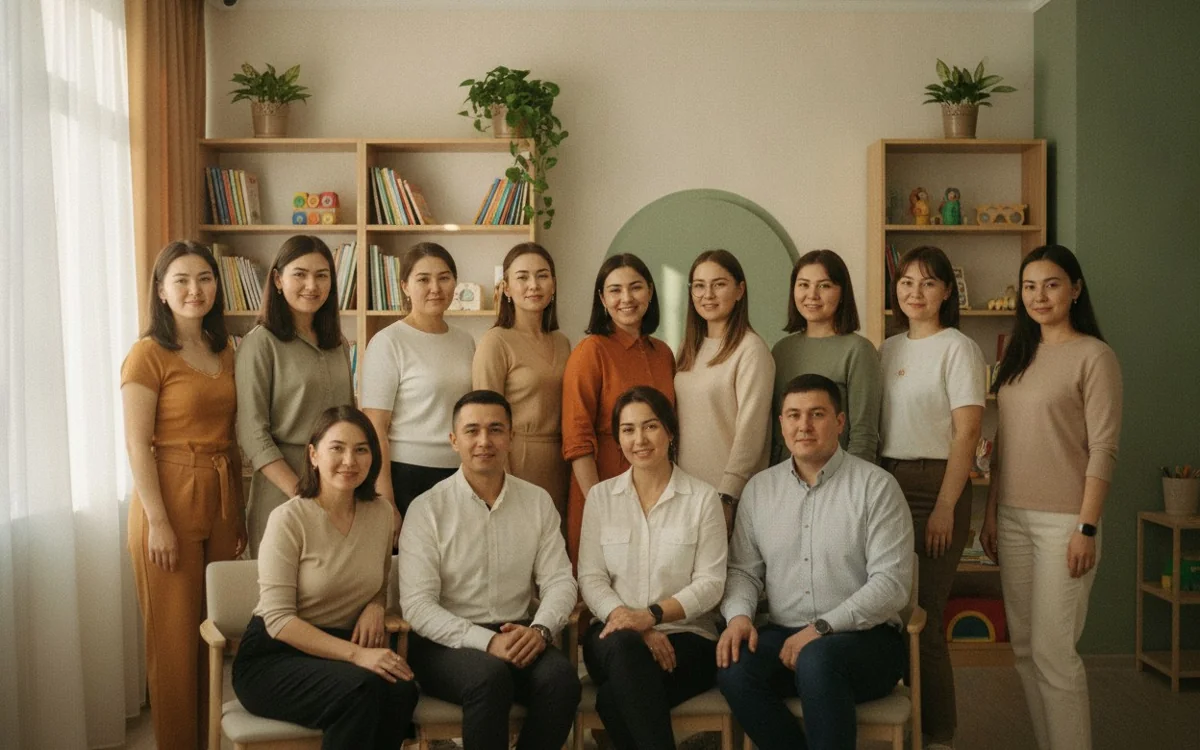
One speech therapist can’t solve all problems. Our center has a team: a defectologist corrects behavior, a neuropsychologist develops memory and attention, and a speech therapist initiates speech. Teamwork allows us to see the child holistically. For example, if a child doesn’t speak due to sensory processing issues, the neuropsychologist advises the speech therapist on which exercises to add. We hold consultations once a month to discuss each child’s progress. This yields results 30% faster than working with a single specialist.
Formats and prices
We offer two main formats: sessions at our center and at home. We do not practice online sessions for children with ASD, because without physical contact and visual control, effectiveness drops by 70%. Prices in Almaty vary, and we strive to keep them affordable. Below is a table with current prices.
| Format | Duration | Price (tenge) | Note |
|---|---|---|---|
| Individual in-center | 40 min | 6000 | Includes work with a speech therapist and defectologist |
| Individual at home | 45 min | 8000 | Only in Almaty, home visits in Alatau and Medeu districts |
| Intensive (3 times a week) | 40 min | 15,000 per week | 15% discount when paying for a month |
| Free diagnostic assessment | 30 min | 0 | Initial consultation, no obligation |
Center-based sessions
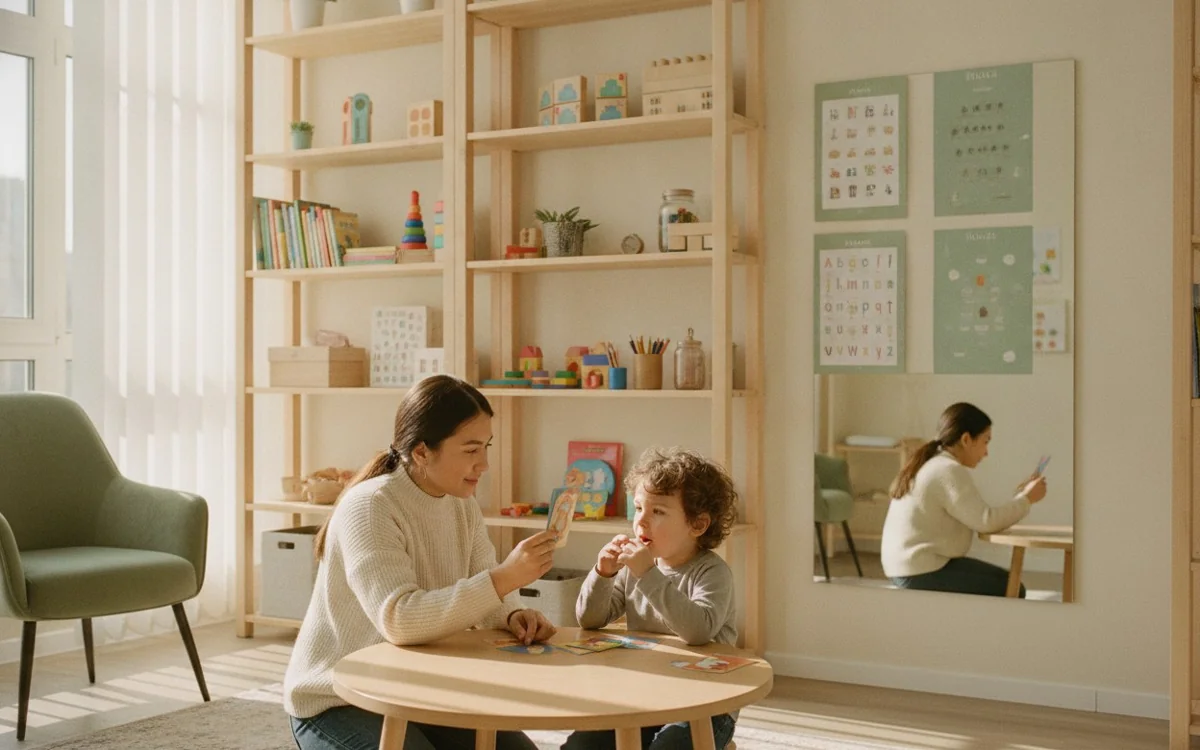
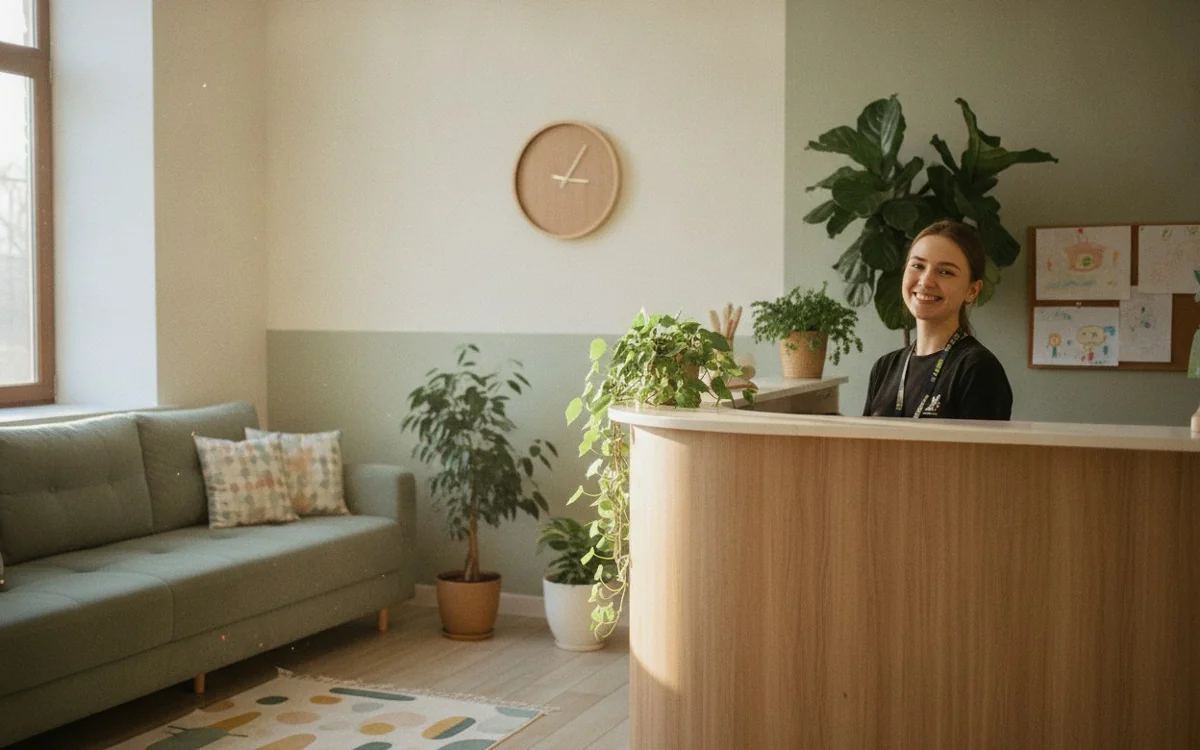
Our center is located in a convenient area of Almaty, with parking and a waiting area for parents. The therapy room has minimal distractions: neutral walls, soft lighting, a carpeted floor. Sessions at the center include access to all materials: sensory boxes, cards, tablets with speech therapy programs. We recommend this format for children who are easily distracted at home. The cost is 6,000 tenge for 40 minutes, which is 10-15% lower than the city average.
Home sessions
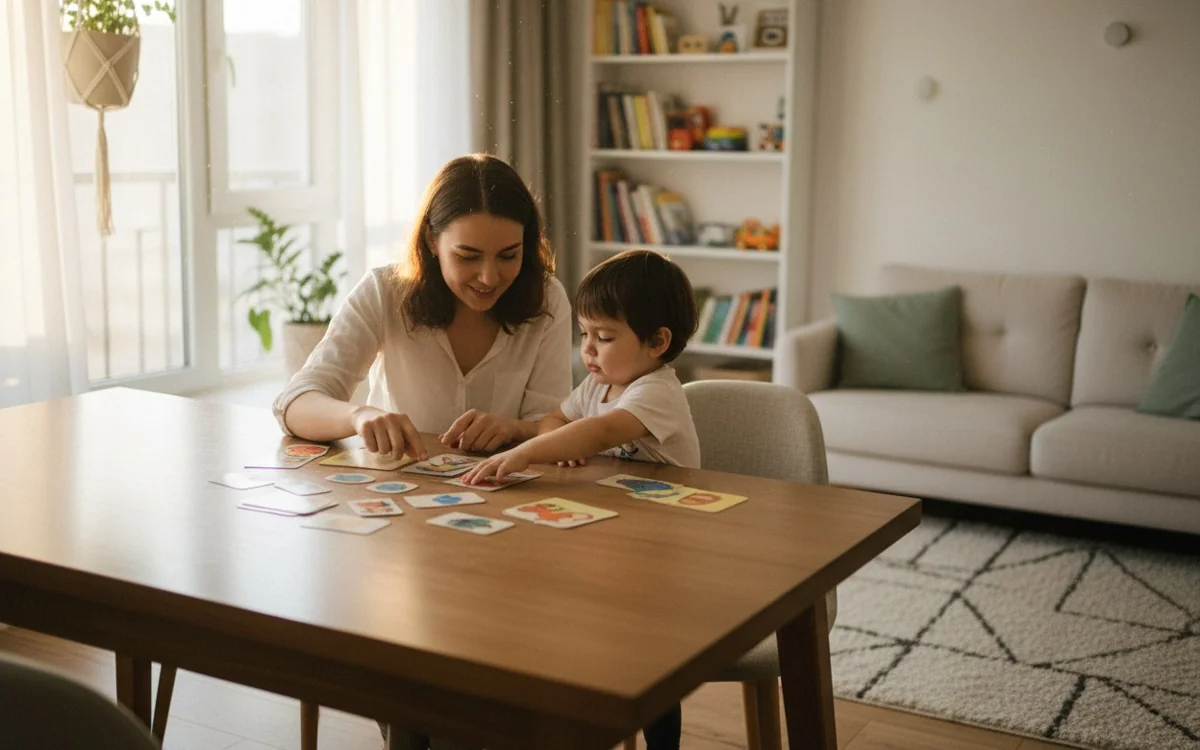
For children who have difficulty adapting to a new place, we offer home visits. Home visits are possible in any district of Almaty, but we give preference to Alatau, Medeu, and Bostandyk districts. Home sessions are more expensive — 8,000 tenge, as they include travel time. We bring all materials with us: cards, toys, a tablet. At home, the child feels safer, and rapport is established faster. However, there is a risk of distractions: TV, siblings. We ask you to arrange a quiet space for the duration of the session.
Free diagnostic assessment
We offer a free diagnostic session so you can see if we are a good fit. During the session, the speech therapist assesses speech skills, communication level, and provides initial recommendations. This is not just a "look-see," but a full consultation. The free diagnostic session lasts 30 minutes, after which we discuss a plan. If you decide to continue, we create a program. If not, you leave with an understanding of what to do next. No hidden conditions.
How to choose a speech therapist for an autistic child
Choosing a specialist is a responsible step. I often see parents coming after unsuccessful experiences with speech therapists who did not understand the specifics of ASD. How to choose a speech therapist for an autistic child? Here are the key criteria I recommend checking.
- Experience with ASD: Ask how many children with autism the specialist has worked with in the last year. If fewer than 5, it's a risk. A speech therapist for autistic children should have a portfolio of cases: from non-verbal to verbal.
- Methods of work: Find out if they use PECS, visual schedules, sensory integration. If the specialist only talks about "articulation exercises," they are not suitable. Methods must be adapted for ASD.
- Contact with the child: At the first meeting, observe how the specialist interacts: they don't pressure, don't shout, and sit at the child's level. If the child cries or withdraws, it's a bad sign. A good speech therapist knows how to wait.
- Feedback for parents: A specialist should explain what they are doing and why. If you don't understand what is happening during the session, that is a problem. We always provide homework and progress reports.
- Program Flexibility: Find out if the plan can be adjusted if the child is struggling. A rigid program without changes leads to stress. We review goals every 2–4 weeks.
- Reviews from other parents: Ask for contacts of parents the specialist has worked with. A real-life review is more valuable than any diploma. In our center, we are open to recommendations.
Remember: timelines and results depend on the diagnosis and regularity of sessions. We do not guarantee that a child will speak in a month, but we guarantee systematic work and transparency at every step. If you are looking for a speech therapist for autistic children in Almaty, come for a free diagnostic session — we will show you how we work, and you can decide without pressure.