



·
Speech therapy massage in Almaty — what you need to know
When parents first hear "speech therapy massage," many imagine something frightening — needles, pain, tears. In reality, it is one of the most effective working methods that helps initiate speech even in complex cases. At our center in Almaty, we have been providing speech therapy massage to children and adults for over seven years, and I will explain how it actually works.
What is speech therapy massage and what is it for
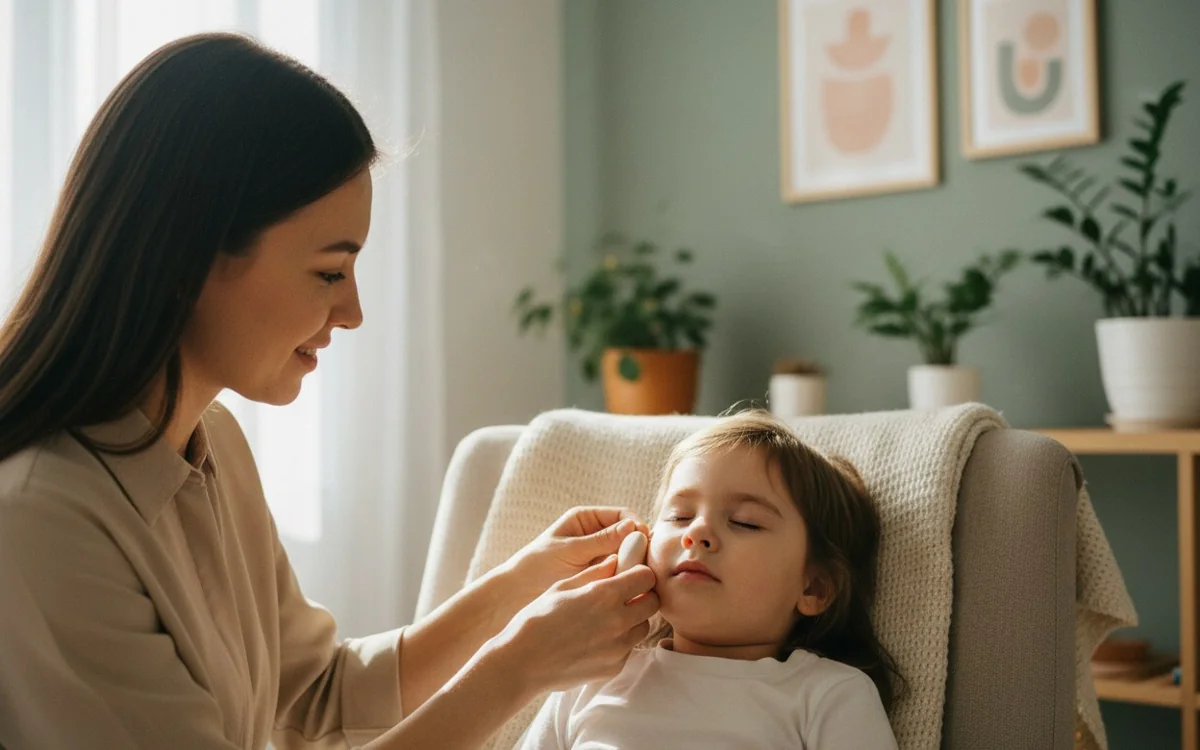
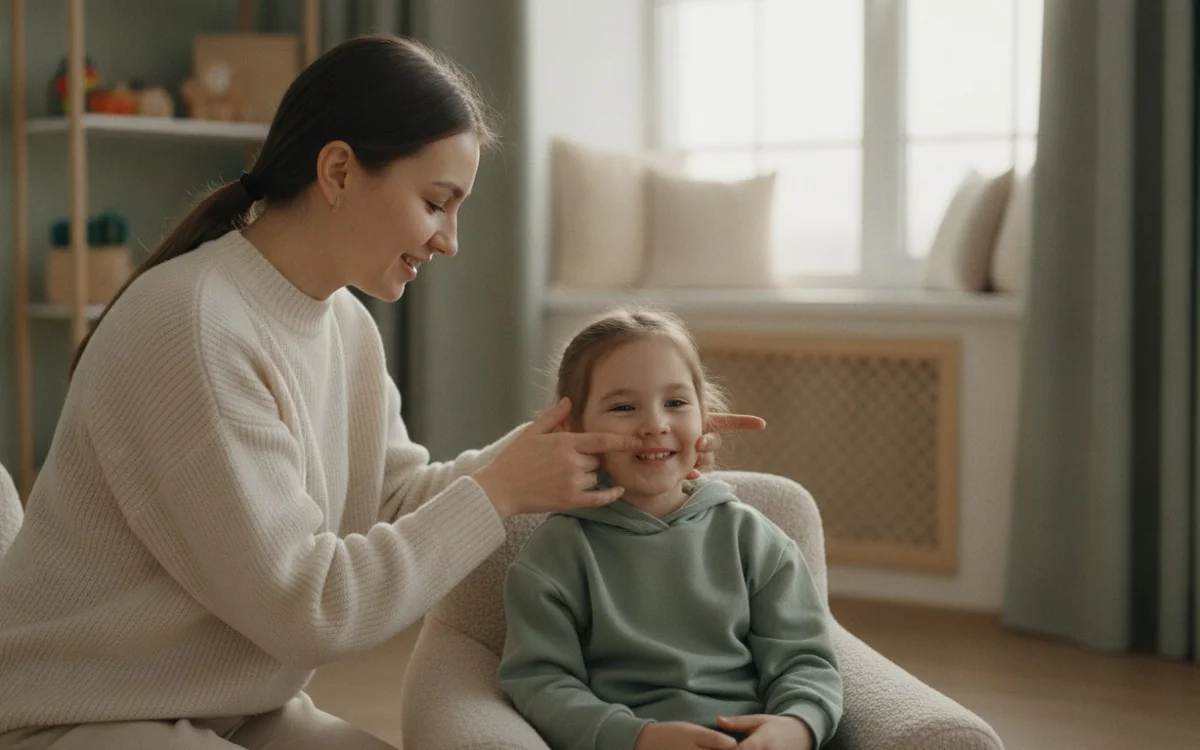
Speech therapy massage is a mechanical effect on the muscles of the articulatory apparatus: the tongue, lips, cheeks, and soft palate. We work with fingers or special instruments to normalize muscle tone, improve blood supply, and prepare the speech organs for correct sound pronunciation.
Why speech therapy massage is needed
Why speech therapy massage is needed — this question is asked at almost every consultation. The answer is simple: to "wake up" muscles that are not working, or, conversely, to relieve excessive tension. In children with dysarthria, the tongue often lies in a lump, does not lift up, and the lips are inactive. Without massage, it is almost impossible to produce sounds — articulatory gymnastics is difficult, and sound automation drags on for months. We use massage as a preparatory stage: after the course, the child begins to feel their palate, lips, and tongue tip — and progress in sessions accelerates two to three times. For example, in five-year-old Amirat with dysarthria, after ten sessions, the "R" sound appeared, which had been absent for two years. The effect is cumulative: the more regular the sessions, the faster the result.
Indications for speech therapy massage
Indications for logopedic massage include a wide range of disorders. The main ones are: dysarthria (mild and pronounced forms), speech delay, alalia, stuttering, hypersalivation (excessive drooling), tongue tone disorders — hypertonicity and hypotonicity. Massage is also effective for rhinolalia (after palate surgery) and in preparation for producing complex sounds in children from 2.5–3 years old. In adults, the indications are the same: after strokes, traumatic brain injuries, for dysarthria due to cerebral palsy. Contraindications: acute oral inflammations (stomatitis, herpes), fever, active-phase epilepsy, blood disorders. If you are unsure — we always conduct a preliminary diagnostic assessment, which is free of charge.
What effect does the massage provide
The results we see in our patients fall into three groups. First — normalization of tone: the tongue stops being "flaccid" or "rigid," and mobility appears. Second — reduced drooling: the child begins to swallow saliva instead of having a wet chin. Third — accelerated sound production: sounds appear 3–4 months faster than with articulatory gymnastics alone. For example, in six-year-old Aisha with tongue hypertonicity, after 8 sessions of relaxing massage, the "L" sound emerged on its own, without additional work. An important nuance: the effect is consolidated if massage is combined with speech therapy sessions. Massage alone without sound correction provides temporary improvement — muscles relax, but the skill of correct pronunciation is not formed.
Types of speech therapy massage
In our practice, we use several techniques, and the choice depends on the diagnosis, age, and muscle tone. We combine classic manual massage with probe massage using the Novikova method, and for children under 3 years old, we often use spoon massage — it is less invasive and well tolerated.
| Type of massage | When we use it | Features |
|---|---|---|
| Manual classic | Hypotonia, hypertonia, preparation for sounds | Finger techniques: stroking, kneading, vibration |
| Probe massage (Novikova) | Dysarthria, mild dysarthria, complex cases | Special probes: ball, fork, hatchet |
| Spoon massage | Children under 3 years old, high sensitivity | Regular teaspoons, stroking along the lips and tongue |
| Toothbrush massage | Hypersalivation, weak tone | Soft brush, circular movements on the tongue |
| Relaxing | Tongue hypertonia, stuttering, anxiety | Slow stroking, targeted pressure |
Manual speech therapy massage
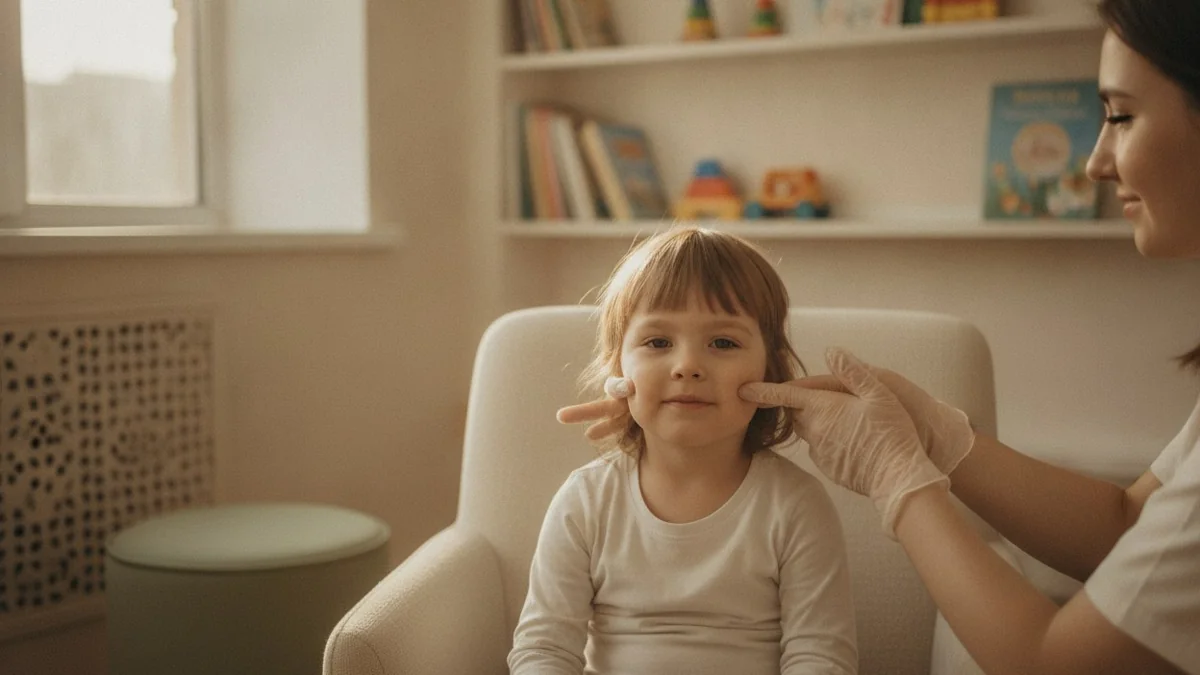
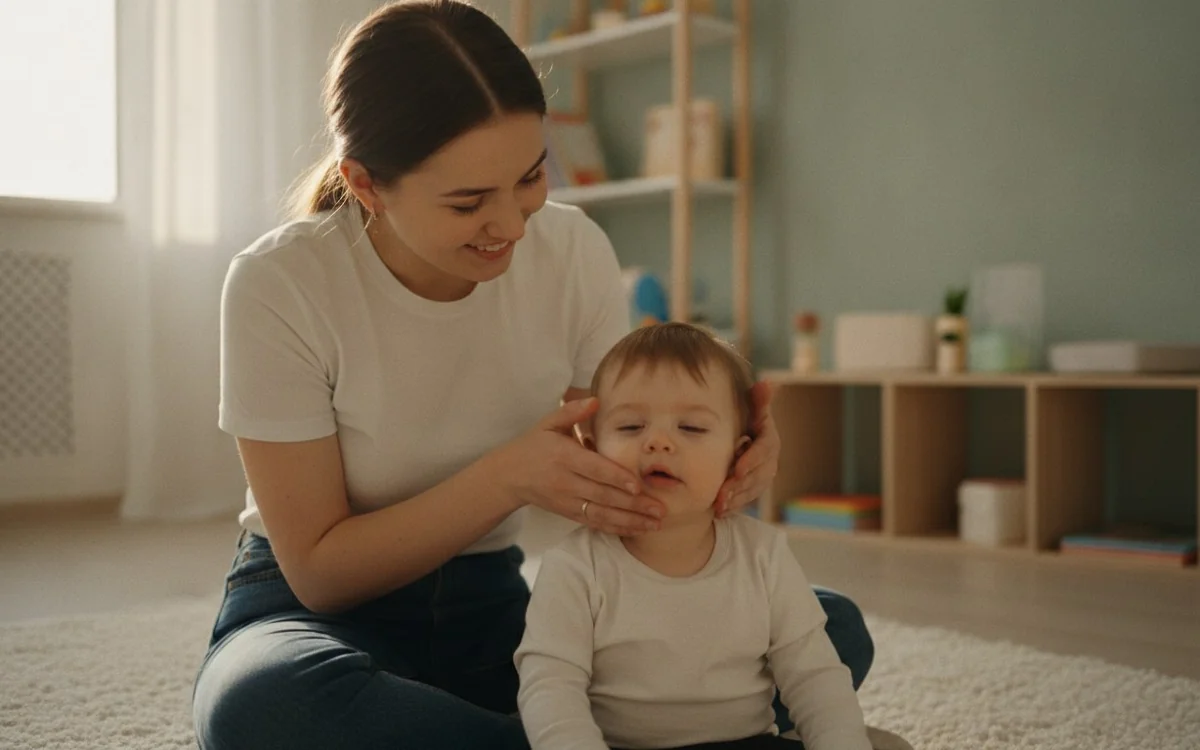
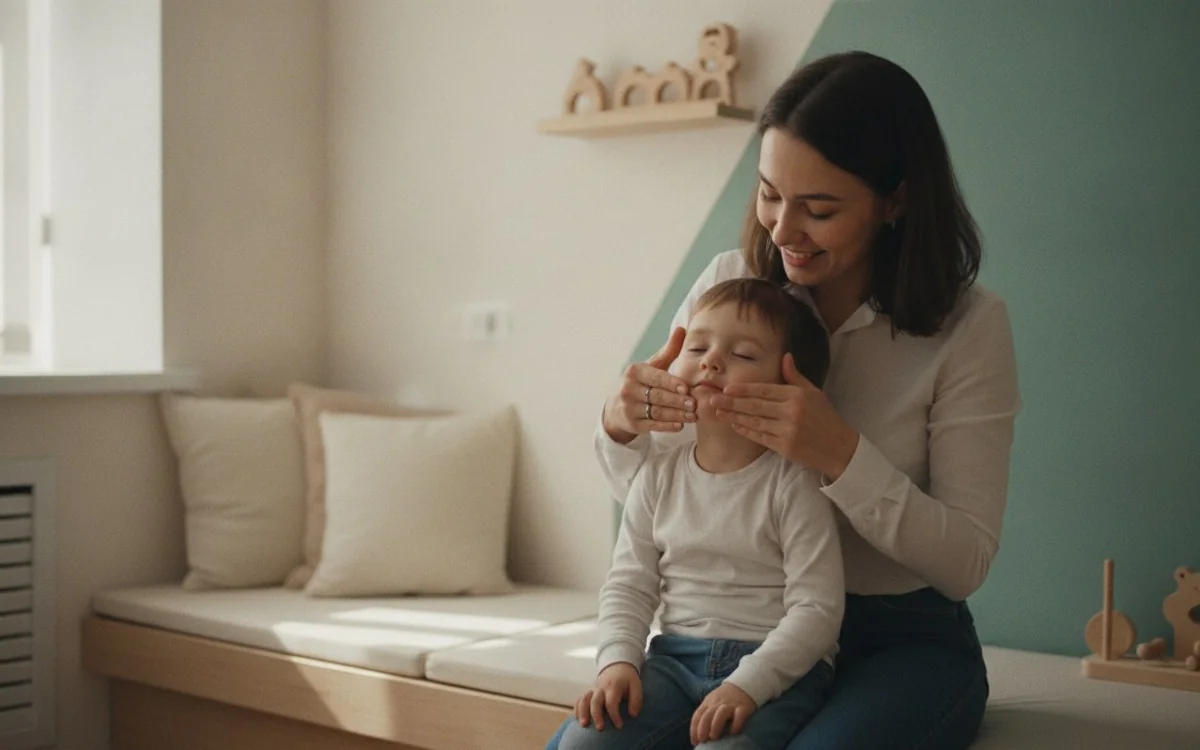
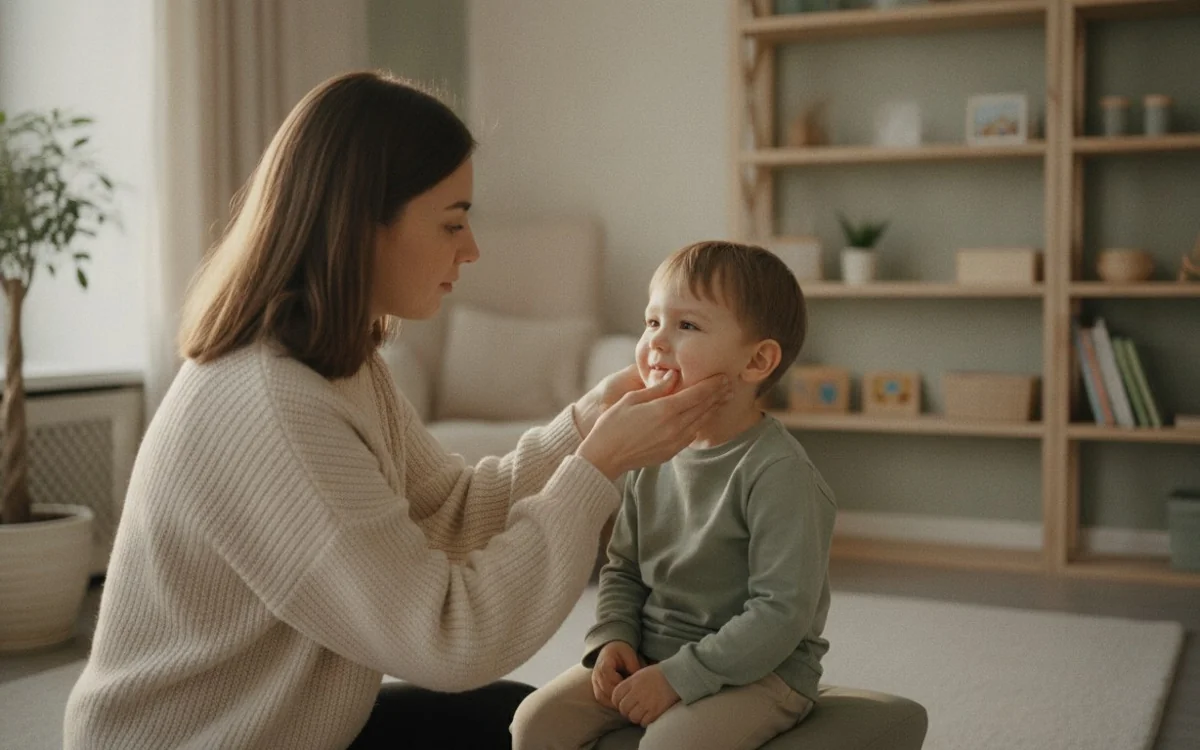
Manual massage is a basic technique that every speech therapist in our center masters. We work with fingertips: stroking the tongue from root to tip, kneading the cheeks from the inside, massaging the orbicularis oris muscle. It is safe, painless, but requires precise knowledge of anatomy. For example, with hypotonia we use more intense kneading movements to "wake up" the muscles, and with hypertonia — slow stroking to relieve spasm. Manual massage takes 10–15 minutes and can be combined with articulation exercises in the same session. We often prescribe it for children from 2.5 years old, when probes are still frightening, but fingers are perceived calmly.
Novikova probe massage
Probe massage is an original method by Elena Novikova that we use for complex cases: dysarthria, alalia, pronounced hypertonia. The set of speech therapy probes includes 8 instruments: a ball for relaxing the tongue, a fork for activating the tip, a hatchet for working on the root. The work requires high qualifications — our speech therapists undergo training and have a speech therapy massage certificate. Probe massage receives mixed reviews: older children (4–6 years old) often tolerate it calmly, while younger children may cry during the first 2–3 sessions but then get used to it. Importantly, the probes are sterilized after each patient, and we use disposable gloves. The course is usually 10–15 sessions, and after it, parents notice that the child has begun to feel their tongue and lips better.
Speech therapy massage with spoons
Logopedic massage with spoons is a great option for anxious children and parents who are afraid of probes. We use regular teaspoons (warm, not cold) and perform stroking movements on the lips, tongue, and cheeks. The technique is simple but effective: the spoon does not injure the mucous membrane, does not trigger the gag reflex, and children perceive it as a game. Massage with spoons works especially well for hypersalivation — we stimulate the orbicularis oris muscle, and drooling stops. The downside: deep tongue work with a spoon is not possible, so for dysarthria we combine it with manual massage. Duration — 5–7 minutes, suitable for children from 1.5 years old.
Speech therapy massage with a toothbrush
Speech therapy massage with a toothbrush — a method we recommend for home reinforcement. Take a new soft toothbrush (children's) and massage the tongue, lips, and inner cheeks in circular motions. This stimulates blood circulation and receptors, which is especially beneficial for hypotonia. However, there is a nuance: at home, parents often press too hard or do it too intensely, causing a gag reflex. Therefore, we first demonstrate the technique during a consultation and then provide a handout. Doing speech therapy massage with a toothbrush at home is effective as a supplement, but not a replacement for a professional session.
For which disorders is massage performed
Each disorder requires its own massage scheme. We do not work "blindly" — before the course, we conduct a diagnosis of muscle tone and salivation to select the technique. Below is a table showing which type of massage and what effect we achieve for different conditions.
| Condition | Type of massage | Expected effect |
|---|---|---|
| Tongue hypertonicity | Relaxing speech therapy massage, manual stroking | Reduced spasm, tongue mobility, emergence of sounds |
| Hypotonia of the tongue | Stimulating, probe, toothbrush massage | Muscle strengthening, tongue elevation, reduced drooling |
| Hypersalivation | Lip massage, circular cheek massage, with spoons | Normalization of salivation after 5–7 sessions |
| Dysarthria (mild) | Novikova probe massage, manual combined massage | Speech sound correction in 2–3 months instead of 6–8 |
| Stuttering | Relaxing speech therapy massage, acupressure | Releasing tension, speech fluency, reducing anxiety |
Speech therapy massage for tongue hypertonicity
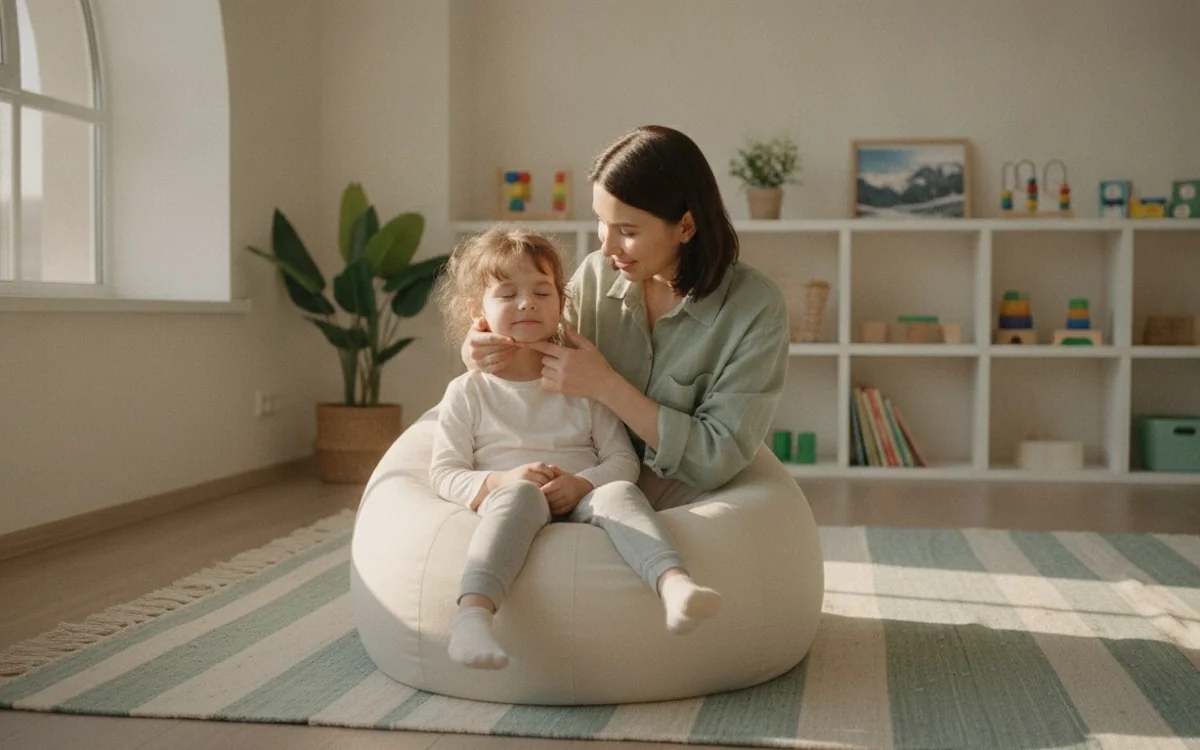
Speech therapy massage for tongue hypertonicity is one of our most common tasks. Hypertonicity looks like this: the tongue is tense, raised to the palate, the tip does not lower, the child speaks nasally or slurredly. We use a relaxing speech therapy massage: slow strokes from the root to the tip, point pressure on spasmed areas, vibration with fingertips. The course is 10 sessions, twice a week. After just 3–4 sessions, the tongue becomes softer, and articulatory exercises become possible. For example, four-year-old Tamir with hypertonicity could not lift his tongue up — after massage, within 2 weeks, the sound "Sh" appeared. Important: if hypertonicity is caused by neurology, we work in conjunction with a neurologist.
Logopedic massage for hypotonicity
Speech therapy massage for hypotonicity is the complete opposite: the tongue is flaccid, flattened, and the child cannot hold it in the correct position. Here, an activating massage is needed: kneading, pinching, and pressing with probes. We often use speech therapy massage probes with notches to stimulate receptors. Hypotonicity is often combined with hypersalivation, so we massage the lips and cheeks simultaneously. Result: the tongue becomes firmer, rises to the palate, and drooling stops. The course is 12–15 sessions, after which the child begins to pronounce sounds they previously "swallowed."
Speech therapy massage for hypersalivation
Hypersalivation (drooling) is a problem that worries parents no less than the absence of sounds. The child has a wet chin, stains on clothes, and speech becomes slurred due to excess saliva in the mouth. Speech therapy massage for hypersalivation targets the orbicularis oris muscle and cheeks: we perform stroking with spoons, finger tapping, and acupressure of the lips. After just 5 sessions, drooling decreases because the muscles begin to retain saliva. A full course is 8–10 sessions, and we teach parents to do speech therapy massage at home for reinforcement.
Speech therapy massage for stuttering
For stuttering, massage is an auxiliary but very important method. We relieve muscle tension in the neck, shoulders, and articulatory apparatus. We use relaxing speech therapy massage: slow stroking of the tongue, lips, cheeks, as well as point pressure on tension areas. Stuttering is often associated with hypertonia, so after the massage, the child speaks more smoothly and stumbles less. The course is 10–15 sessions, but the result depends on the form of stuttering: with the neurotic form, the effect is noticeable faster; with the neurosis-like form, more time is required.
How the procedure goes
Many parents worry: "Will it hurt?", "How long does a session last?", "The child won't open their mouth." I'll explain step by step how it all happens at our center.
How long does speech therapy massage last
How long speech therapy massage lasts depends on the child's age and condition. For children under 3 years — 5–7 minutes, for 3–6 years — 10–15 minutes, for schoolchildren and adults — up to 20 minutes. We never hold a child by force: if they are tired or fussy, we take a break or shorten the time. The course is usually 10–15 sessions, 2–3 times a week. The break between courses is 1–2 months to consolidate the result. Important: after each session, we give recommendations for articulatory gymnastics to enhance the effect.
How is the massage done and is it painful?
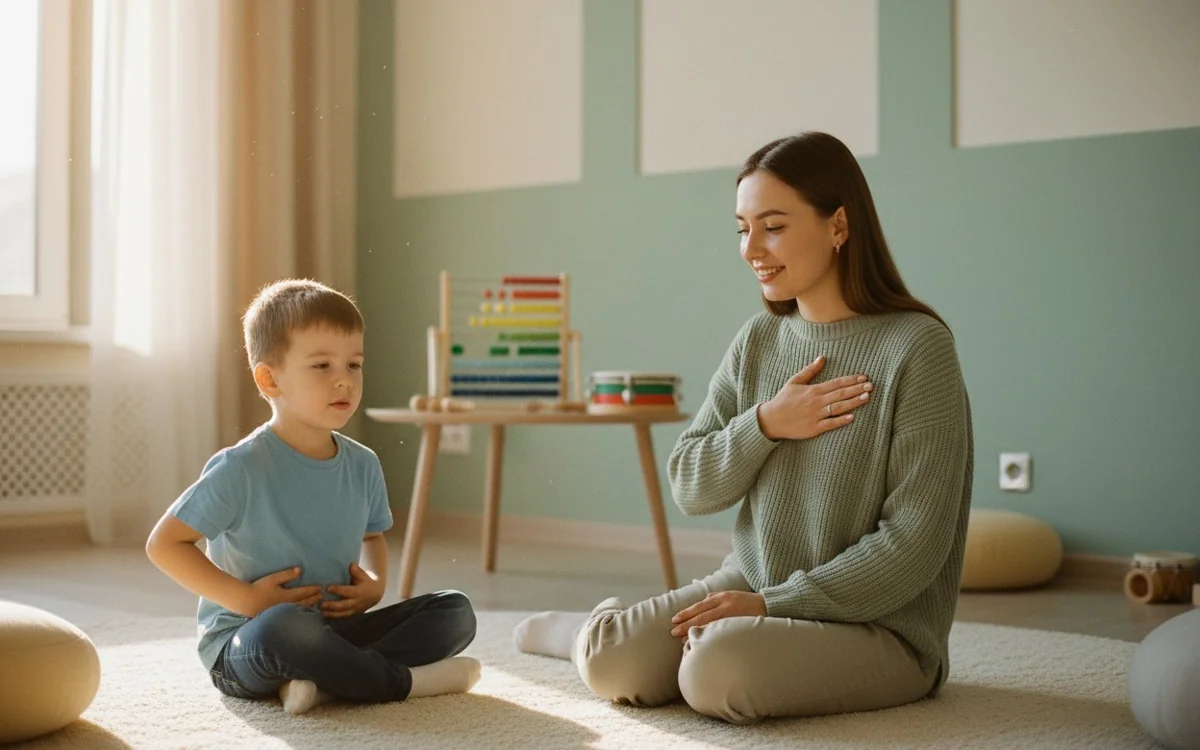
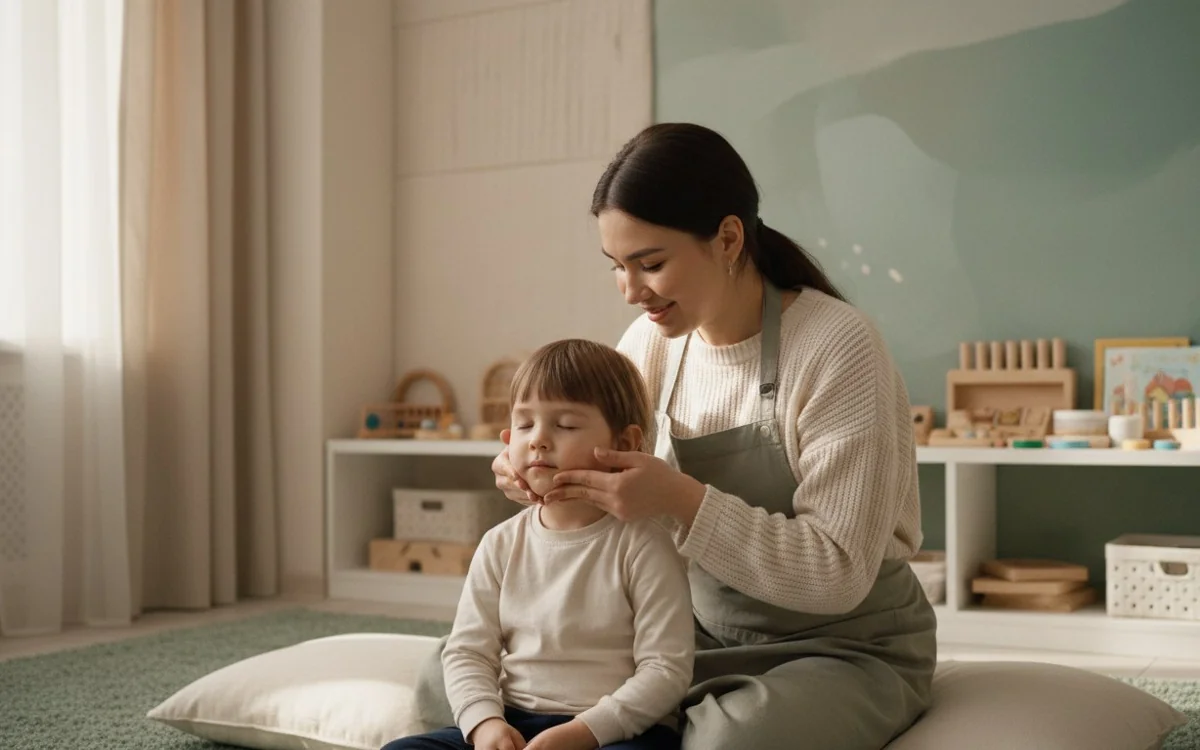
How to do speech therapy massage — we show parents at the first consultation. The child sits or lies down, the speech therapist wears gloves, instruments are sterile. First, stroking, then point movements. Does it hurt? No, if the specialist is qualified. Discomfort may occur during probe massage — a "tickling" or pressing sensation, but not sharp. Children who cry the first time usually do so from fear of the new, not from pain. We use playful moments: "now the tongue will meet the probe," "the brush cleans the tongue's teeth." After 2–3 sessions, the child gets used to it and even asks for the massage.
Can speech therapy massage be done at home
Speech therapy massage at home — a question we hear constantly. Yes, some elements can be done at home: stroking with spoons, massage with a toothbrush, manual lip massage. But full probe massage cannot be done at home — it requires knowledge of anatomy, certification, and experience. Home mistakes: too much pressure (injury), wrong direction (increased tone), working with an undiagnosed condition. We give parents a handout and show 3–4 safe exercises, but the main course is conducted at the center. Self-massage without a speech therapist's supervision can be harmful — for example, increasing hypertonicity instead of relieving it.
How much does speech therapy massage cost
Prices in Almaty vary, but we have a fixed cost that does not change during the course. Below are the current prices for speech therapy massage at our center.
| Service | Duration | Price (tenge) |
|---|---|---|
| Manual massage (1 session) | 10–15 minutes | 3 500 |
| Probe massage (1 session) | 15–20 minutes | 5 000 |
| Spoon massage (1 session) | 5–7 minutes | 2 500 |
| Package for 10 sessions (manual) | — | 30 000 |
| Subscription for 10 sessions (probe massage) | — | 45 000 |
| Initial consultation with diagnostics | 30 minutes | Free |
How much does speech therapy massage cost: breakdown
How much does speech therapy massage cost — it depends on the type and region. In Almaty, the average price for manual massage is 3,000–4,500 tenge per session, and for probe massage — 4,500–6,000 tenge. Our cost is below the city average because we work without intermediaries and central location rent. The speech therapy massage price at our center includes the work of a certified speech therapist, sterile instruments, and an individual plan. A course package saves 15–20%. Compare: 10 individual probe massage sessions — 50,000 tenge, with a package — 45,000 tenge. For families needing regular sessions, this is a significant difference.
Speech therapy massage reviews: what parents say
Logopedic massage reviews from our clients — the best advertisement. The mother of three-year-old Karina: "After 6 sessions, the child started saying 'mama' and 'give,' even though he was silent before. I was initially afraid of the probes, but the speech therapist explained everything, and my daughter got used to it." The father of five-year-old Daniyar: "Logopedic massage for hypersalivation helped within a month — the drooling stopped, and my son began pronouncing sounds more clearly." Logopedic massage reviews in Almaty are generally positive, but there is also negative feedback: some parents write that the massage did not help. This usually happens when the course was interrupted or not combined with therapy sessions. We always warn: massage is part of a comprehensive approach, not a magic pill.
Speech therapy massage for children and adults
Although we mostly see children, speech therapy massage for adults is also in demand. After strokes, with cerebral palsy, after jaw surgeries — muscles need to be restored just like in children. The difference lies in the intensity and duration of sessions.
Massage features for children
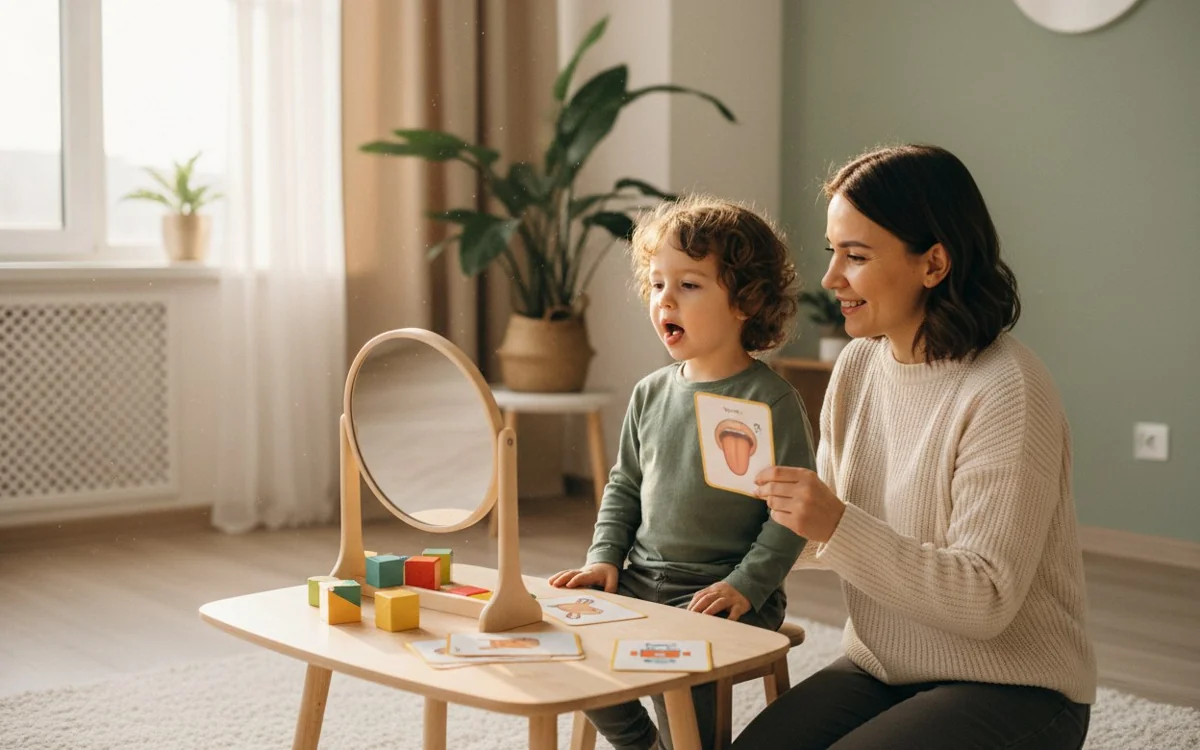
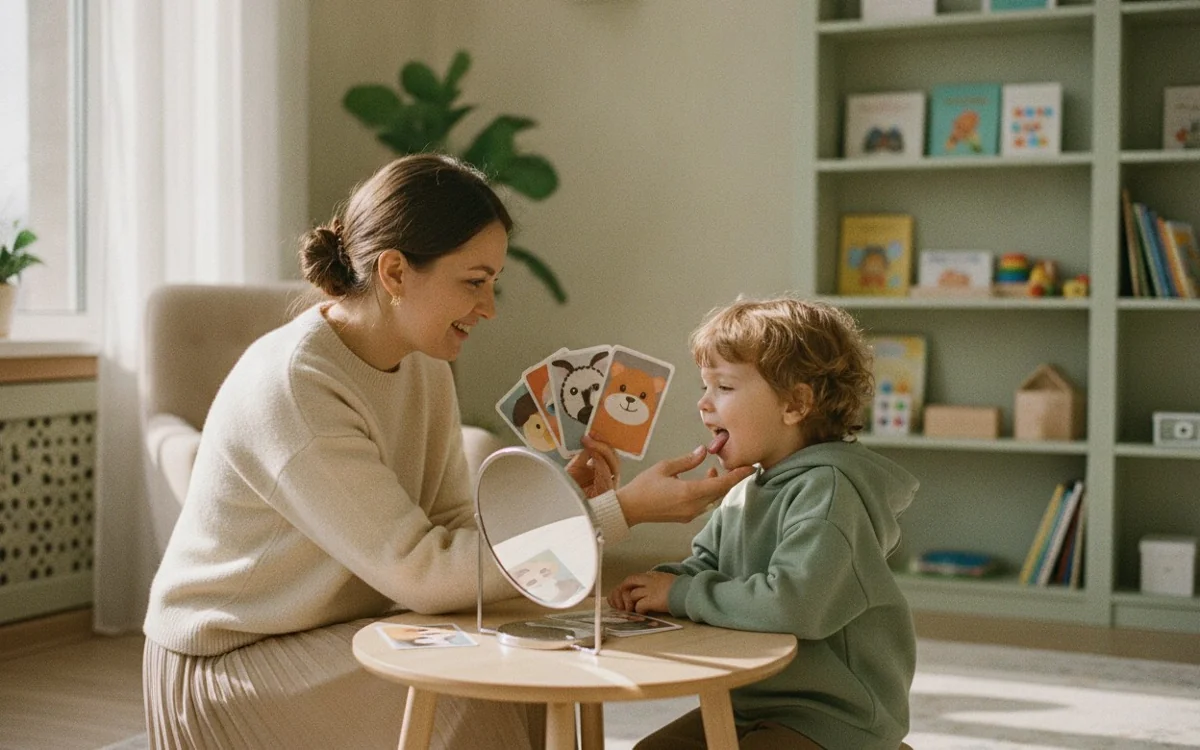
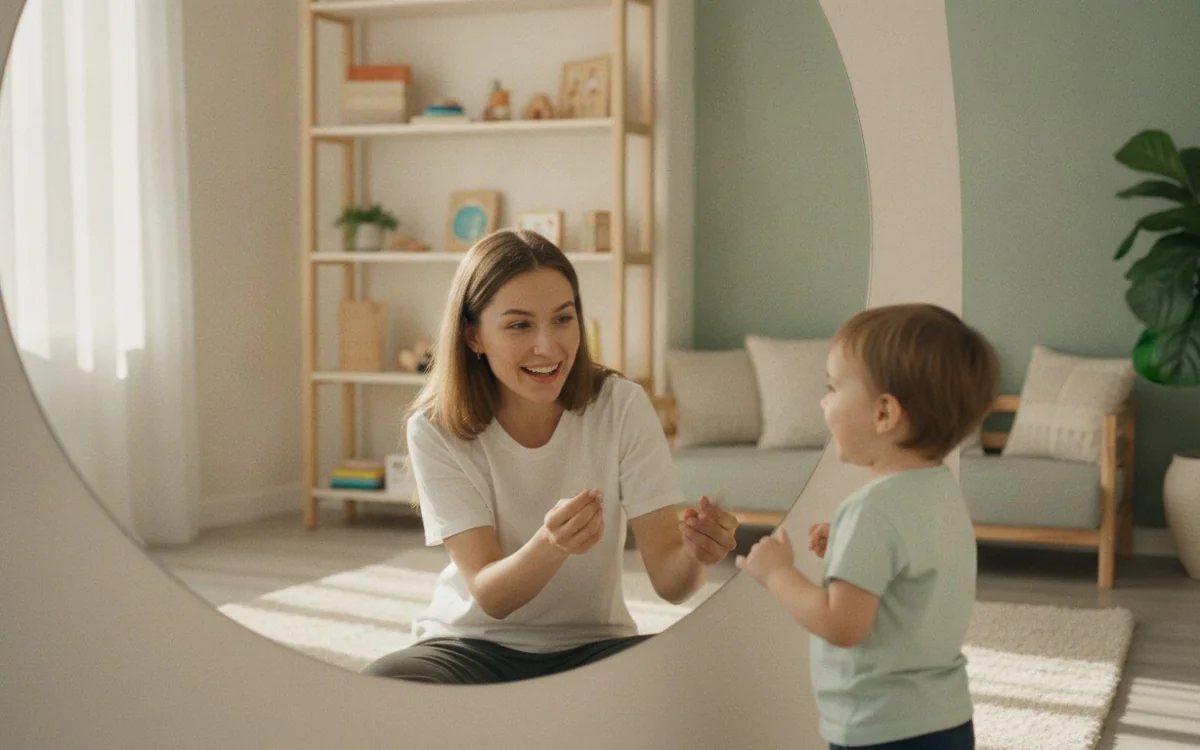
For children under 6, massage is conducted in a playful form. We use speech therapy massage pictures: we show on an image where the tongue is, where the lips are, and "draw" with massage movements. For toddlers under 3, only manual or spoon massage, without probes. Important: the child must be healthy (no runny nose or fever), otherwise, we reschedule the procedure. Older children (4–6 years old) already understand that massage helps them speak beautifully and cooperate. We do not restrain the child by force — if they refuse, we reschedule the session or change the technique.
Features of massage for adults
Speech therapy massage for adults is more intensive, up to 20 minutes, using probes and deep tissue work. Adults tolerate it better, but they often have neurological issues (stroke, injury), so we work carefully, considering sensitivity. For example, after a stroke, a 45-year-old man had tongue hypotonia — after 15 sessions, he could swallow and pronounce sounds that had been "lost." For adults, the course is longer: 15–20 sessions, twice a week. Speech therapy massage for adults in Almaty is still a rare service, but we provide it.
How to choose a specialist
Choosing a speech therapist for massage is a responsible step. Be sure to check: relevant education (speech therapist-defectologist), speech therapy massage certificate (continuing education courses), experience working with children with dysarthria and hypertonicity. At our center, all speech therapists are certified in Novikova's probe massage and undergo regular supervision. Avoid specialists who promise results in 3 sessions — this is unrealistic. A good speech therapist always says that timelines depend on the diagnosis and regularity of sessions. Come for a free consultation: we will show how the massage works, answer your questions, and give an honest prognosis.
If you are looking for speech therapy massage in Almaty, come to us — we will help your child speak clearly and beautifully. Book a free diagnostic session, and we will create an individual program.