












·
Online speech therapist in Almaty — what you need to know
When a child cannot pronounce the "r" sound by age seven, and a dictation at school is due in a month, or an adult loses speech after a stroke — there is no time to wait. We in Almaty have long worked not only in the office: the online format has removed the barrier of distance and time. Over six years of practice, I have conducted more than 3,000 remote sessions and know exactly when the screen helps and when it only hinders. I will tell you without advertising clichés — only what works for us.
Who online speech therapy is suitable for
The online format is not a universal cure, but for many tasks it is more effective than in-person meetings. We select clients based on clear criteria: age, type of disorder, and the parent's willingness to participate. Below, we break down three groups we consistently work with.
Children from 4 years old
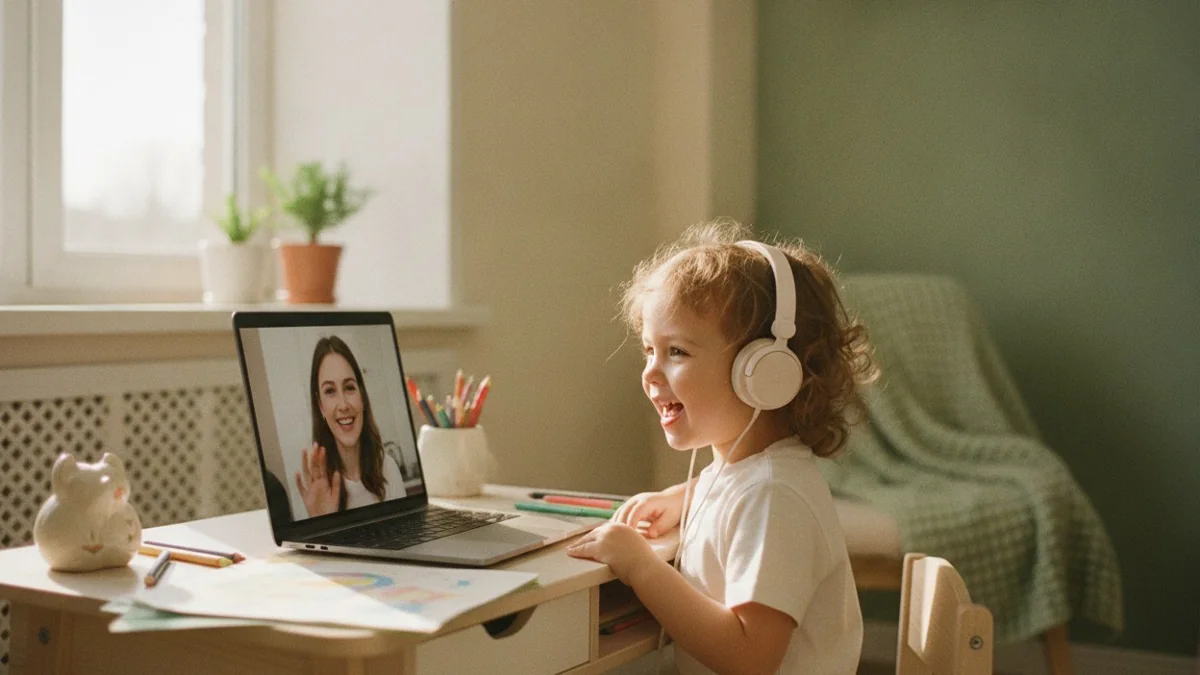
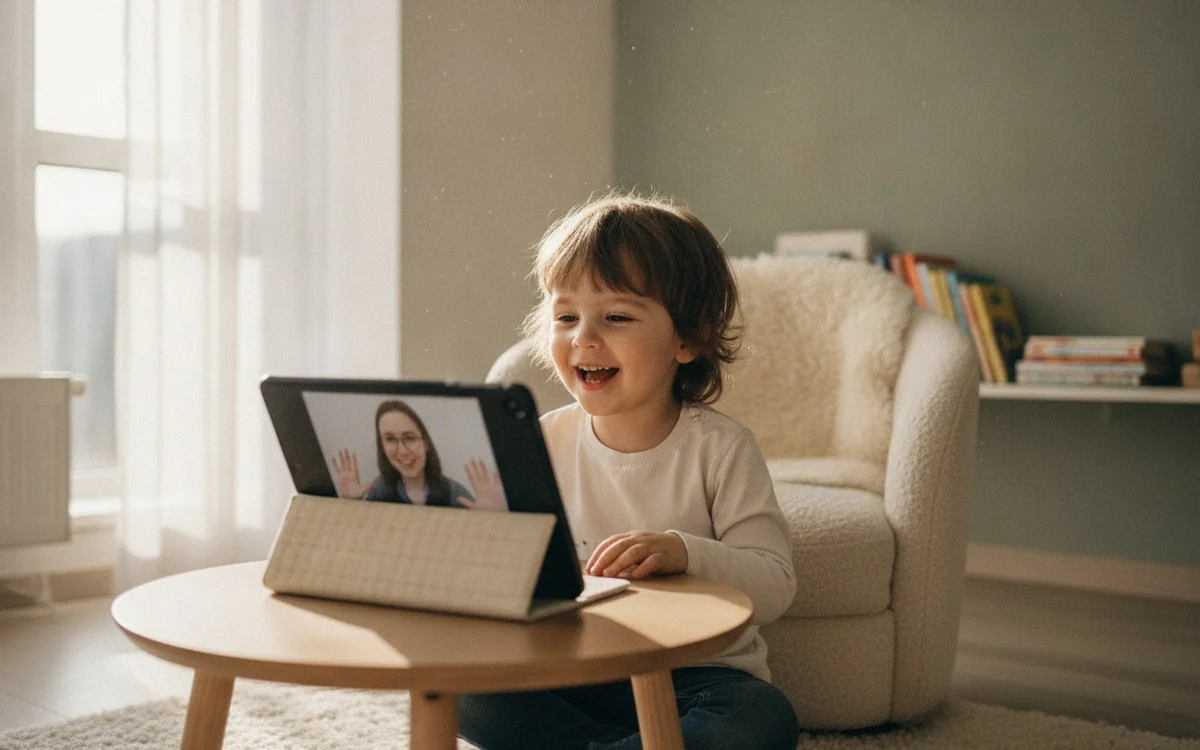
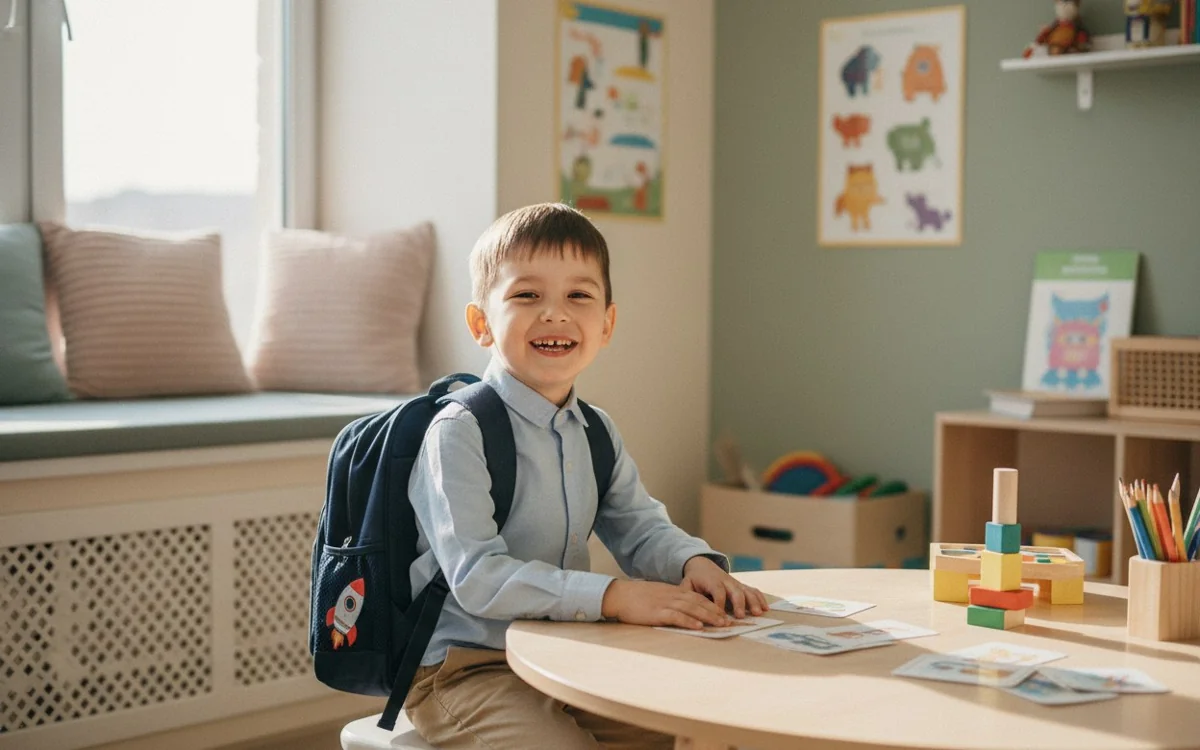
Four years old is the minimum age when a child can maintain attention on a screen for 15–20 minutes. We do not take three-year-olds with severe dysarthria online: they need physical contact and articulation massage. But for teaching sounds like "l", "r", "sh" in preschoolers, distance learning works great. Example: Arman, 5 years old, from Alatau district — couldn't say "r" and "l". After 12 sessions of 30 minutes via Zoom, both sounds were established. Mom sat nearby, following our instructions as an assistant. Key point: online speech therapy games help maintain interest — we use interactive puzzles and animations on the Miro board, so the child doesn't get distracted. If your child has no severe motor impairments of the articulatory apparatus, online sessions will yield results within 1–2 months of regular classes.
Teens and Adults
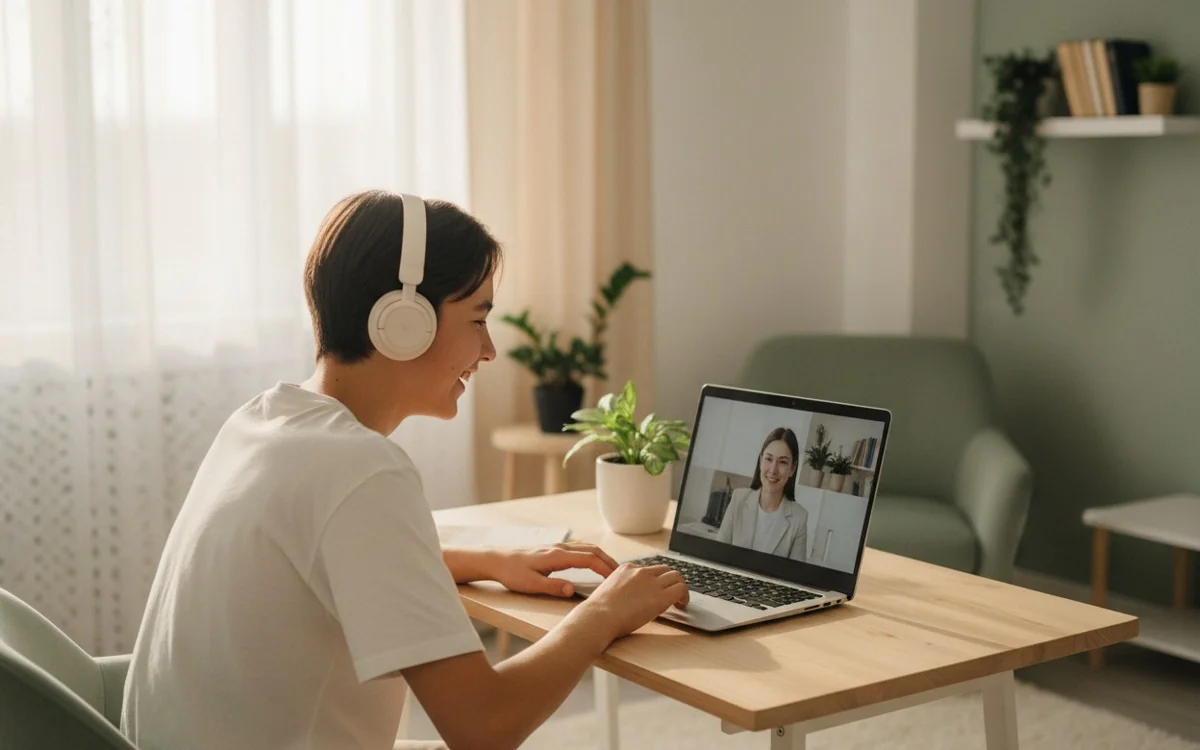
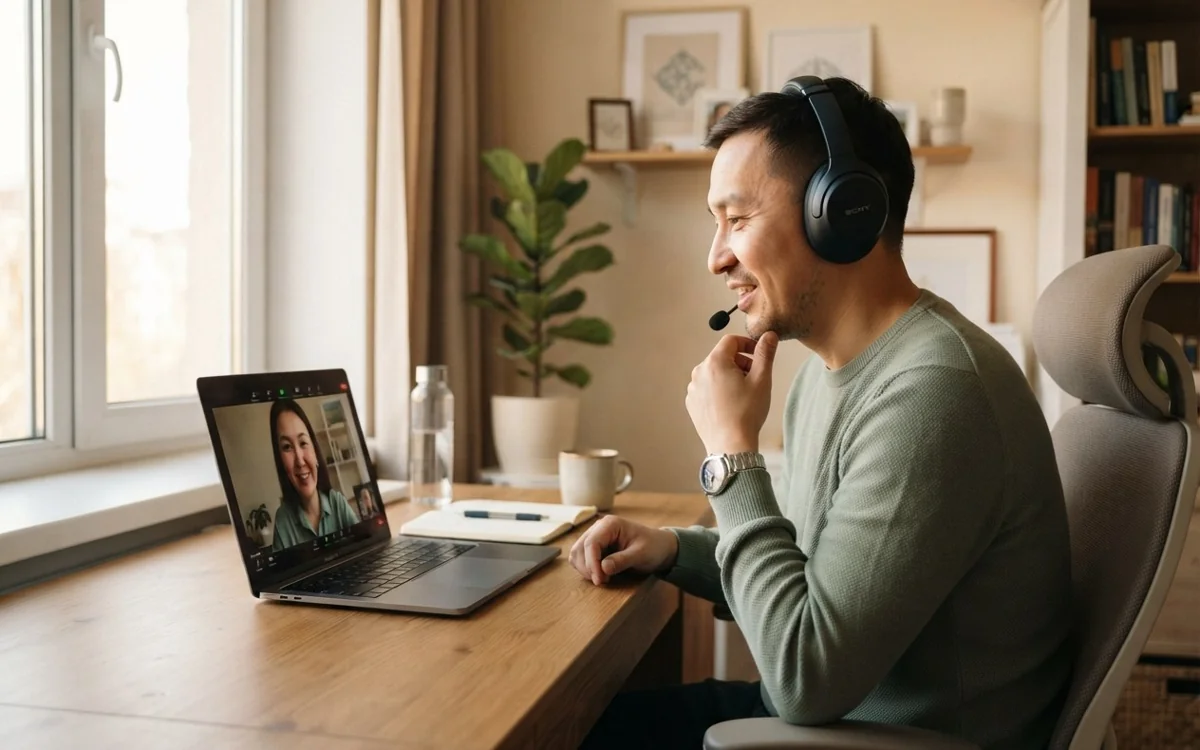
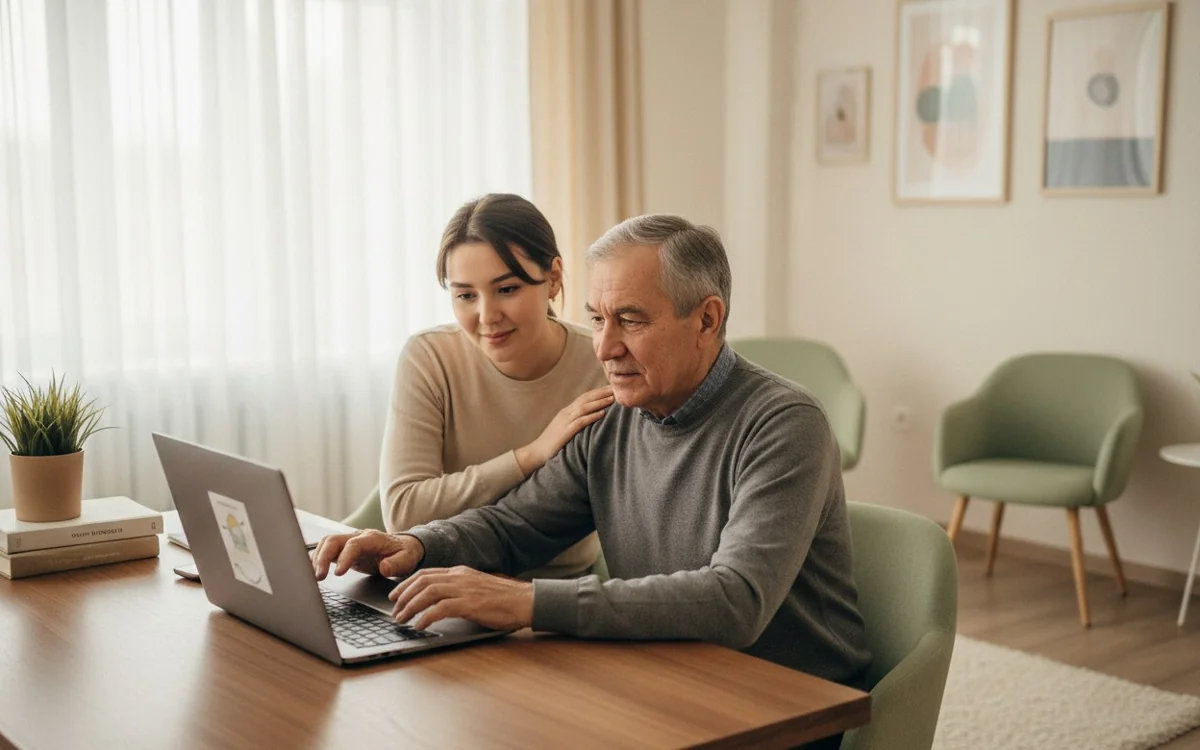
Older students and adults are ideal candidates for remote sessions. They are motivated, understand instructions, and are not camera-shy. We provide online speech therapy for teenagers from age 12: fixing rhotacism, lisping, and unclear diction. Often, students come before defending their diploma or young professionals who need to speak clearly in negotiations. Adults after a stroke or traumatic brain injury also work online — they are treated by an online speech therapist-aphasiologist. Speech recovery through a screen is possible if the patient can sit and hear. For example, a 54-year-old man from the Bostandyk district after an ischemic stroke: after 4 months of online sessions, he restored phrasal speech from a "yes-no" level to short dialogues. For adults, we use Skype — it is more stable in our conditions.
When online is ineffective
There are cases where a screen is useless. First, children under 3.5 years old with speech development delays: they need speech therapy massage and tactile stimulation. Second, severe forms of dysarthria with swallowing and salivation issues: in-person control is essential here. Third, children with ASD and severe behavioral problems: they won't sit in front of a camera. We honestly discuss this during the free diagnostics — we don't charge for a format that won't yield results. If you're unsure, ask the speech therapist during the initial consultation — we determine within 15 minutes whether online is suitable.
How online speech therapy sessions work
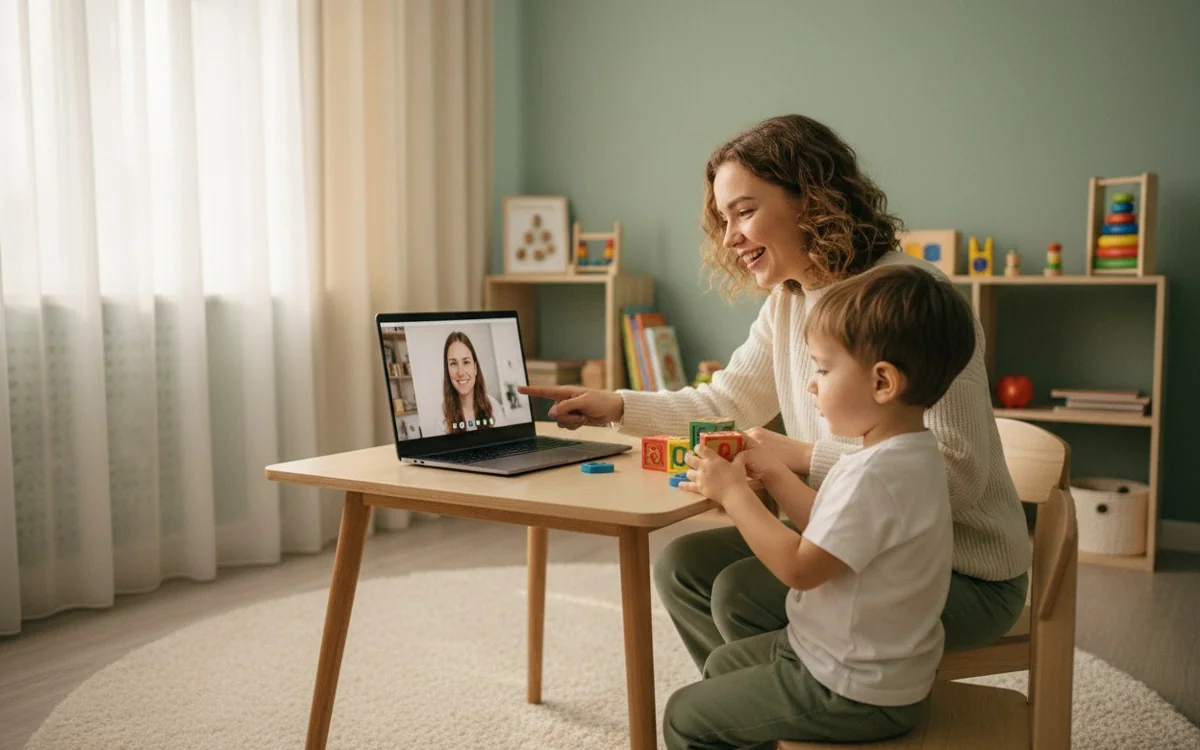
Many parents worry that remote speech therapy is just a video chat without structure. In reality, each lesson follows a clear protocol, and our technical setup is professional. Let me show you what a typical session from our center looks like.
Setting up the workspace for an online session:
- Lighting: Light should fall on the child's face from the front or side, but not from behind — otherwise the speech therapist cannot see articulation. Use a desk lamp directed at the mouth.
- Camera: place a laptop or tablet at the child's eye level, at a distance of 40–50 cm. The camera should capture the chest and face fully — we need to see how the tongue and lips move.
- Sound: use a headset with a microphone — the built-in laptop microphone distorts the sounds "s" and "sh," so the speech therapist can't hear the defect. Wireless headphones with a microphone for 3000 tenge solve the problem.
- Room: a quiet room without a TV or other children. Close the door — even the noise of a washing machine disrupts the child's rhythm.
- Surface: In front of the child, a clean table with only a 20x30 cm mirror, paper, and a pencil. Remove toys and phones — they distract attention.
- Posture: the child sits upright, feet on the floor or a footrest. If they swing their legs, concentration decreases. Place a pillow on the chair to keep the back straight.
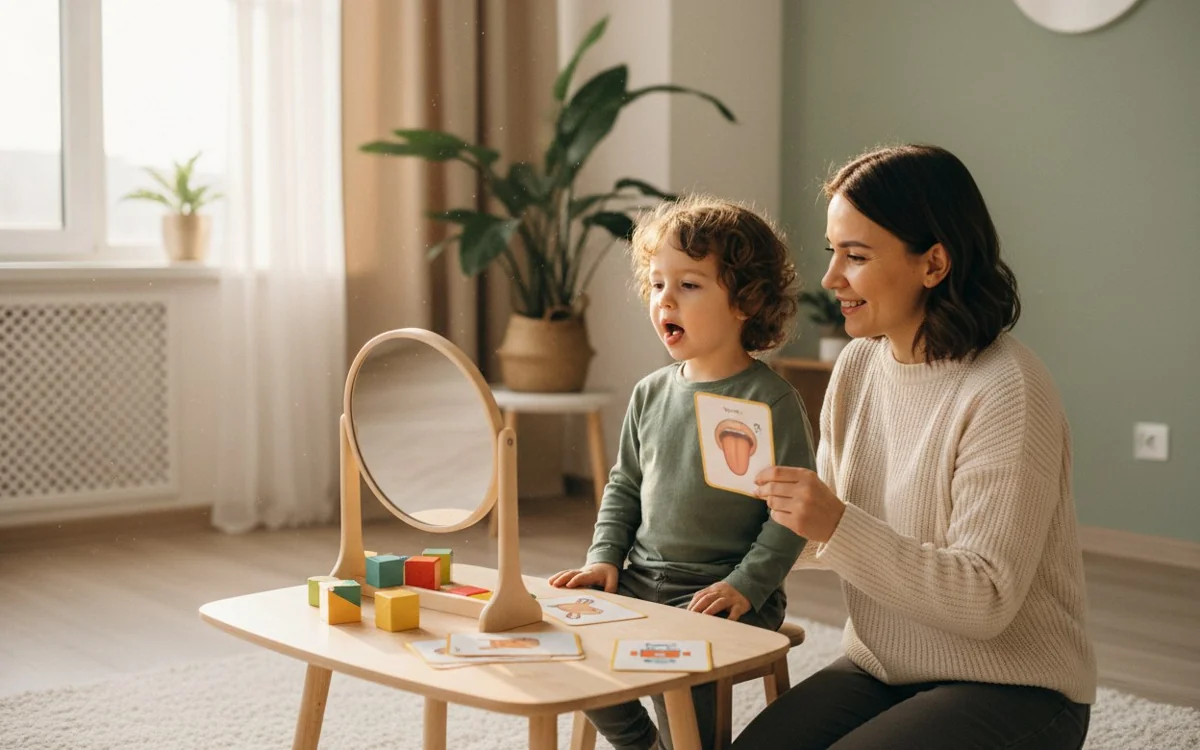
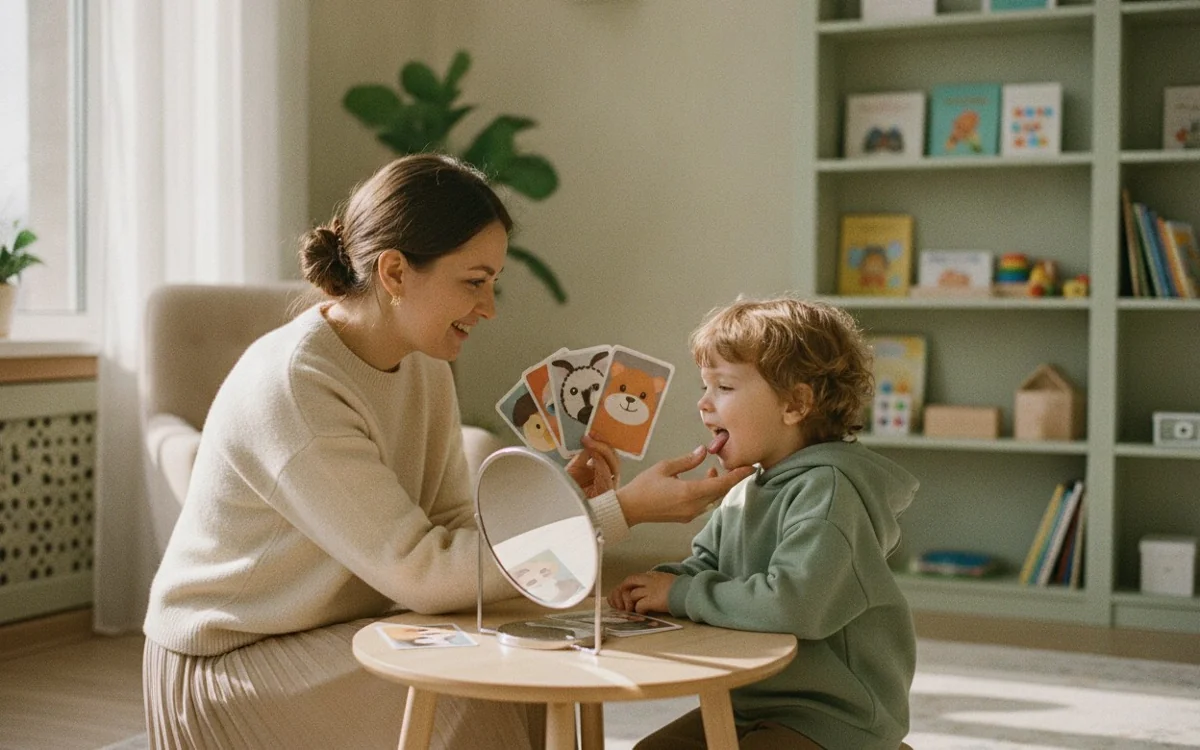
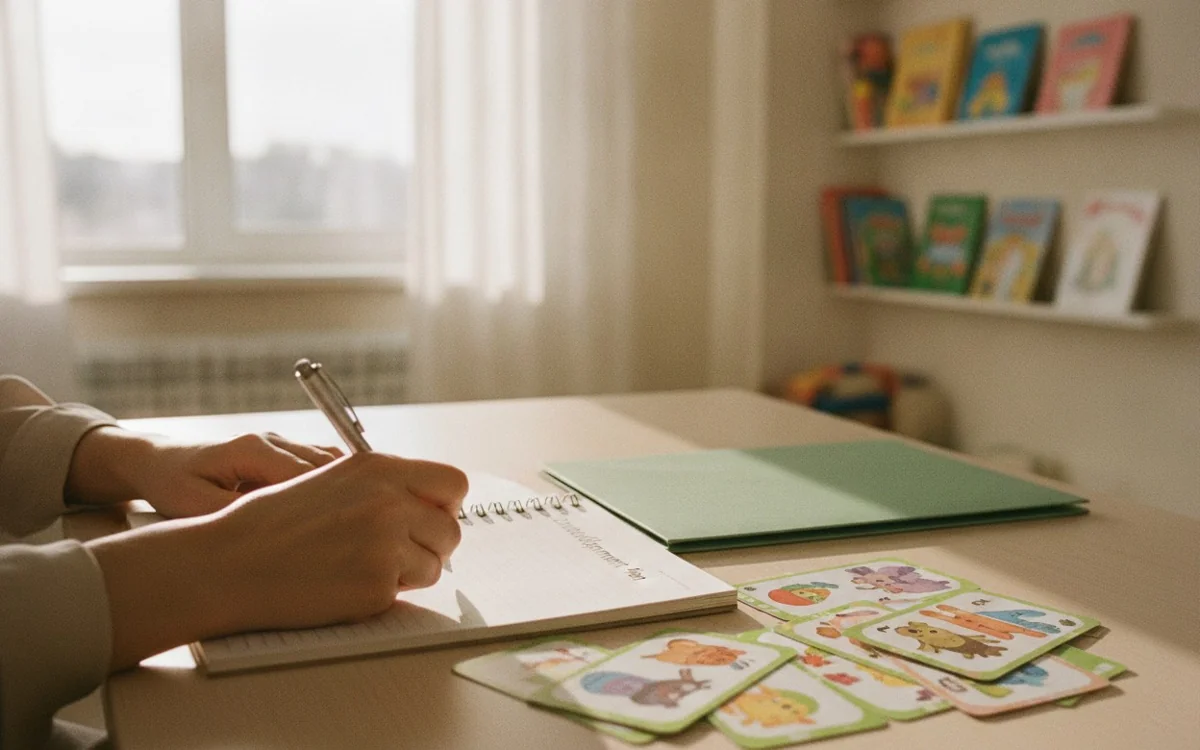
A session lasts 30–40 minutes. We start with articulation exercises in front of a mirror — I demonstrate the exercise, the child repeats, and I correct through the screen. Then we move on to sound production: I use substitute tools (cotton swabs, spatulas) that the parent holds according to my instructions. For automation, I include online speech therapy games — on the Miro interactive board, I display a field with pictures, the child clicks and pronounces syllables. This holds attention better than paper cards. We do not record the session, but we give the parent homework in Telegram with video exercises.
What challenges we address online
We accept most speech disorders for remote sessions, but not all. The table below will help you understand if your issue can be addressed via screen. If unsure, come for a free assessment: we test online and give honest feedback.
| Task | Is online suitable | Features | Average duration |
|---|---|---|---|
| Sound articulation (r, l, sh, zh) | Yes | Parent assistance required to hold the spatula | 1–3 months |
| Diction and articulation for adults | Yes | High motivation, we work without a parent | 2–4 months |
| School Preparation (sound analysis, syllables) | Yes | We use interactive boards and games | 3–6 months |
| Stuttering correction | Partially | Only mild forms, severe ones — in-person | 6–12 months |
| Speech Recovery After Stroke | Yes | Stable internet connection required | 6–18 months |
| Dyslexia and dysgraphia | Yes | We work on writing via screen and printed sheets | 4–8 months |
| Severe dysarthria | No | Speech therapy massage needed — in-person only | — |
Please note the "stuttering" line: we only take online those who do not have respiratory muscle spasms. For others, in-person sessions at our center. For adults with aphasia, we use vocabulary recovery protocols through pictures and audio — an online aphasia speech therapist works with patients even from other cities in Kazakhstan. Online speech therapy services include diagnostics, correction, and consultations for parents — we don't limit ourselves to just working with the child.
Online or in-person — what to choose
We get this question every day. The answer depends on three factors: the child's age, the type of disorder, and logistics. Below is a comparison table — in 2 minutes you'll understand which format suits you.
| Criterion | Online | In-person (our center) |
|---|---|---|
| Cost | 5000–7000 tenge per 40 min | 7000–9000 tenge per 45 min |
| Parent Involvement | Mandatory for children under 7 years old | Not required |
| Articulation control | Via camera, with 0.5 sec delay | Full visual and tactile |
| Speech therapy massage | Not possible | Available |
| Child's discipline | Depends on the parent | Monitored by a speech therapist |
| Time savings | No commute, can do it from home | Transfer 30–60 min |
| Technical issues | Possible (internet, sound) | No |
| Suitable for Adults | Yes, ideally | Yes, but less convenient |
When to choose in-person: child under 4 years old, has tongue tone disorders (dysarthria), requires probe massage, child cannot sit still without mom. If you have a busy schedule and the child is 5+ with only sound issues — online gives the same result in the same time frame. We do not push remote sessions: at the first meeting, we suggest trying both formats. Many families from Medeu and Bostandyk districts of Almaty choose a mix — 2 online + 1 in-person per month for monitoring. When you search for an online speech therapist — that’s how most of our cases start, and we do not disappoint.
How much do online sessions with a speech therapist cost
Prices at our center are fixed — no package discounts, but with a bonus for new clients. We don't like hidden fees: you only pay for the session, diagnostics are free. Below is the current price list for today.
| Session format | Duration | Cost | Who It's For |
|---|---|---|---|
| Initial assessment | 30 min | Free | All new clients |
| Individual session (child 4–7 years old) | 30 min | 5000 tenge | Preschoolers |
| Individual session (child 7+) | 40 min | 6000 tenge | School-age children |
| Individual session (adult) | 45 min | 7000 tenge | Teens and Adults |
| Session with a speech therapist specializing in aphasia | 45 min | 8000 tenge | After stroke, TBI |
| Parent consultation | 30 min | 3000 tenge | Without the Child |
Please note: the initial assessment is free — this is not marketing, but our standard. We need to determine if online sessions are suitable, and only then offer a plan. We do not sell online speech therapy courses — only individual sessions via a subscription for 4 or 8 lessons. Payment is via Kaspi or bank transfer. If you are looking for free online speech therapy, the assessment covers this request, but regular online speech therapy lessons, unfortunately, cannot be free: preparing materials and providing feedback takes us an hour after each session. For those who want to try without commitment, we hold an open webinar once a month — you can ask a speech therapist a question and get a short consultation. Follow our Instagram for announcements.
How to choose an online speech therapist
The market for remote speech therapists in Almaty is growing, but quality ranges from "excellent" to "money down the drain." As a practitioner, I see three main mistakes parents make: choosing by price, not checking credentials, and not observing how the specialist conducts a session. Here is a checklist we recommend for evaluating any speech therapist.
Criteria for Choosing a Speech Therapist for Online Sessions:
- Speech Therapist or Defectologist Diploma: Ask for a photo of the diploma — that's the basics. If a specialist can't show it, move on. Online courses for becoming a speech therapist from scratch do not qualify you to work with children.
- Online work experience of 1 year or more: remote work requires different skills — maintaining attention through a screen, working with audio delay, quickly switching activities. A beginner won't be able to handle it.
- Use of interactive tools: A speech therapist should work with Miro, Google Jamboard, or similar tools. If sessions are conducted simply via Skype without screen sharing, effectiveness drops by 40%.
- Reviews from real clients: Ask for contacts of 2–3 families who have been attending for more than a month. Online speech therapist reviews are often paid; live communication is more reliable.
- Trial lesson with the camera on: A speech therapist should sit in front of the camera, demonstrate articulation, and provide real-time feedback. If the specialist hides their face or works only with their voice — that's not a speech therapist, it's a voice recorder.
- Clear lesson structure: Request a plan for a typical session. It should include: warm-up, articulation exercises, sound placement/automation, a game, and homework. Chaos is a sign of unprofessionalism.
- Readiness to assign homework: Without daily practice, progress is 3 times slower. A good speech therapist sends video exercises and checks their completion throughout the day.
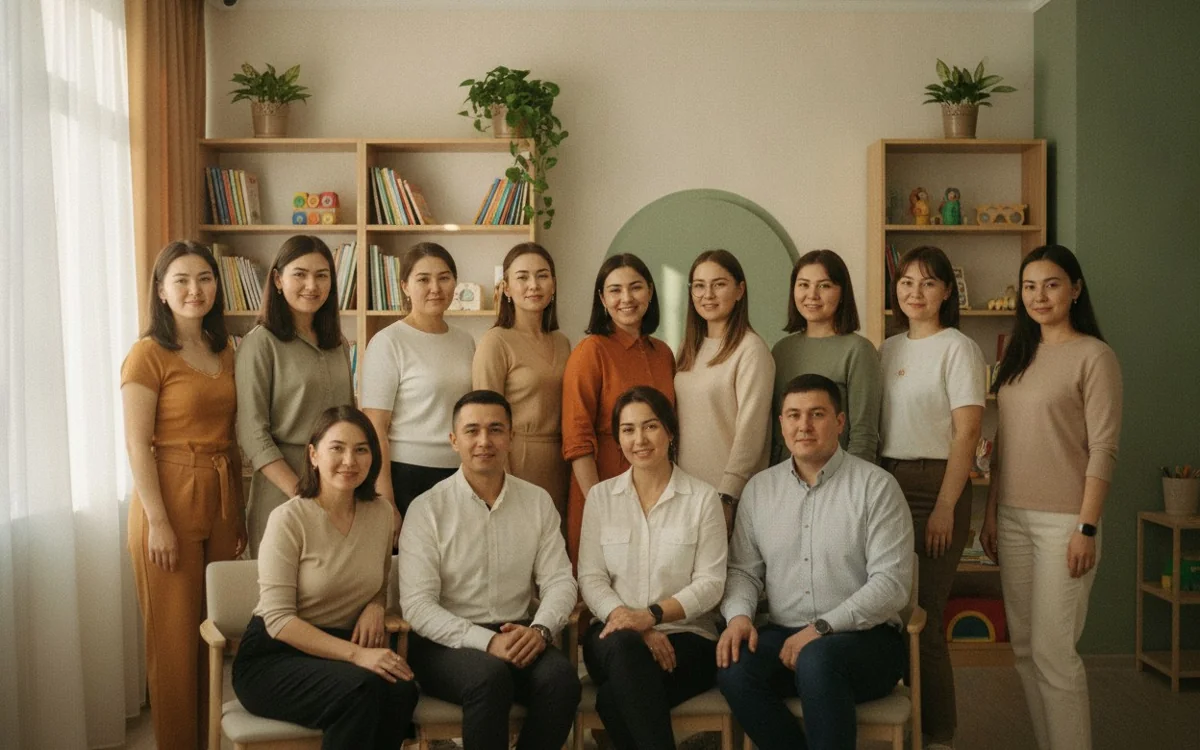
We meet all criteria. Our specialists have higher defectology education and completed internships in online methods. If you are looking for a speech therapist via Skype or an online speech therapist in Almaty — we work on both platforms, but recommend Zoom for children (the “reactions” feature keeps attention) and Skype for adults (more stable with weak internet). An online speech therapist at our center is not just “looking into the camera,” but full-fledged therapy with a plan, reports, and messenger support.
We don’t promise a miracle in three sessions. Results depend on the diagnosis, consistency, and your involvement. But if you’re ready to work — the online format eliminates travel time to the speech therapist and provides the same progress as in-person meetings. Come for a free assessment — we’ll show you how it works.