











·
Group speech therapy sessions in Almaty — what you need to know
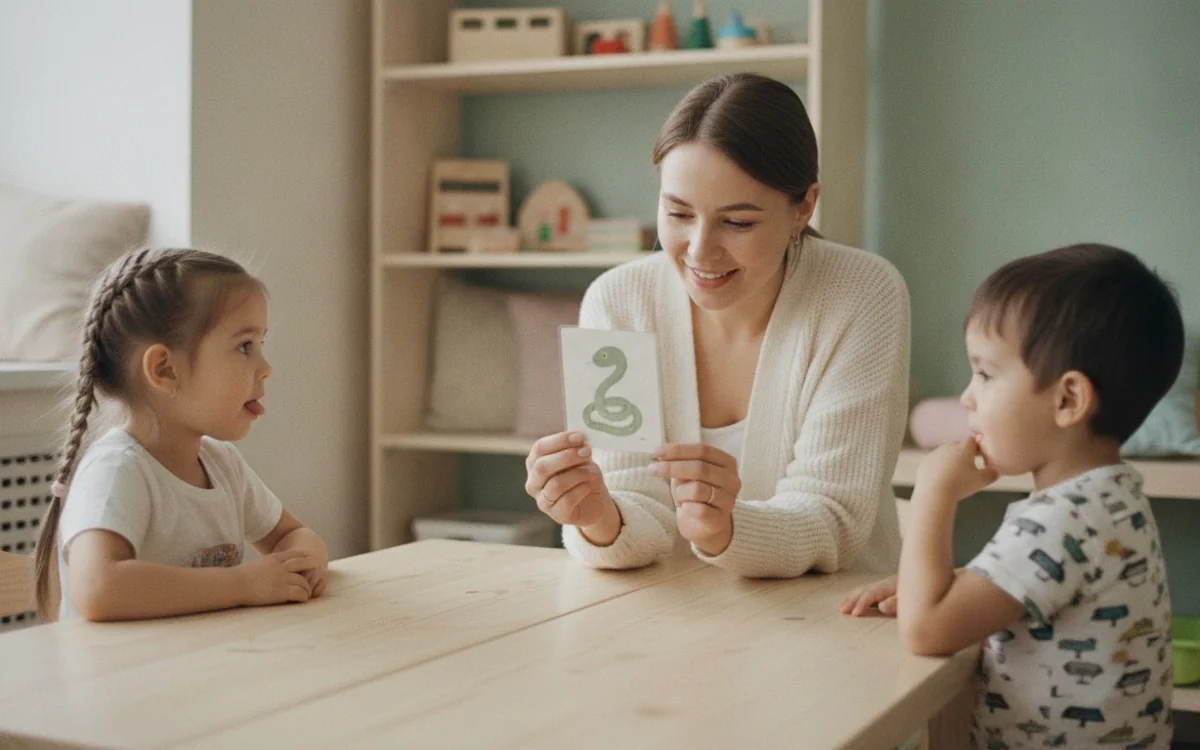
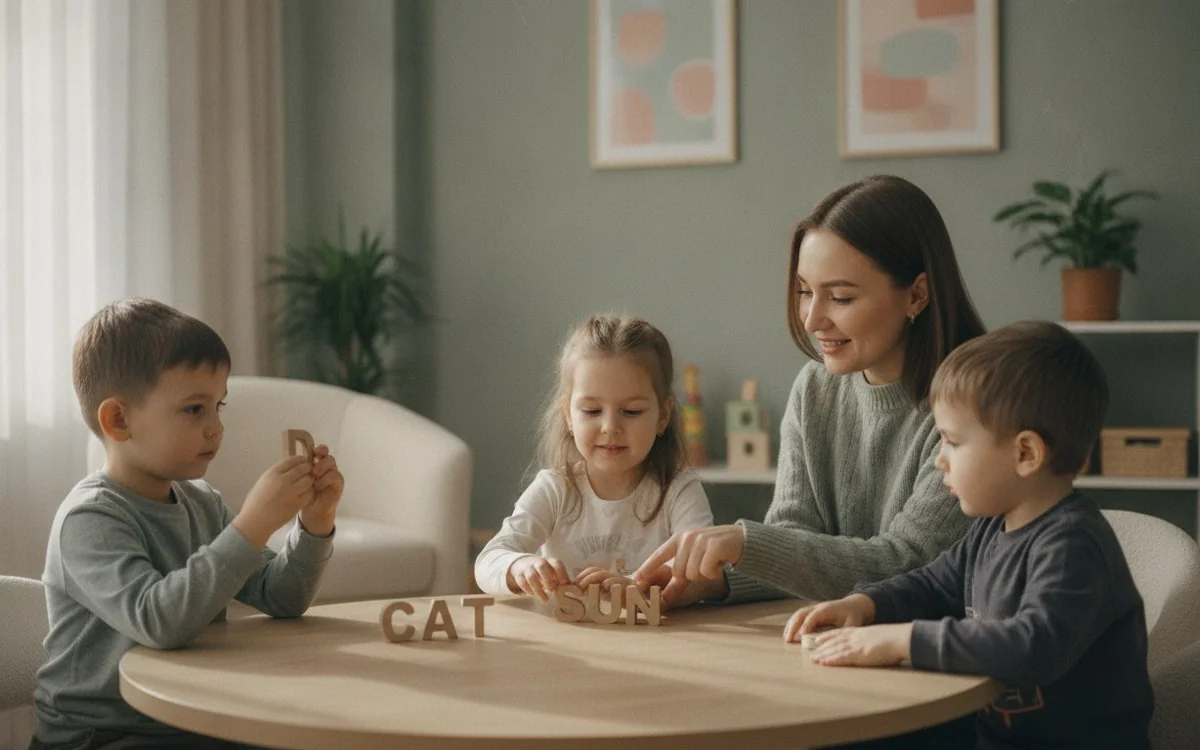
When parents bring their child to a speech therapist, they often imagine individual work at a table: cards, a mirror, sound production. But there is another, equally effective format — group sessions with a speech therapist. At our center in Almaty, we use mini-groups so that children not only correct their speech but also learn to communicate, negotiate, and listen to each other. Let me explain how it works and who it suits.
What are group speech therapy classes?
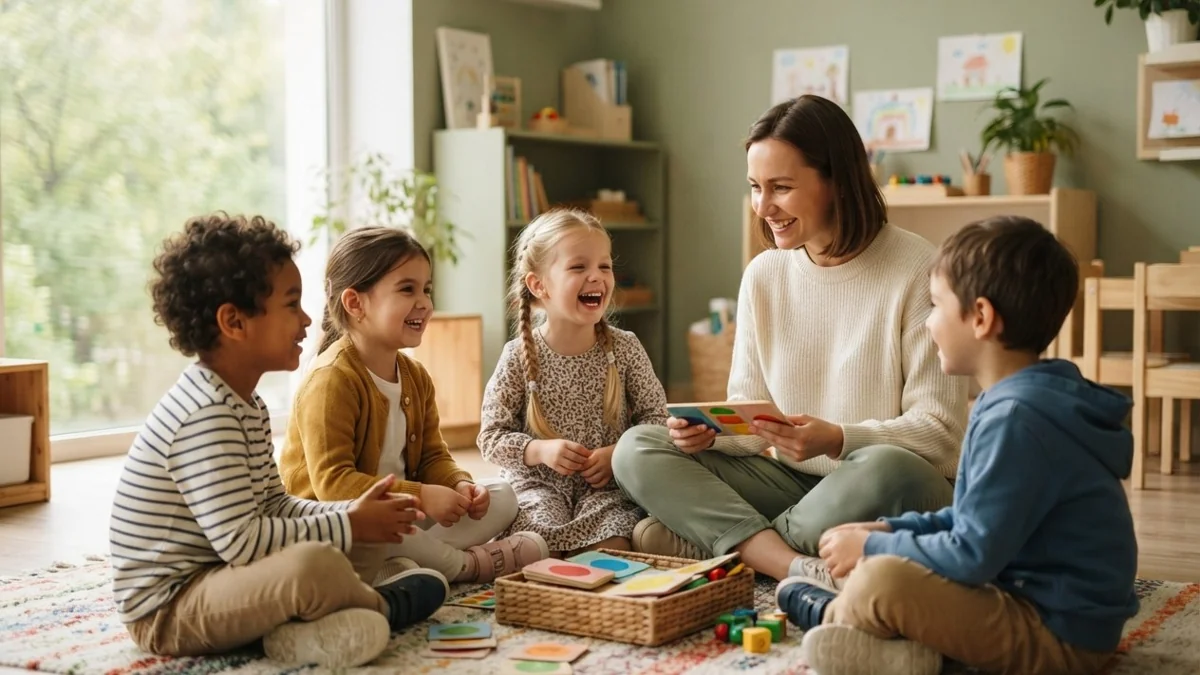
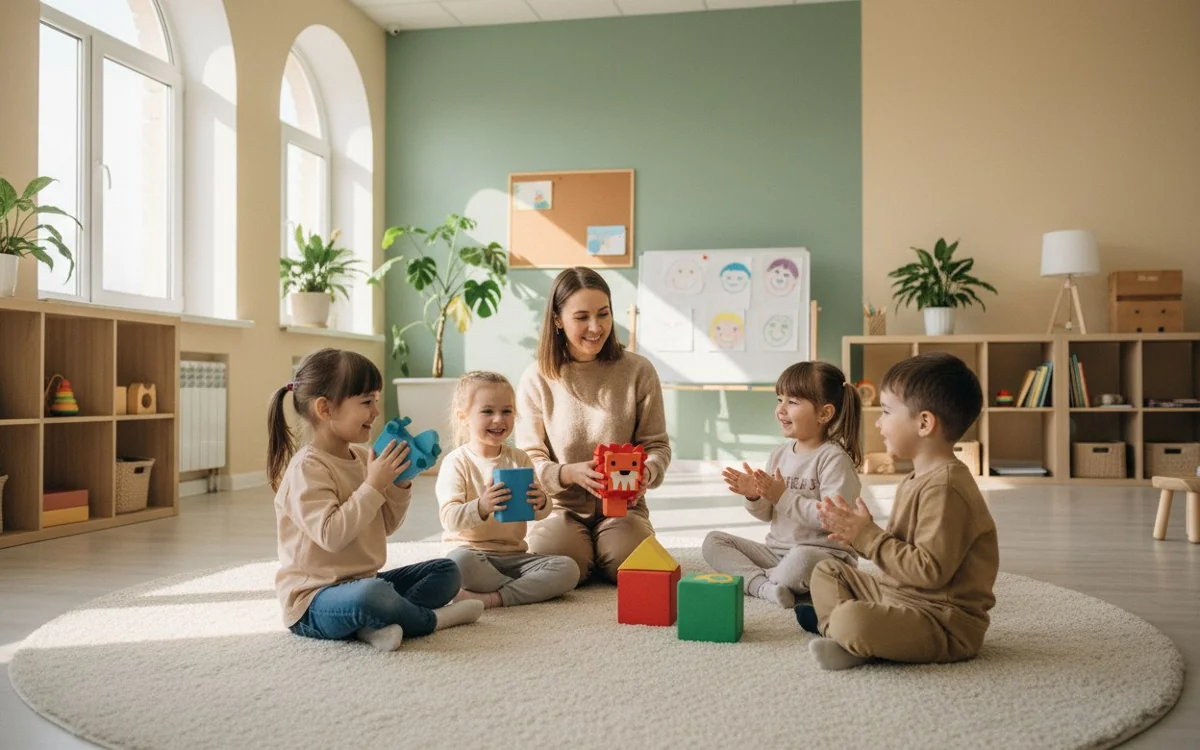
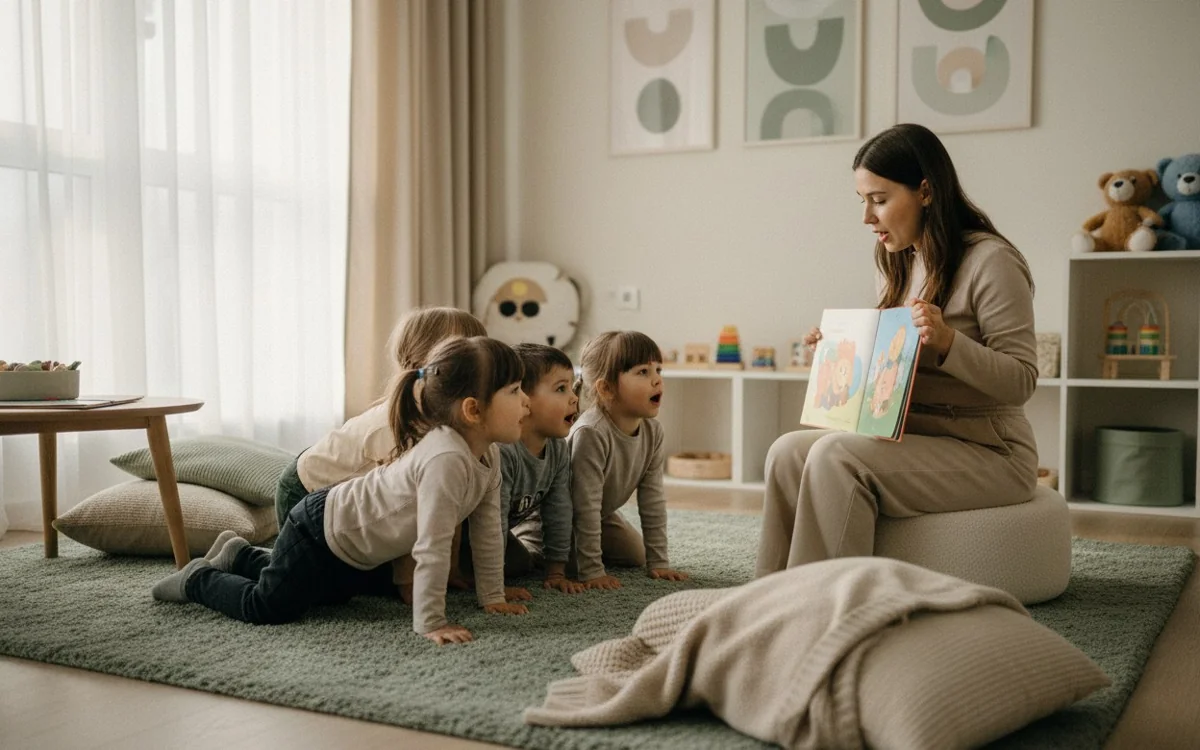
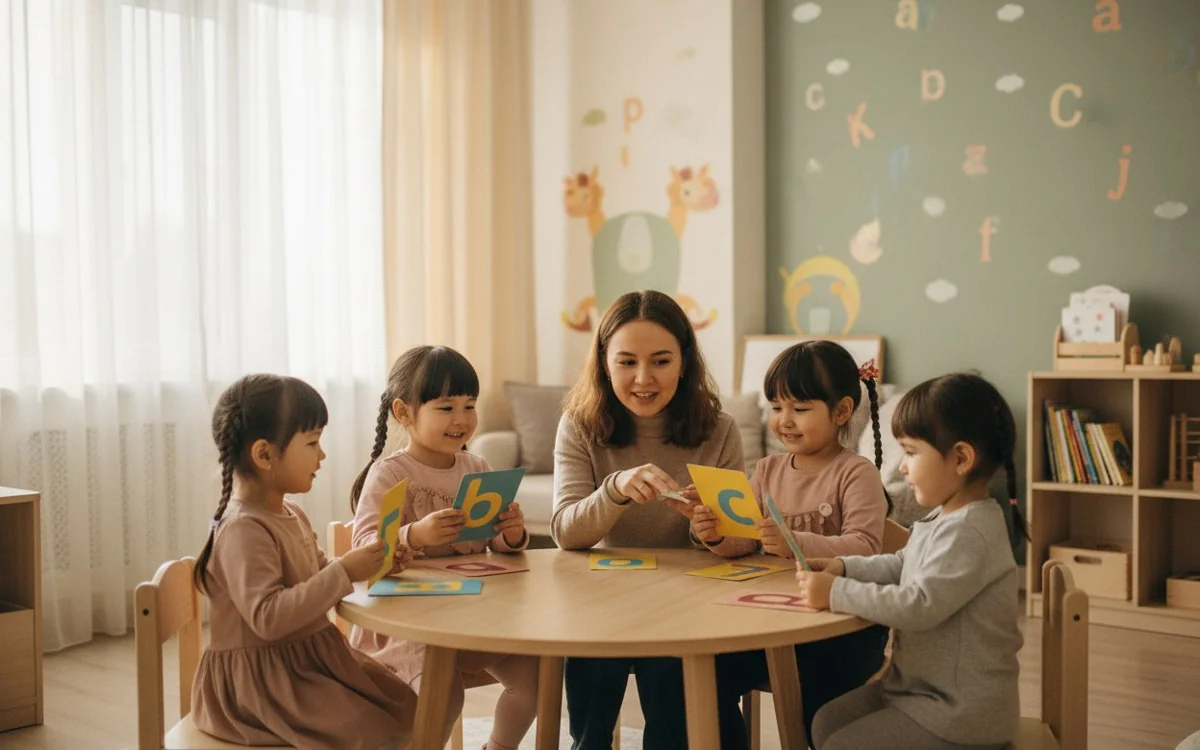
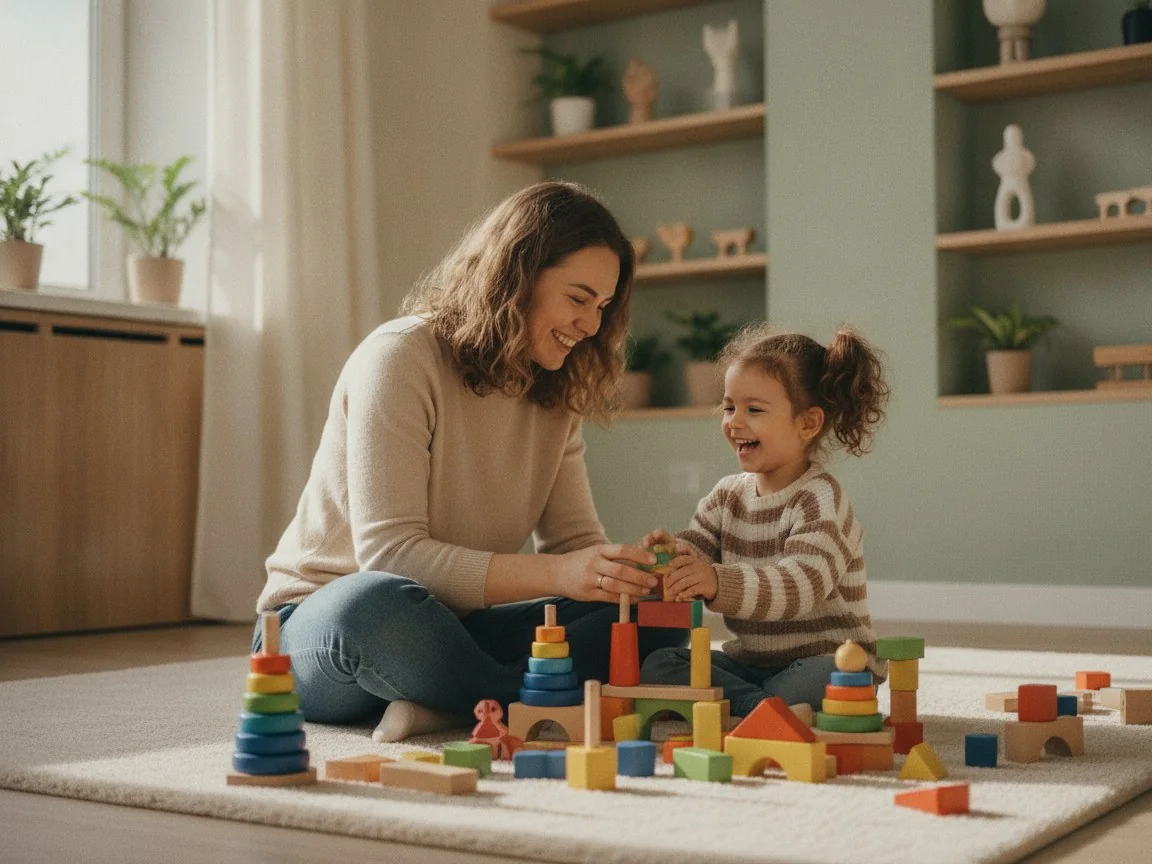
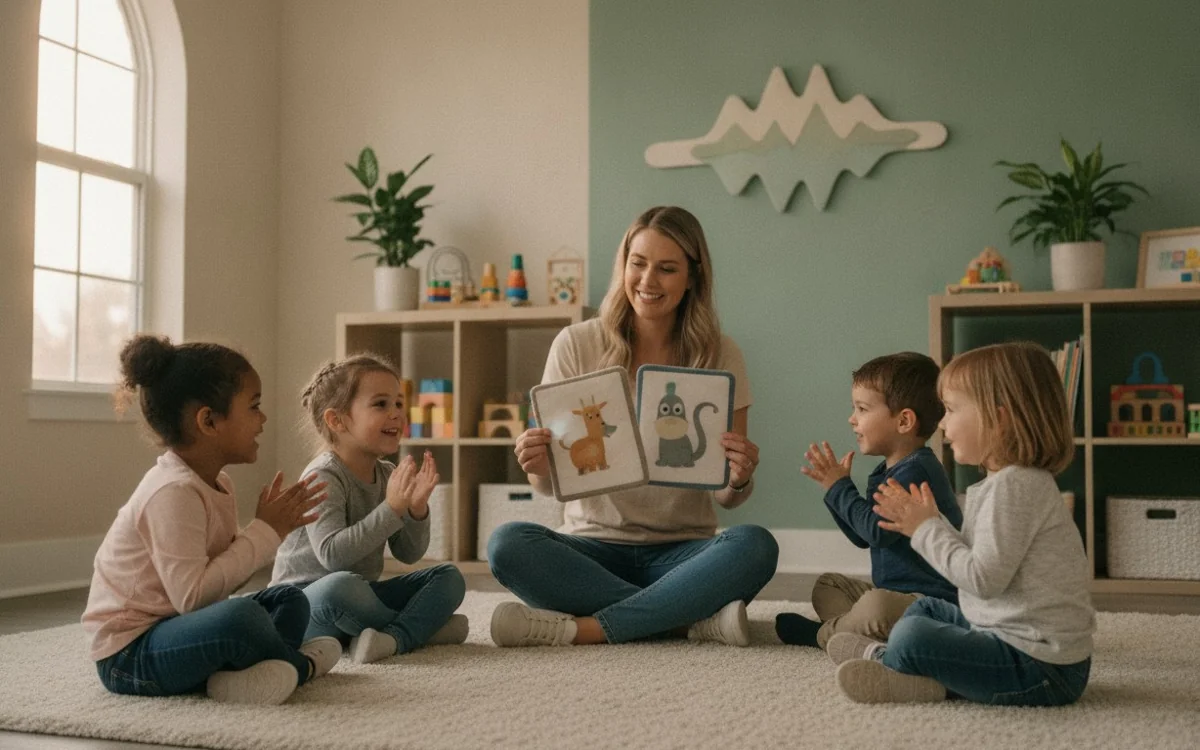
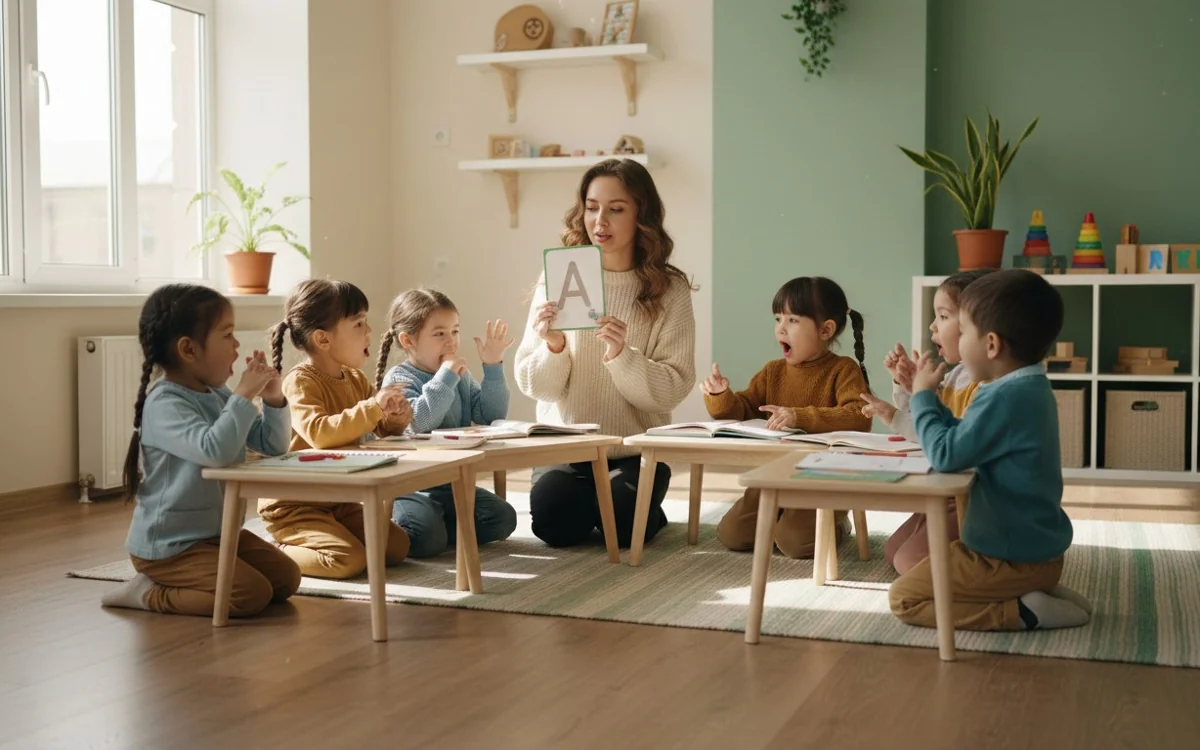
Group speech therapy sessions are not just lessons in a peer group. This is specially designed work in mini-groups of up to 4 children, where each child receives attention but also learns to interact. We group children by age and speech development level so that tasks are achievable but require effort.
How groups are formed and why no more than 4 children
Group size: maximum 4 children. This is not a random number—with more, the speech therapist physically cannot monitor each child's articulation. Age-based grouping: we don't mix a three-year-old with a seven-year-old—they have different goals and attention spans. Level-based grouping: children with similar disorders (e.g., dyslalia or general speech underdevelopment) study together so tasks are equally challenging. Group dynamics: the composition may change every 2-3 months as progress is made—the child is moved to a more advanced group.
What speech skills are developed in the group
In a group format, a child learns not only to speak correctly but also to use speech in real communication. We work on:
- Sound automation: in play, the child repeats words many times without noticing the effort.
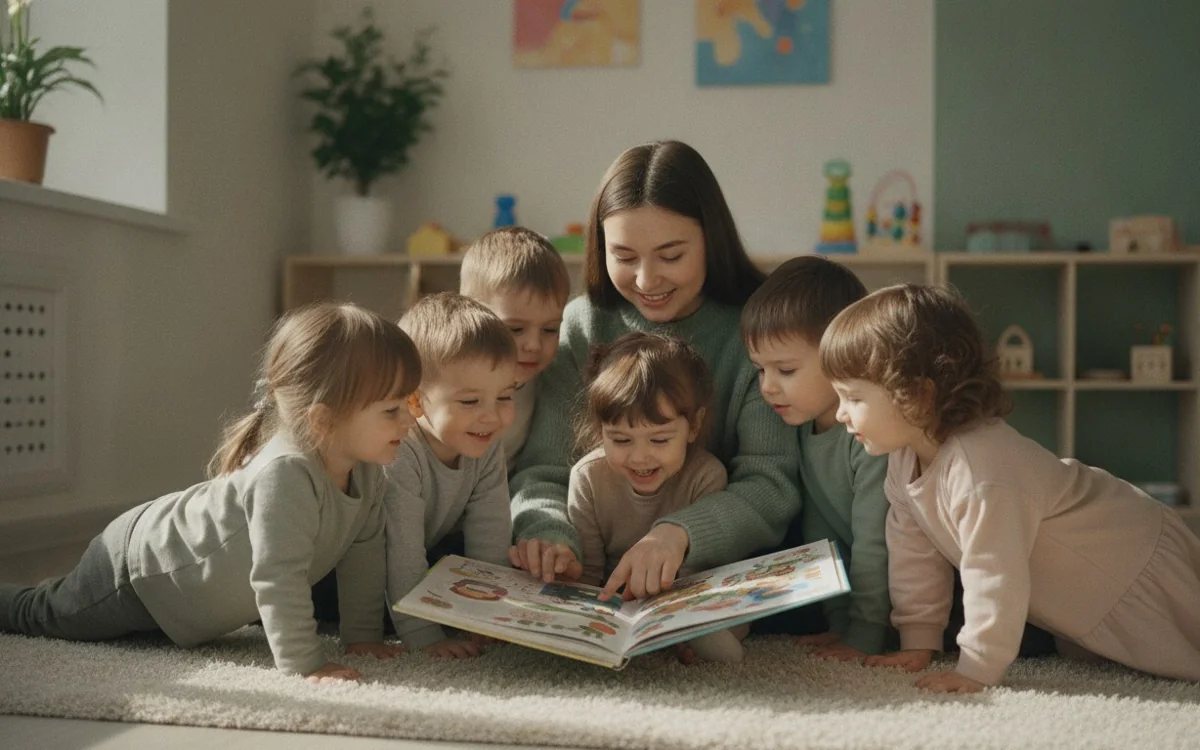
- Coherent speech: retelling from a picture, describing an object, composing a story from a sequence.
- Grammatical structure: agreement of words in gender and case — this happens naturally in dialogue.
- Auditory attention: children learn to hear each other's mistakes and correct them.
- Communication skills: the ability to ask a question, answer, and maintain a topic — this is only gained in a group.
The role of play and socialization in speech correction
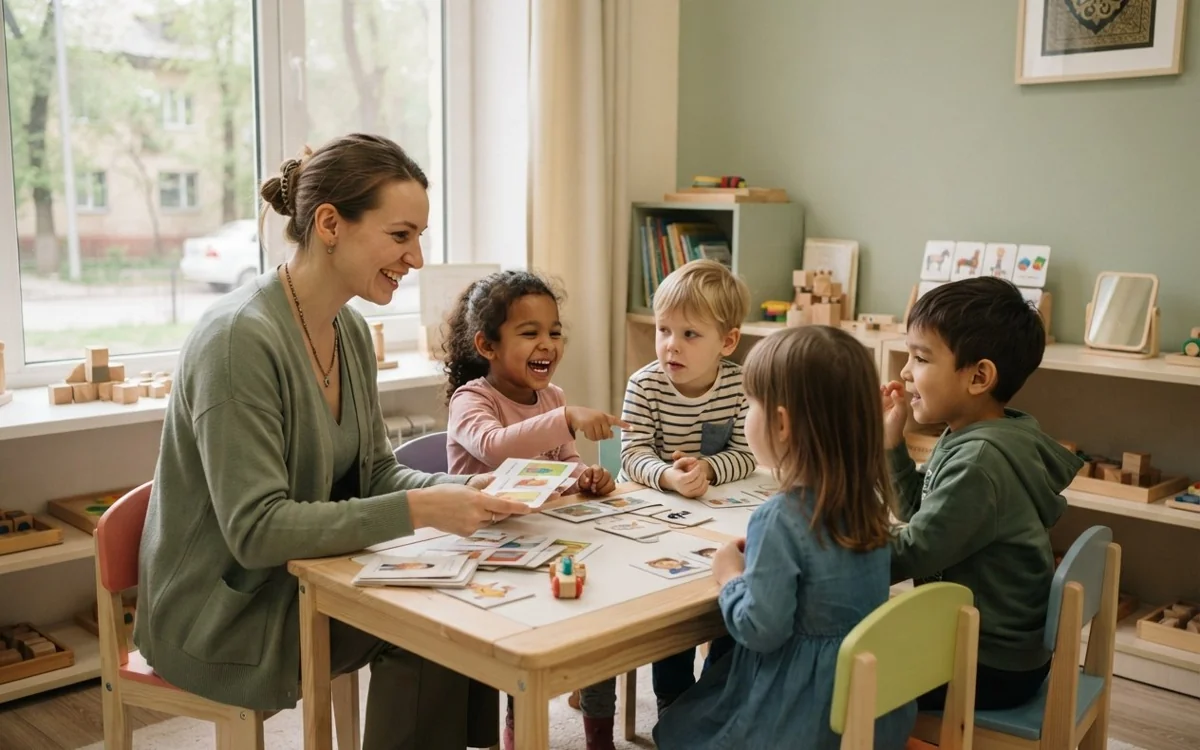
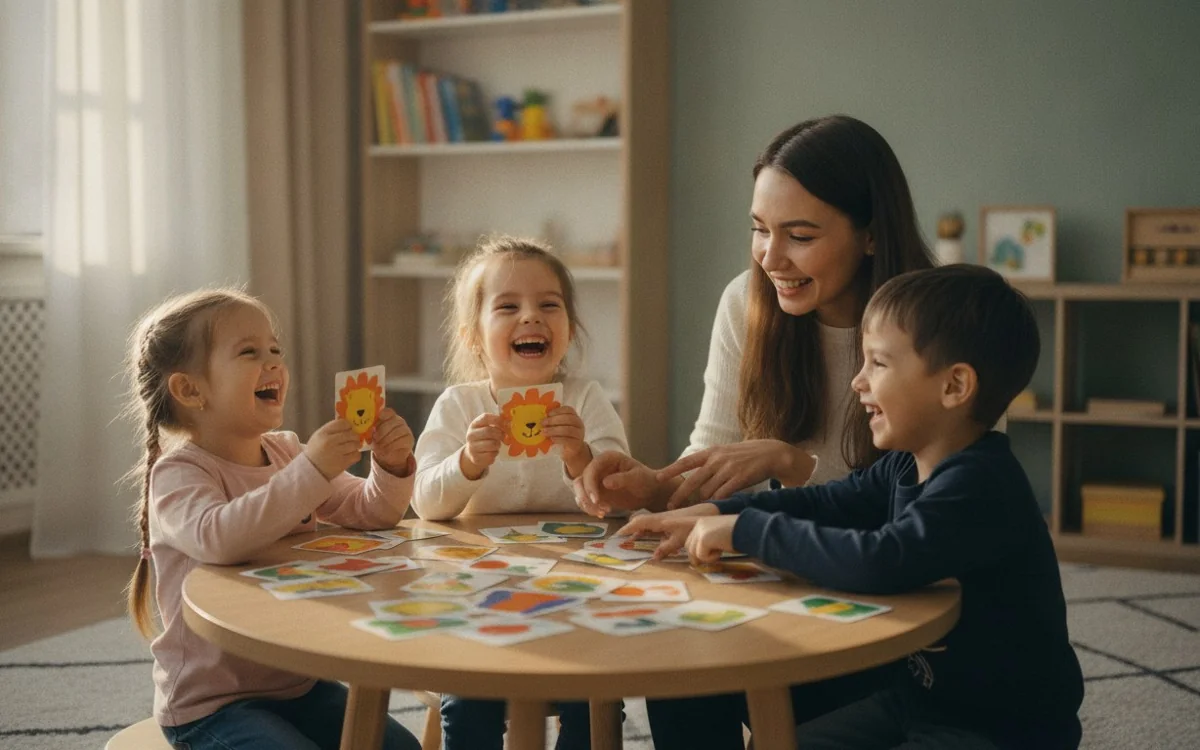
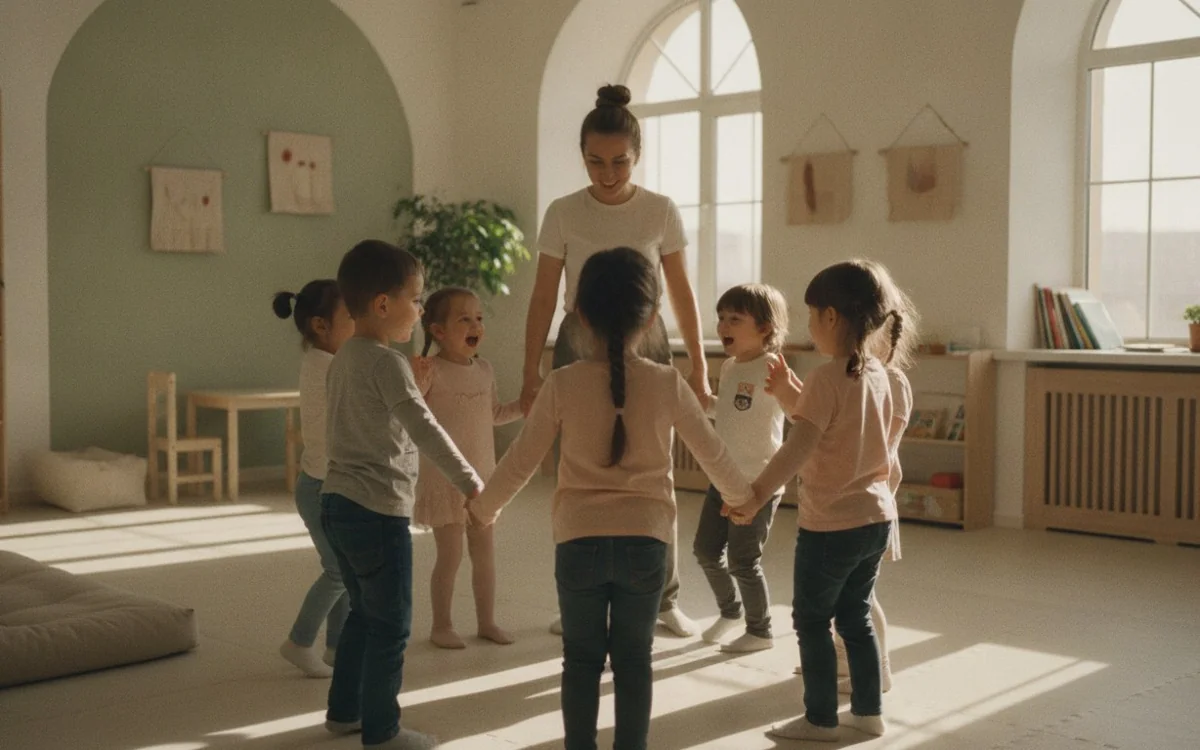
Play is the main tool of a group speech therapy session. When a child is engaged, they don't tense up or fear making mistakes. We use role-playing games, board lotto, and active relay races with speech tasks. Socialization here acts as a catalyst: children imitate each other's correct speech and compete to say tongue twisters more clearly. One of my young clients from the Auezov district couldn't pronounce the sound "r" for six months in individual sessions, but in a group, he automated it in two months — simply because he wanted to be "like Sasha" on the team.
Who Group and Subgroup Classes Are For
Not all children need only individual work. Group speech therapy classes are a format for those who have already completed the sound articulation stage or have mild disorders. However, there are also cases where a group is contraindicated. Let's break it down.
Children with mild speech disorders: dyslalia, FFD
If a child has impaired pronunciation of 2-4 sounds (dyslalia) or has phonetic-phonemic underdevelopment (FFD), group speech therapy classes are the best choice. In a group of 3-4 children, we work on sounds through play, then immediately move to automation in speech. For example, in a lesson on the theme "Zoo," each child names an animal with their "difficult" sound: "lynx", "giraffe", "elephant". Children hear correct models and adapt. According to our observations, automation in a group is 30-40% faster than in individual sessions, due to repeated practice in dialogues.
Sound automation and school preparation
Once a sound is established but the child still "loses" it in speech, a group is the ideal setting for reinforcement. We simulate scenarios like "shop," "school," and "birthday party," where the child must consciously use the new sound. For school readiness, group classes are indispensable: children learn to answer at the board, retell texts, and work in a team. We have a program for older preschoolers aged 5–7, where we simultaneously develop phonemic awareness and sound analysis skills — exactly what is tested during interviews at Almaty gymnasiums.
When Individual Classes Are Better for a Child Than a Group
Group speech therapy sessions are not suitable if:
- The child has a severe speech disorder (alalia, dysarthria, stuttering) — an individual program and constant articulation monitoring are needed.
- Ages up to 3 years — younger children are not ready for group dynamics; they need only one adult.
- The child has pronounced behavioral characteristics (autism, ADHD)—in a group, they will get distracted and disturb others until they master basic interaction skills.
In such cases, we recommend starting with individual sessions, and after 3-6 months, once a foundation is established, trying a group.
Speech therapist consultations for parents of senior and preparatory groups
I’ll specifically mention speech therapist consultations for parents of the older group and speech therapist consultations for parents of the preparatory group. We hold them once a month — this is an integral part of our work. During the consultation, we explain what is currently being worked on in the group, give homework, and show how to reinforce skills in daily life. For example, a mother from the Bostandyk district was surprised that her child only said the "r" sound during sessions, but not at home. After the consultation, we adjusted the exercises — within two weeks, the sound was solidified. Such meetings increase the effectiveness of group sessions by 50%, because parents become active participants in the process.
How group classes differ from individual ones
The difference is not just in the number of children. Each format has its own purpose, and it’s important to understand what you are choosing. Below is a comparison table by key criteria, followed by the pros and limitations of groups.
Comparing Formats: Group vs. Individual
| Criterion | Group session (up to 4 children) | Individual session |
|---|---|---|
| Goal | Automation, socialization, communication | Sound production, correction of severe disorders |
| Speech therapist's attention | Shared among children (but each gets 15-20 minutes of active work) | 100% of time focused on one child |
| Cost | 3500-5000 tenge per session | 6000-10000 tenge per session |
| Duration | 45-60 minutes | 30-45 minutes |
| Socialization | Benefits: children interact and learn from each other | Minimal |
| Homework | Yes, with a focus on play with parents | Yes, individual sessions |
| Effectiveness for mild disorders | High (faster automation) | High |
| Effectiveness for severe disorders | Low (not suitable) | High (required) |
Benefits of group sessions: socialization, motivation, price
The main advantage of group speech therapy sessions is socialization. The child learns not just to speak, but to speak with others: answer questions, argue, negotiate. The second important point is motivation. Children compete: "Who can say more words with the 'sh' sound?" — this works better than any rewards. The third advantage is the price. Group speech therapy sessions in Almaty cost on average 40-50% less than individual ones. For many families, this is an opportunity to attend regularly rather than occasionally.
Limitations of the group format: when it won't work
A group speech therapy session will not work if the child is shy about speaking in front of others — the barrier must first be removed through individual sessions. The format is also ineffective if the children have very different levels: one is already automating the "r" sound, while another is just learning to pronounce it. We always conduct an initial assessment to determine if a group is suitable for the child. If not, we offer an individual plan and revisit the idea of a group after a couple of months.
How a group speech therapy session goes
Parents often ask: "So what do they do? Just play?" The answer is both yes and no. Each group speech therapy session has a clear structure, where play is just a tool to achieve speech goals. Let me explain step by step.
Session structure: warm-up, main part, reinforcement
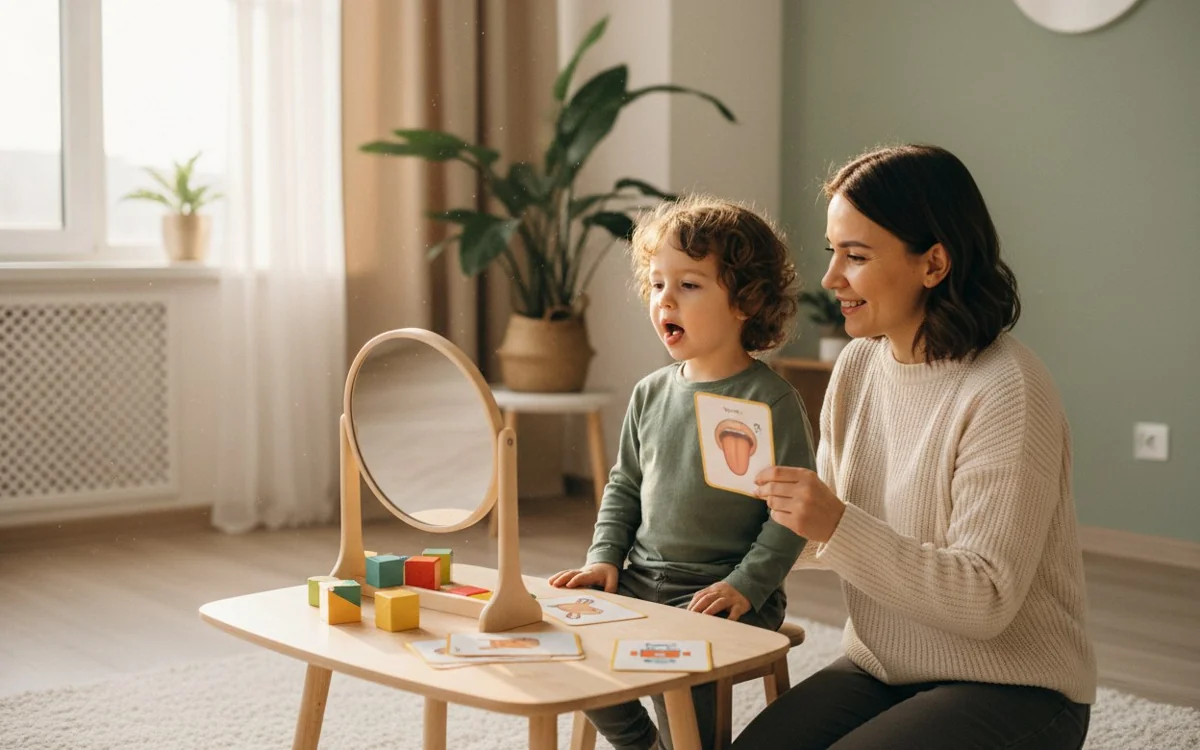
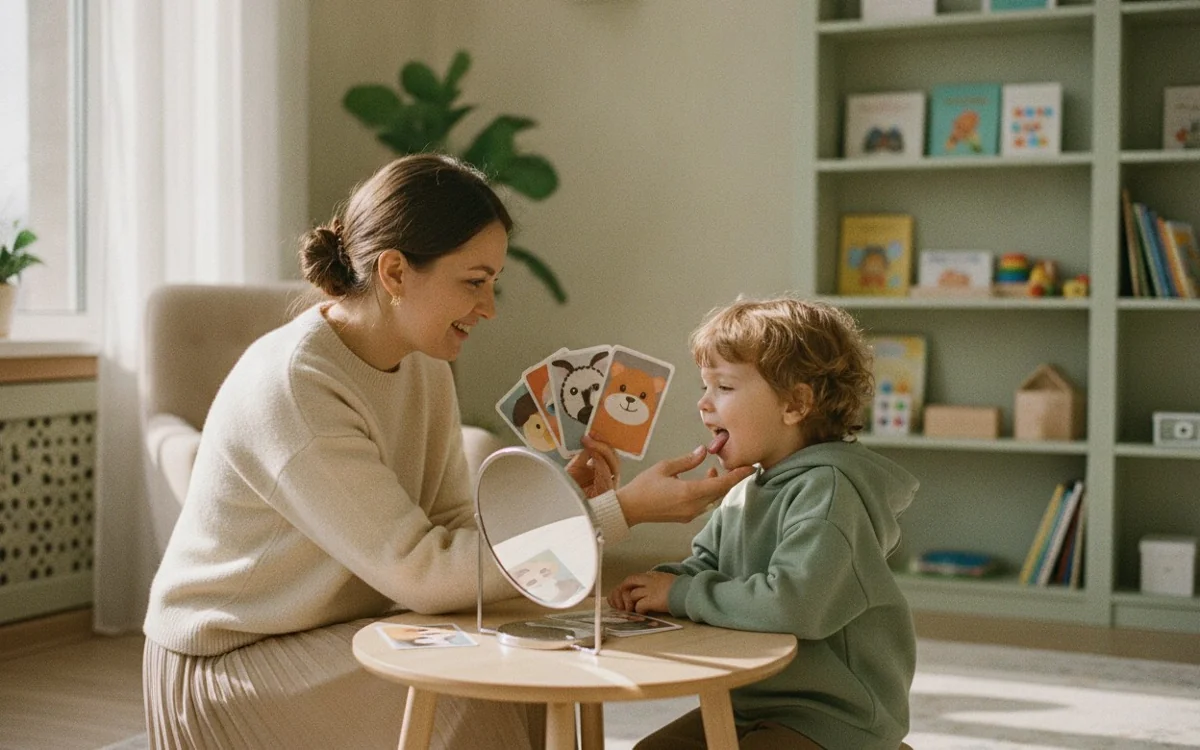
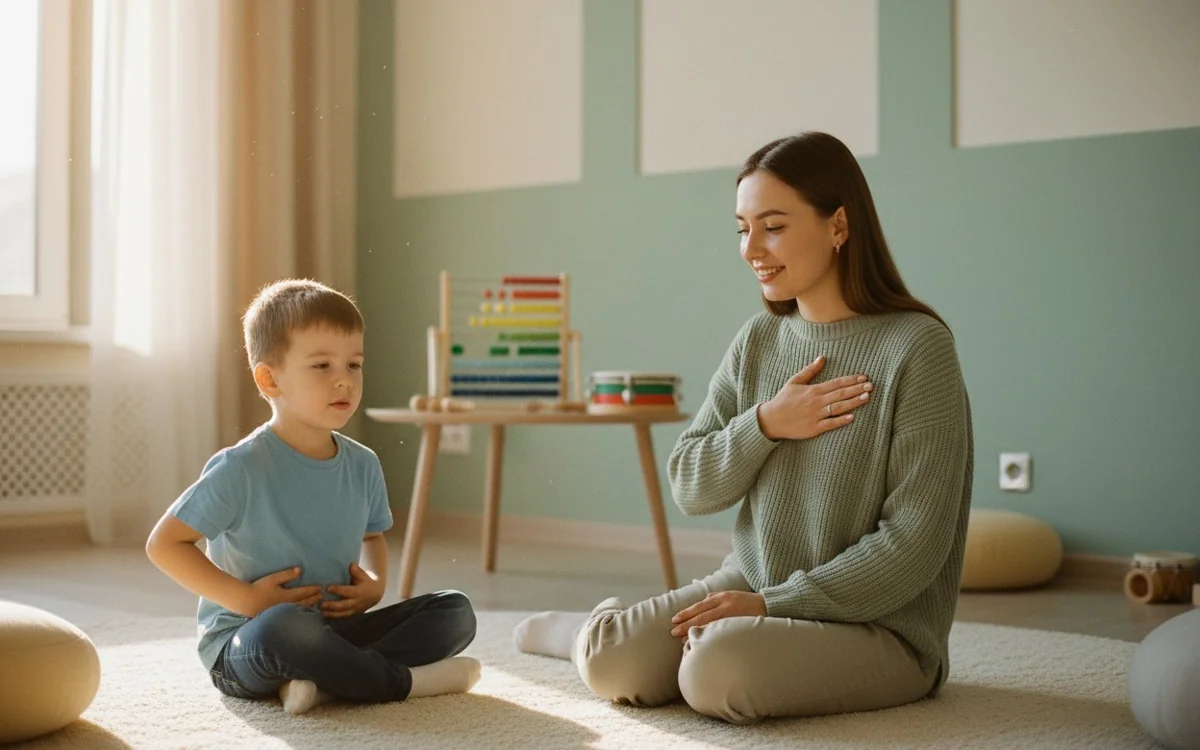
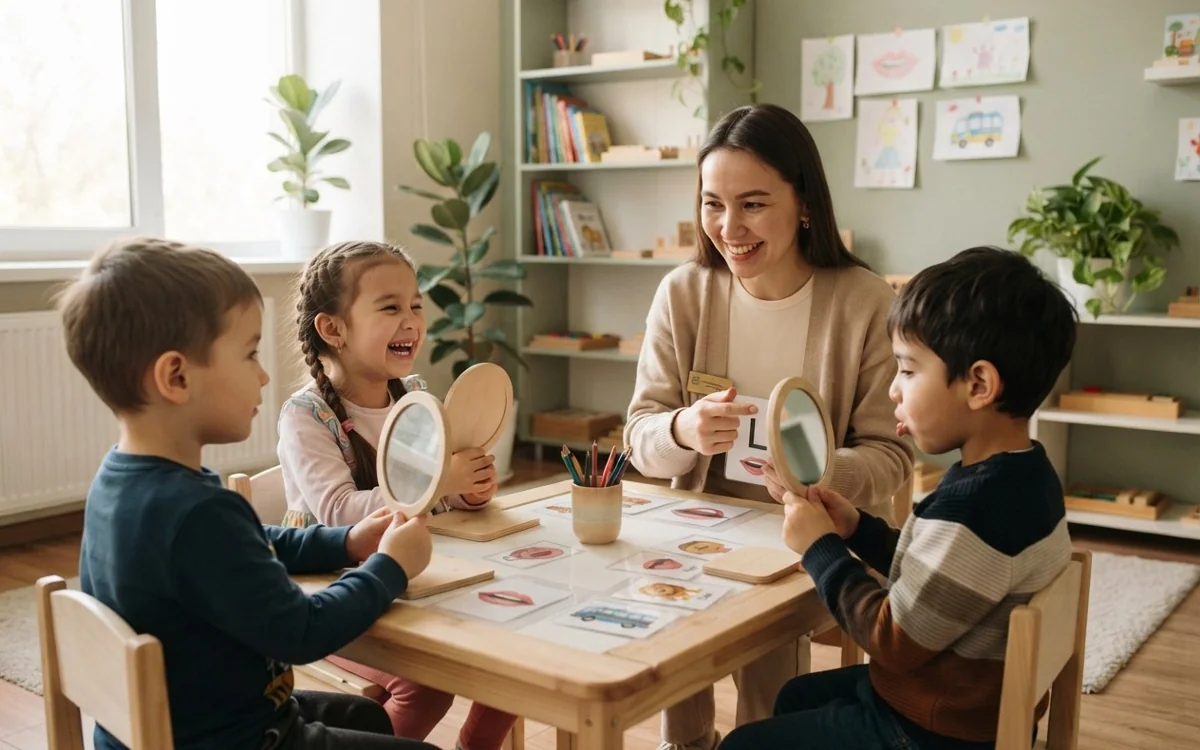
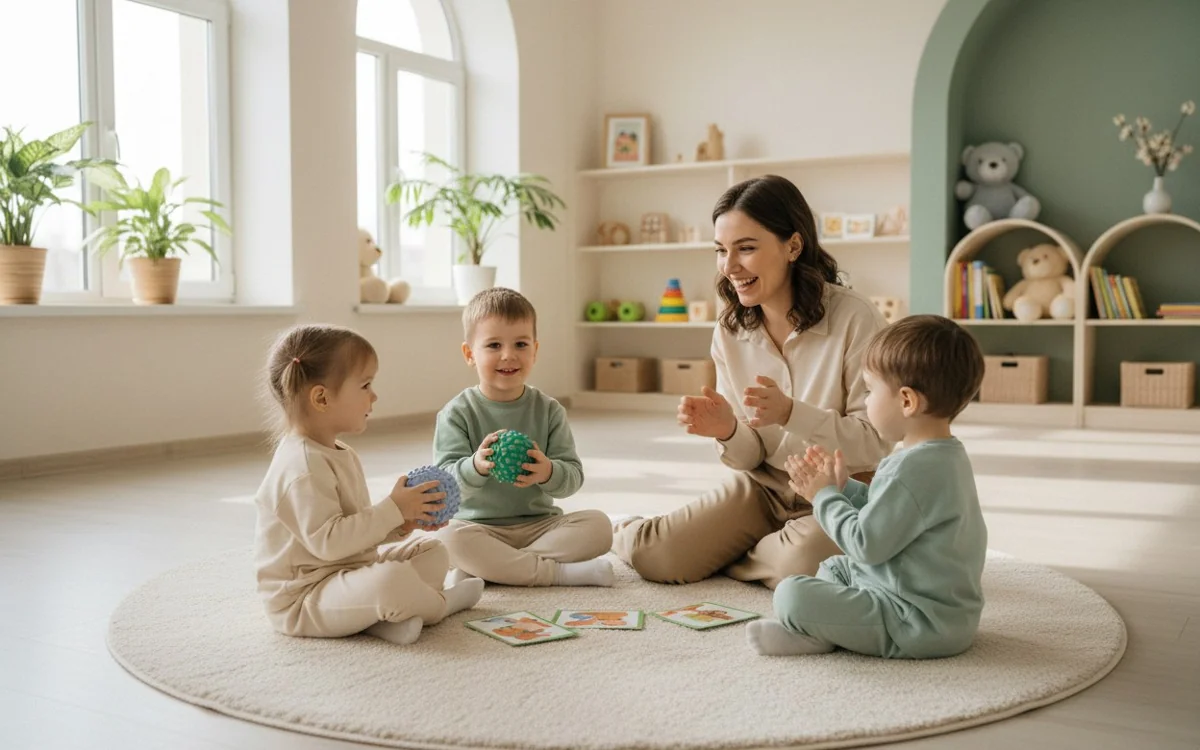
A session lasts 45-60 minutes and is divided into three blocks: 1. Warm-up (5-7 minutes): articulation exercises in front of a mirror — all children do the exercises together, the speech therapist corrects each one. Plus breathing exercises: "blow out the candle", "blow off the cotton ball". 2. Main part (30-35 minutes): working on sounds through play. This could be a lotto game for automation, a role-playing game "Pharmacy" (where you need to clearly name medications), or a role-based retelling of a fairy tale. Activities change every 5-7 minutes to maintain attention. 3. Reinforcement (5-10 minutes): reflection — children share what they learned and receive "homework" in the form of a game to play with parents.
How the speech therapist distributes attention among children
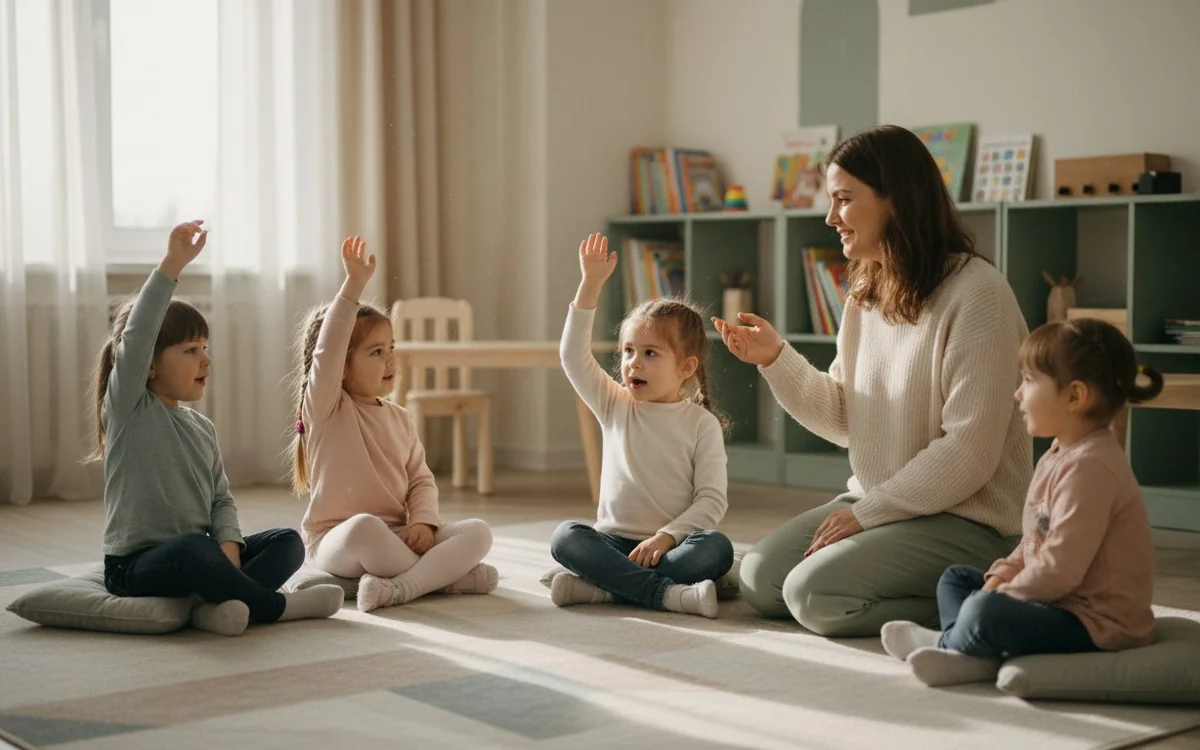
This is a key skill. In group speech therapy sessions, I work on the principle of "one speaks — everyone listens." When one child answers, the others get a task: find the mistake, add to it, repeat. This way, everyone is engaged. I use a timer: 3-4 minutes for individual questioning of each child, then a group game. If someone gets distracted, I involve them in the task: "Aigerim, help Alisher remember what sound is in the word 'shapka'." Children quickly get used to the fact that the speech therapist's attention is a shared resource.
Role of parents: homework and feedback
Without parents, the effectiveness of group classes drops by half. We give homework — simple, 10–15 minutes a day: practice a tongue twister, play lotto, read syllable by syllable. Every two weeks, we hold consultations with the speech therapist for parents of the preparatory and older groups, where we review progress and adjust the program. We have a WhatsApp chat where parents share videos of their children doing homework — I comment and praise the kids. This creates a continuous process.
How much do group speech therapy sessions cost
Price is a common question. Group speech therapy sessions in Almaty are more affordable than individual ones, but the cost depends on the area, the specialist's qualifications, and the format. Here are the current prices at our center.
Cost of subscriptions and single sessions
| Format | Single session | Monthly pass for 8 sessions | Savings |
|---|---|---|---|
| Group (4 children) | 4,000 tenge | 28000 tenge (3500 per session) | 12,5% |
| Subgroup (2-3 children) | 5000 tenge | 36,000 tenge (4,500 per session) | 10% |
| Individual | 8000 tenge | 60,000 tenge (7,500 per session) | 6% |
An annual subscription is more cost-effective if you plan regular sessions — at least twice a week. We recommend this rhythm for lasting results.
What is included in the cost: materials, diagnostics, consultations
The cost of a group speech therapy session includes:
- All materials: lotto, cards, toys, mirrors — nothing needs to be purchased.
- Initial assessment is free — we evaluate the child's speech and select a group.
- Monthly consultation for parents (30 minutes) — review of progress and homework.
- Access to a private chat with the speech therapist for feedback.
No hidden fees. If a child misses a session due to illness, we reschedule it for another day within the subscription period.
Why group sessions are cheaper than individual ones
The logic is simple: in a group session, the speech therapist works with 4 children at once, and the cost is shared. But this doesn't mean quality is lower—it's just a different format. For us, a group is not a way to earn more, but a way to make speech correction more accessible. Many families from Almaty bring their second child specifically to group classes because it allows both children to attend without straining the budget.
How to choose a speech therapist for group sessions
Choosing a specialist for a group is more challenging than for individual sessions. It requires not just a speech therapist, but someone who can manage a group of children and see each child individually. Here is a checklist.
Selection criteria: group size, age, experience
Group size: no more than 4 children. If you are offered a group of 5–6 people, it is no longer a speech therapy session but daycare. Age matching: children should be within one year of each other (4–5 years, 5–6 years, 6–7 years). A 2–3 year age gap makes the session ineffective for younger children. Level matching: the speech therapist should conduct a diagnosis and form a group of children with similar disorders. If a group includes a child with dyslalia and a child with general speech underdevelopment, the weaker one will struggle, and the stronger one will get bored. Group experience: ask how many years the speech therapist has been leading group classes. A specialist without group work experience cannot hold the attention of 4 children at once.
How to know if group sessions are right for your child
Signs that the format "works":
- The child attends the session with pleasure, without crying.
- After 2-3 weeks, you notice that they have started using new sounds in speech at home.
- They talk about other children in the group and try to play with them outside of sessions.
- The speech therapist provides positive feedback during consultations.
If there is no progress after a month or the child refuses to attend, the group format may not suit them. In such cases, we offer a trial individual session to understand the reason.
Why we don’t accept into a group without a preliminary diagnosis
Assessment is a mandatory step. During it, we not only check which sounds are impaired but also evaluate behavior: whether the child can sit in a circle, wait their turn, and stay focused. If not, we recommend individual sessions for 2–3 months to develop voluntary attention. This is honest toward both parents and the child. We don't want you to pay for a group that won't be beneficial.